
Japanese Warships Engaged Chinese Carrier Strike Group in ‘Harassment’ Operation
Military Watch Magazine Editorial Staff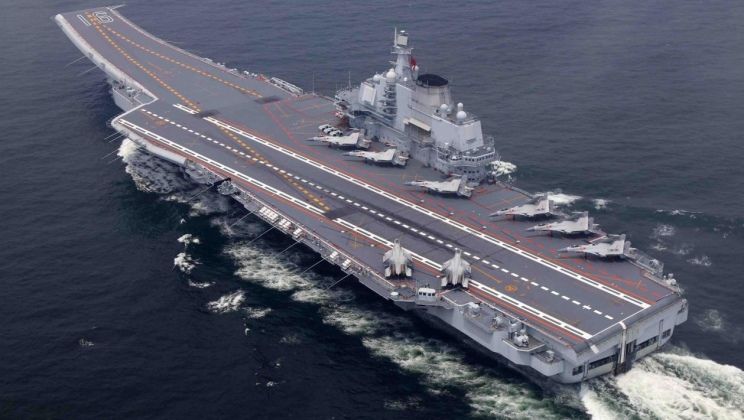
Chinese Carrier Liaoning
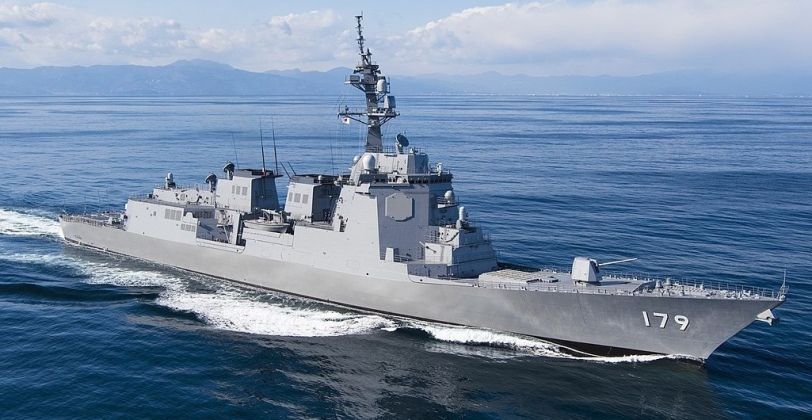
Following the return of the Chinese People's Liberation Army Navy's Liaoning carrier group to its home port from far-sea combat training, state media outlets reported that the group encountered repeated close-range harassment by Japanese forces during these exercises. The carrier group departed for the Western Pacific on May 19, and also exercised in the South China Sea and other unstated regions. Japanese vessels and aircraft repeatedly conducted close-range tracking, surveillance, and provocative harassment, while the Liaoning carrier group maintained a high state of alert throughout its time at sea. These claims follow reports Japanese destroyer JS Asahi monitored the Liaoning carrier group, and was involved in an engagement with the Type 054B class frigate Luohe during operations.
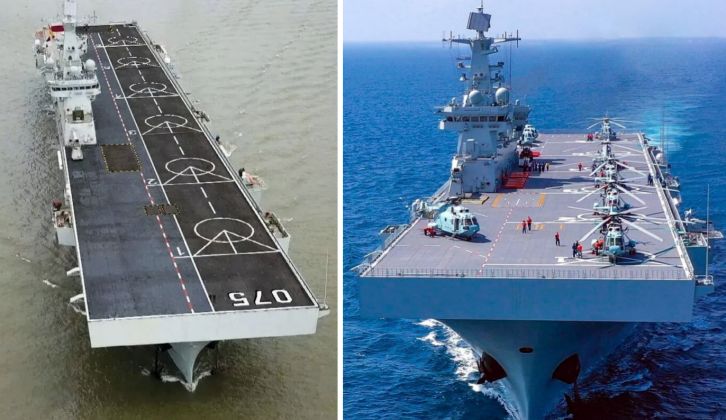
The Liaoning carrier group continuously manoeuvred across multiple training areas and succeeded in establishing a comprehensive early warning and reconnaissance system, continuously launching carrier-based fighter aircraft for combat sorties, flexibly adjusting combat formations, and responding to Japanese actions. The exercises also included the first publicly reported joint drills between the carrier group and an amphibious assault ship group, the latter led by a Type 075 class ship, strengthening the Navy’s multi-mission coordinated combat capabilities in far-sea operations. Exercises further tested shore-sea system-of-systems confrontations, carrier-based aircraft tactical flights, and group search and rescue operations.
Relations between China and Japan have deteriorated significantly since the election of Japan’s new prime minister, Sanae Takaichi, who within days of assuming threatened to intervene militarily in the ongoing conflict between the People’s Republic of China on the Chinese mainland, and the Republic of China based on Taiwan Island. The two Chinese governments have for decades been in a state of civil war. In what was widely interpreted as a response to this threat, unprecedented engagements in December saw Chinese People’s Liberation Army Air Force J-15B fighters form radars locks on Japanese F-15 fighters over international waters southeast of Okinawa Island on December 6. Media outlets based on Taiwan reported that the Japanese military leadership were unsettled, to the point of being “freaked out,” by the results of the two engagements, as the U.S.-supplied fighters’ radar warning receivers were only able to notify pilots of the threats after a weapons lock had already been formed.
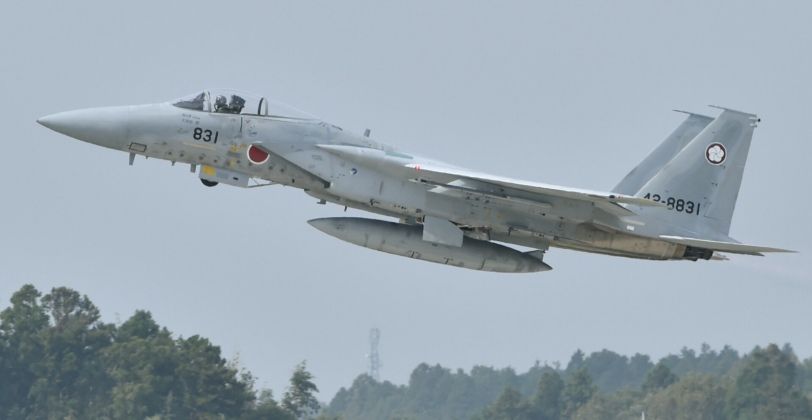
Japanese sources have reportedly observed that the F-15J’s radar can track the J-15B at ranges of around 100 kilometres, while the J-15B can track the F-15 at ranges of around 170 kilometres at a most conservative estimate, with the engagement between the two fighter types thus described by analysts as a “sobering awakening” for the Japanese military apparatus. In January the Japanese Ministry of Defense reported a sharp increase in the Air Self Defense Force’s emergency fighter scrambles in December 2025, with 79 launches having been made to intercept foreign military aircraft approaching the country’s airspace. Fighters were scrambled only 33 times the previous month, with incidents in December representing 17.6 percent of the year’s total of 448. Chinese military aircraft accounted for 53 of the December scrambles, while Russian aircraft were responsible for 23. Engagements between the two countries’ forces are expected to continue at a high level of intensity.
