
Japan Acquires New AWACS With Counter-Stealth Capabilities; First E-2D Advanced Hawkeye Delivered to Tokyo
Military Watch Magazine Editorial Staff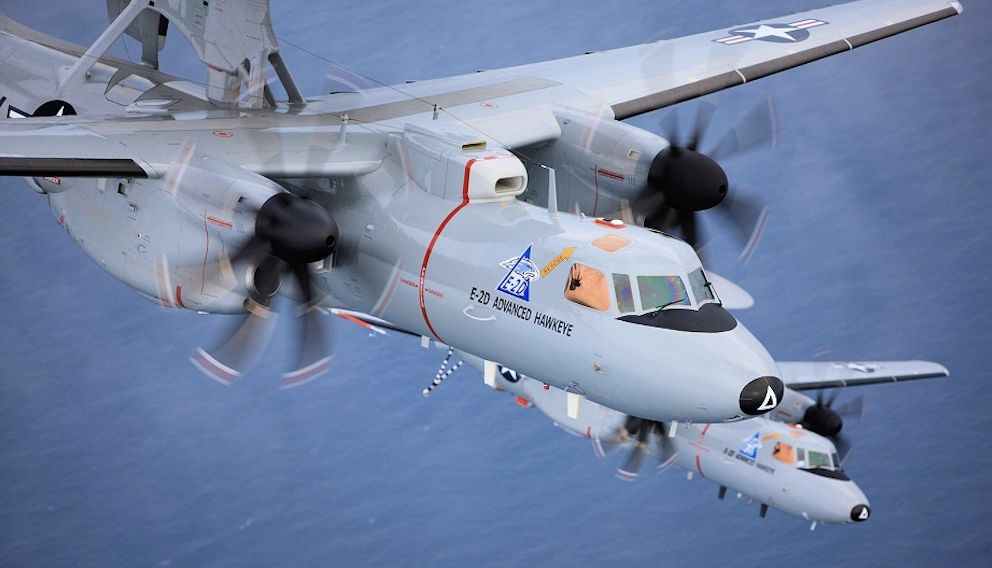
E-2D 'Advanced Hawkeye' AWACS Aircraft
Northrop Grumman
Japan’s armed forces have received the first new E-2D Advanced Hawkeye airborne early warning and control (AWACS) aircraft from American defence manufacturer Northrop Grumman. The aircraft were selected by Japan’s Ministry of Defense in November 2014, and were designed to serve as an effective force multiplier to squadrons of U.S. manufactured fighters such as the F-35A and F-15J. The E-2 first entered service in the U.S. Navy in 1964, and though it was initially designed to operate from American aircraft carriers it has since been widely exported for ground based operations. The Hawkeye is the first AWACS aircraft designed specifically for its role - as opposed to the heavier E-3 Sentry and Russian A-50 AEW platforms which are based on the Boeing 707 and Ilyushin Il-76 respectively. The United States Navy currently operates twelve E-2 squadrons, and the Hawkeye was acquired for ground based operations by Egypt, Japan, Taiwan and Mexico as a lighter and less costly alternative to the E-3 Sentry.
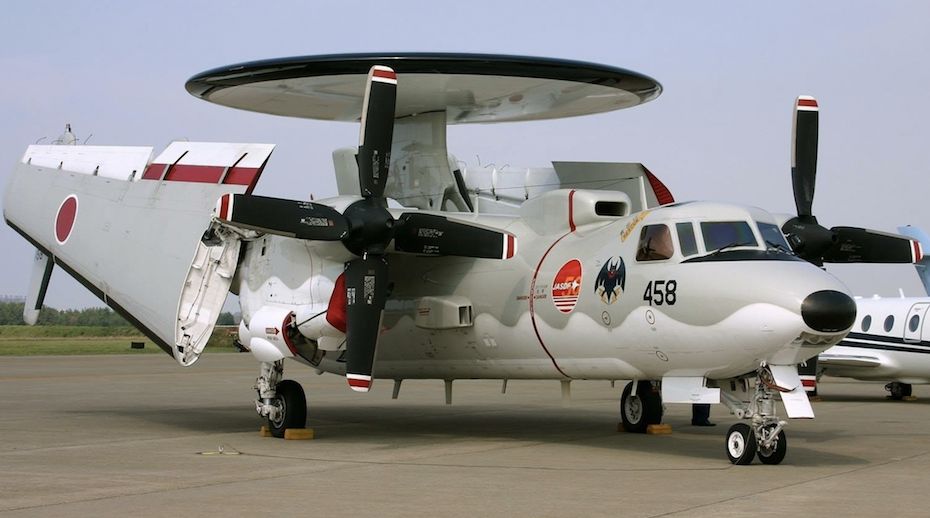
The E-2D represents the fourth major version of the Hawkeye, and is the first to integrate new active electronically scanned array radar technologies. The Advanced Hawkeye has received an entirely new avionics suite, a new AN/APY-9 radar, integrated satellite communications, improved T56-A-427A engines, a full glass cockpit and new electronic warfare systems and countermeasures - making it considerably more capable than its predecessor the E-2C. Perhaps the greatest strength of this new aircraft, however is the reported counter-stealth capability of the AN/APY-9 radar which is reportedly designed to detect fighter sized fifth generation aircraft such as the Chinese J-20 air superiority fighter. This combined with the Advanced Hawkeye’s ability to guide long range missiles such as the AIM-120C deployed by Japanese F-15 and F-35 fighters to their targets makes it an invaluable asset given the growing deployments of stealth aircraft by Tokyo’s potential adversaries.
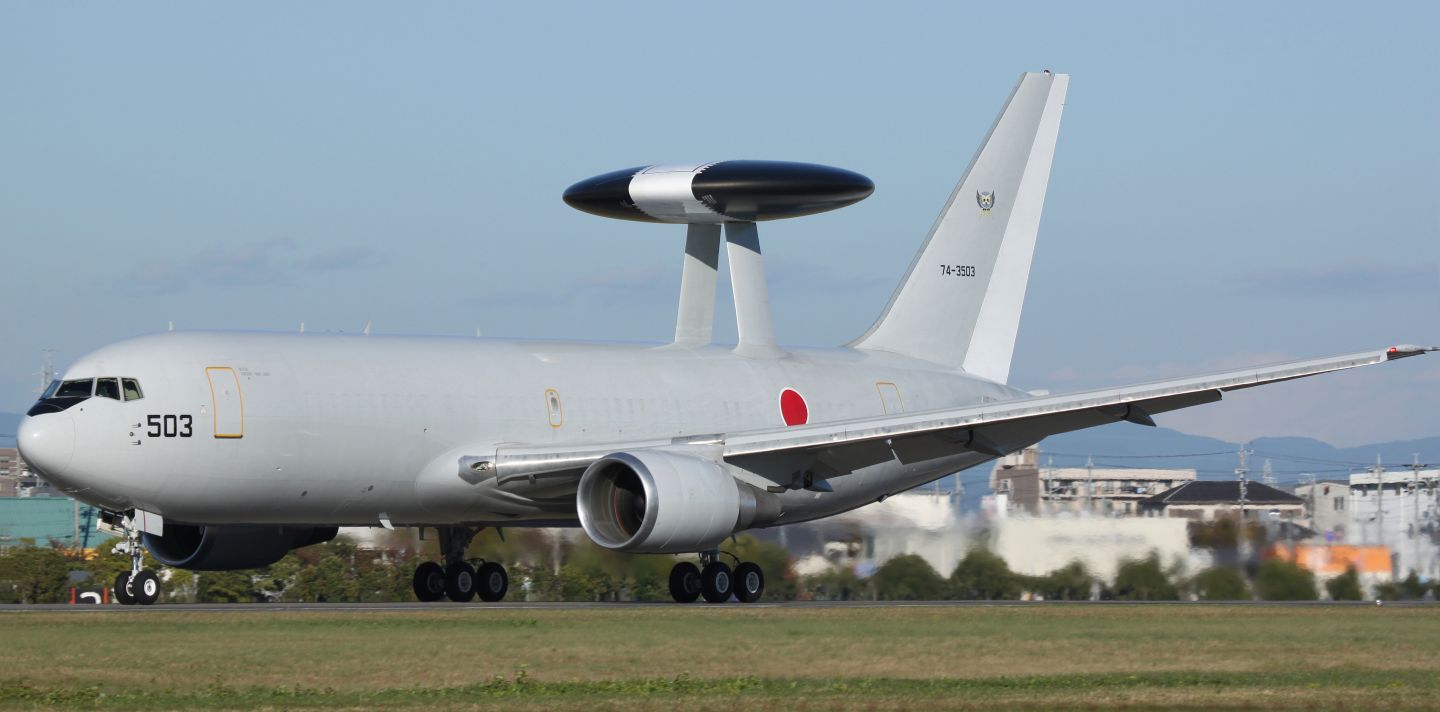
Japan’s AWACS fleet is currently considered the most capable in the world other than that of the United States, with a large force of 13 E-2C and 4 Boeing E-767 platforms currently in service which will be further strengthened with the E-2D. The E-767 is a close derivative of the E-3 Sentry, which is considered the most capable AWACS platform in the world. Vice president and integrated product team leader of Northrop Grumman’s manned airborne surveillance programs Jane Bishop stated regarding the E-2D acquisition upon delivery of the first Advanced Hawkeye: “Northrop Grumman’s longstanding partnership with Japan is beginning a new chapter with the delivery of the first Japan E-2D. This aircraft provides a significant increase in early warning and surveillance capability to outpace Japan’s evolving security needs.” The platform has been promoted by the company as “a two generation leap in radar technology” over the E-2C. As the E-2 was designed for carrier operations, it retains the ability to deploy from short or makeshift runways which allows it to deploy from island outposts near contested waters - a valuable asset for the Japanese Air Force. Due to the limitations of the Japanese Izumo Class carriers, which have extreme small decks and lack even basic catapult launch systems or arresting gear, E-2D Hawkeyes will be restricted to ground based operations for the time being. This could change, however, if Japan proceeds with plans to acquire more advanced and heavier carriers in future.
