
Iran’s Intelligence Chief Warns Western Threats Could Lead Country to Develop Nuclear Weapons
Military Watch Magazine Editorial Staff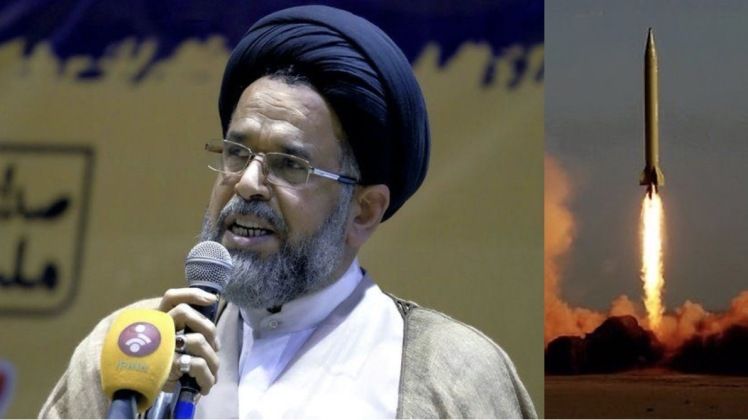
Iranian Intelligence MinisterMahmoud Alavi and Shahab-3 Ballistic Missile
Iran’s Intelligence Minister Mahmoud Alavi has warned that Iran could reverse its decision taken in the 1990s not to develop nuclear weapons, at a time when the country has moved to increase uranium enrichment which could provide the materials needed to construct its first warheads. “The Supreme Leader [Ali Khamenei] has explicitly said in his fatwa that nuclear weapons are against sharia law and the Islamic Republic sees them as religiously forbidden and does not pursue them,” the minister stated. “But a cornered cat may behave differently from when the cat is free. And if they [Western states] push Iran in that direction, then it’s no longer Iran’s fault.” Iran has stated that a removal of American economic sanctions is a necessary prerequisite to its return to compliance with the Joint Comprehensive Plan of Action (JCPOA) nuclear deal, which the U.S. withdrew from unilaterally in 2018 despite Iran’s full compliance. The U.S. withdrawal led Tehran to retaliate by loosening its compliance and increasing uranium enrichment.
The threat to develop nuclear weapons and steps towards this end provide Iran with leverage to potentially win American concessions and ensure a loosening of economic sanctions - which short of war appear to provide the only means for Washington to prevent Iran from increasing uranium enrichment further. Iranian officials have repeatedly threatened that the country could withdraw from Nuclear Non-Proliferation Treaty should the U.S. not return to compliance with the JCPOA by removing sanctions, with the treaty being the only legal obstacle to Iran becoming a nuclear weapons state. Tensions have risen since early 2019 as the possibility of U.S. military action against Iran has been raised on multiple occasions, although Iran’s formidable ballistic missile deterrent and the heavily fortified nature of its nuclear facilities has seriously complicated prospects for an American military solution to the Iranian nuclear issue.
