
Iranian Foreign Minister Threatens Withdrawal From Nuclear Non-Proliferation Treaty - How Tehran Could Resume its Nuclear Weapons Program
Military Watch Magazine Editorial Staff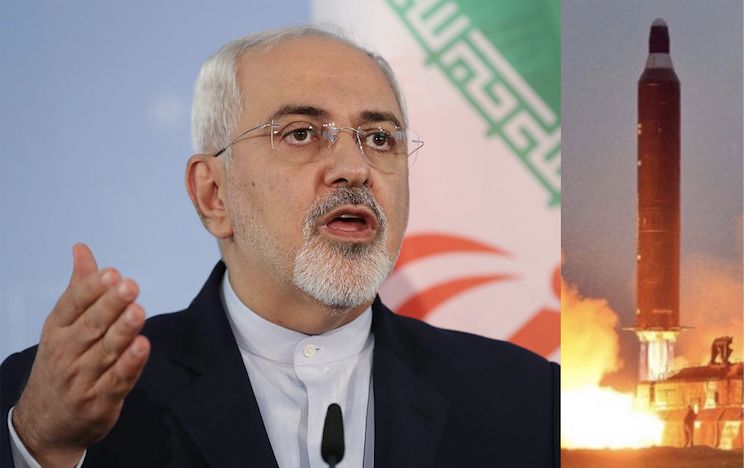
Iranian Foreign Minister Javad Zarif (left) and Musudan Ballistic Missile
Iranian Foreign Minister Javad Zarif has warned that Iran could withdraw from the Treaty on Non-Proliferation of Nuclear Weapons, of which it is currently a signatory, which prohibits it from pursuing nuclear weapons. Withdrawal would likely be carried out under Article X, similarly to the North Korean withdrawal in 2003, which allows withdrawal if "extraordinary events, related to the subject matter of this Treaty, have jeopardised the supreme interests of its country" with three months' notice. The minister warned that Iran would withdraw if the Iranian nuclear issue was referred to the United Nations, with the U.S. having indicated it sought to reimpose economic sanctions on the country through the security council. This comes amid rising tensions between Iran and the Western Bloc, following the American assassination of its most prominent military official Quds Force Commander Qasem Soleimani on January 3rd. Iran’s Foreign Ministry previously threatened to withdraw from the treaty in April 2019, and has since reduced restrictions imposed under the Joint Comprehensive Plan of Action (JCPOA) nuclear deal on uranium enrichment. This has come in response to both American violations of the deal, as well as the assassination of the Iranian commander. Israeli intelligence has warned that, at current rates of enrichment, Iran could have enough weapons grade uranium to produce a single nuclear warhead by the end of 2020. Iran already possesses a range of ballistic missiles of North Korean origin including the Musudan, Khorramshahr and Shahab-3 which could be used to deliver nuclear warheads against faraway targets.
