
Iran Rejects Western Efforts to Alter Nuclear Deal with New Restrictions and Participants
Military Watch Magazine Editorial Staff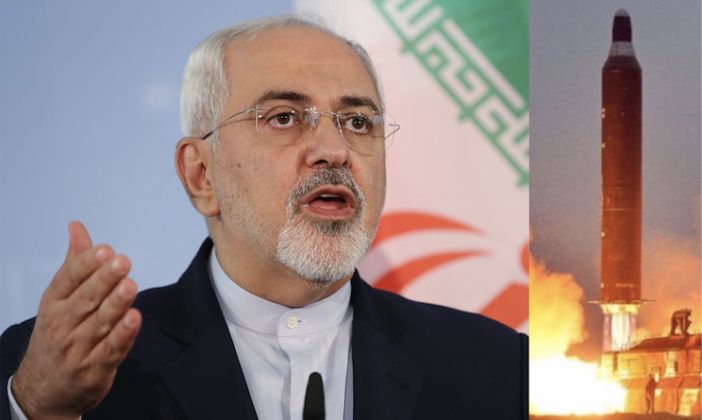
Iranian Foreign Minister Javad Zarif and Musudan Ballistic Missile
Iran’s Foreign Ministry issued a statement on January 30th rejecting any changes to the participants or text of the Joint Comprehensive Plan of Action (JCPOA) nuclear deal signed in 2015. This follows the possible return of the United States to the deal under the new Joe Biden administration, after a withdrawal by the Donald Trump administration in 2018 and subsequent imposition of harsh economic sanctions on the Middle Eastern state over three years. Sanctions were notably escalated during the COVID-19 pandemic’s initial fallout in 2020, exacerbating the economic damage and humanitarian impacts. Iranian Foreign Ministry spokesman Saeed Khatibzadeh stated regarding Tehran’s stance and rejection of Western efforts to alter the nuclear deal as a condition for resumed American participation: “The nuclear accord is a multilateral international agreement ratified by U.N. Security Council Resolution 2231, which is non-negotiable and parties to it are clear and unchangeable.”
France previously led calls to force Iran to accept Western imposed limits on its development of a ballistic missile deterrent as part of a renegotiated nuclear deal, although according to statements by the Iranian leadership this deterrent is considered non-negotiable as the only means to asymmetrically deter the much larger forces of the U.S. and its European and Middle Eastern military partners. French President Emmanuel Macron also said any new talks should include Saudi Arabia as an eighth member. American officials have also indicated that the country would require further Iranian concessions in order to return to compliance with the agreement after its unilateral withdrawal. German officials have similarly indicated that the nuclear agreement is no longer acceptable in its current form, and that curbs on Iran’s missile deterrent needed to be imposed - a line supported by Tehran's longstanding adversary Israel. The JCPOA was signed by Iran, China, the United States, Russia, Britain, France and Germany - although only Western parties to the deal have raised issues regarding the current terms and seen vocal calls within their governments to amend the agreement to force further concessions on Tehran. Iran has steadily increased its nuclear activities since the U.S. withdrawal from the nuclear deal to strengthen its negotiating position and increase pressure on the Western powers to come to the table.
