
Iran’s Indigenous Fighter it Claimed Could Match America’s F-18: How Capable Was the Saeqeh?
Military Watch Magazine Editorial Staff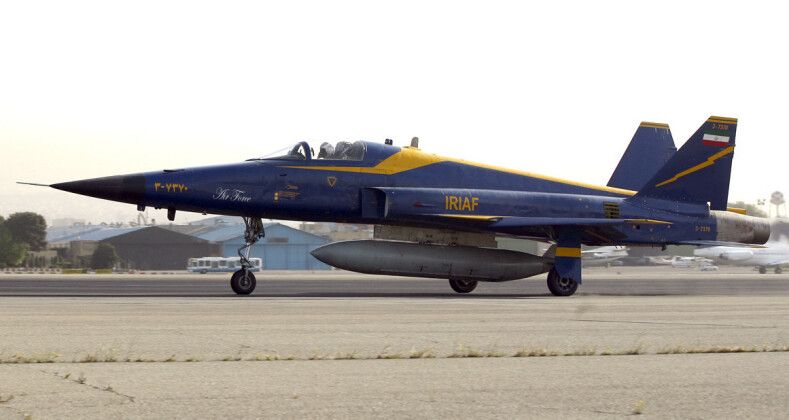
Iranian Saeqeh Lightweight Twin Engine Fighter
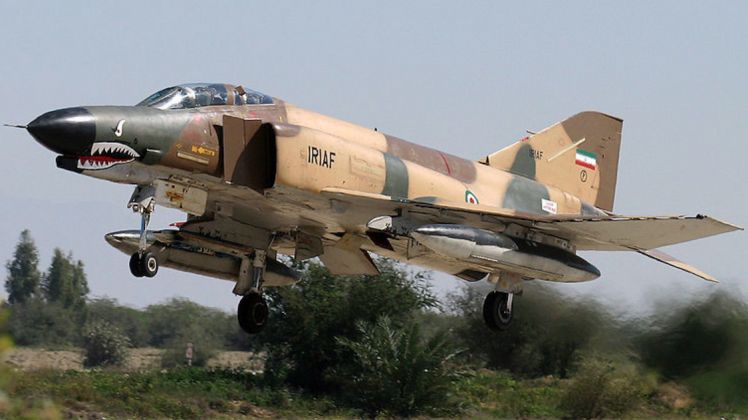
Following the 1979 Islamic Revolution, the overthrow of the Western aligned Pahlavi Dynasty and Tehran’s foreign policy realignment away from the Western Bloc, Iran was no longer able to acquire either U.S. made weapons systems or parts to service existing weapons platforms. For the Iranian Air Force, which relied exclusively on U.S. made fighters including the third generation F-5E Tiger II light fighter, the heavier F-4 Phantom, and elite fourth generation F-14 heavyweight jets, this was a particularly serious situation. Western analysts widely predicted that a lack of parts would ground the entire Iranian fleet permanently within five years. The newly declared Islamic Republic, facing a large scale invasion from neighbouring Iraq just months after its formation, was forced to invest heavily in its military aviation to protect its airspace from hostile aircraft and avoid losing air superiority entirely. These investments proved successful, and Iran's American made fighters were able to fly throughout the war and continue to form the backbone of its fleet until to this day. This provided the country with an invaluable stepping stone from which to further strengthen its military aviation industries after the war, servicing even fighters as complex and sophisticated as the F-14 as well as producing advanced indigenous weapons systems for these aircraft such as the Fakour 90 air to air missile. More recently, amid growing tensions with the Western Bloc and difficulty importing modern combat aircraft due to both political and economic constraints, Iran has invested in developing fighter jets indigenously to serve its needs.
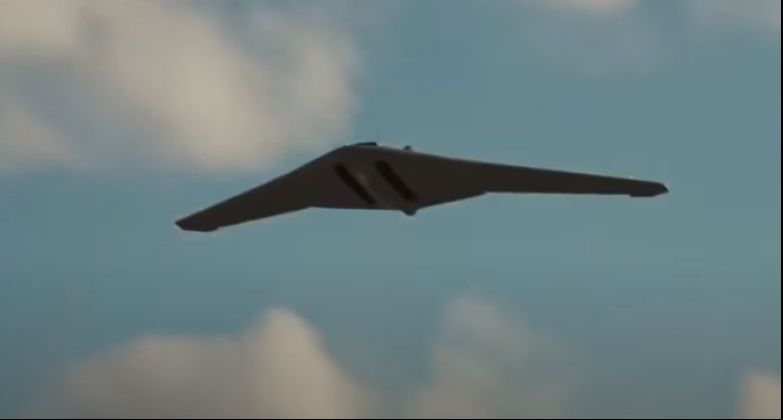
While the Iranian Qaher-313 light stealth fighter announced in 2013 grabbed headlines, and was long been derided by Western analysts as a propaganda stunt unable to produce any combat capable aircraft, the result of the program remains to be seen. Given revelations of Iran’s recent success producing and fielding highly sophisticated stealth drones however, and the relatively advanced state of its military aviation, the possibility of the Qaher-313 entering serial production and combat service later in the decade should not be entirely discounted. Long before the Qaher’s announcement, however, Iran had already developed another potentially promising indigenous fighter under a joint sponsorship from the Defence Ministry and the Air Force. This was the Saeqeh twin engine light fighter, which saw its first flight in 2004 and reportedly entered service in 2007.
Of the three U.S. fighter classes in service in the Iranian Air Force, the F-5E is by far the lightest and least complex. The fighter was developed as a low cost platform to be exported by the United States to its lower tier allies such as South Vietnam and Thailand, while only close U.S. partners such as Israel and Japan were permitted to purchase the heavier F-4 Phantom. Iran acquired the F-5 long before it was permitted to acquire the Phantom, and only extensive lobbying on the part of the head of state Mohamed Reza Shah himself led to Iran being sold the F-4 and later the F-14. The F-5’s simplicity, however, made it far easier not only to develop parts for and maintain, but also for Iranian experts to attempt to reverse engineer. The Saqeh fighter’s close resemblance to the F-5 is a result of the former being closely based on the design of the latter, and although the F-5’s design dates back to the early 1960s the Iranian Air Force has invested in upgrading the design both to keep its existing U.S. made fighters serviceable and to develop viable modern combat platforms based on the F-5 airframe.
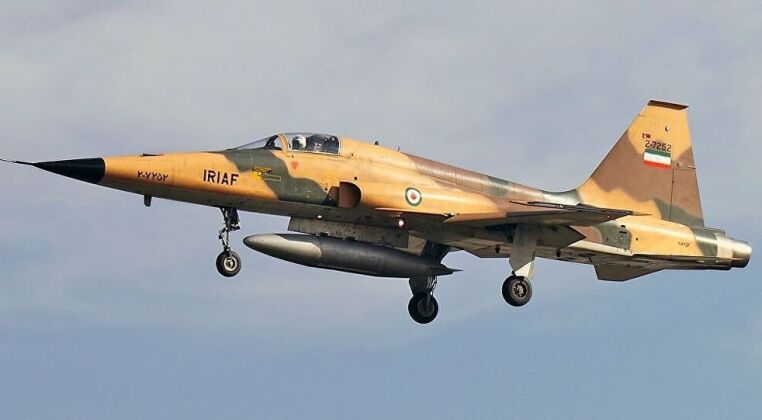
Despite its age, heavily modernised F-5s are currently operated by a number of modern military powers such as Taiwan and Thailand, and upgrades to the platforms have allowed them to contend with fourth generation light fighters - in some cases on favourable terms. The most notable examples are Taiwanese F-5 variants with Sky Sword II long range air to air missiles and Thai F-5TH jets which boast AESA radars and '4+ generation' avionics. Indeed, the Swiss Air Force notably expressed a preference for an upgraded F-5 over the F-16 due the former’s lower maintenance requirements which largely compensated for the latter's performance advantages. Iran’s modifications to the F-5 airframe on the Saeqeh appear to go further than those of all other operators, and Tehran is suspected of having gained assistance from China, Russia or North Korea in developing its fighter. Iranian sources claim the Saeqeh has fourth generation capabilities - indicating it may have benefited from technologies reverse engineered from the country's F-14 and MiG-29 jets which are its only post-third generation foreign aircraft. Moreover, according to the Iranian military, the fighter has a significantly extended range compared to the original F-5 and can fly up to 3000km where the original was restricted to under 1,500km. External modifications of the Saeqeh include a twin tail configuration similar to that of the F-18 Hornet.
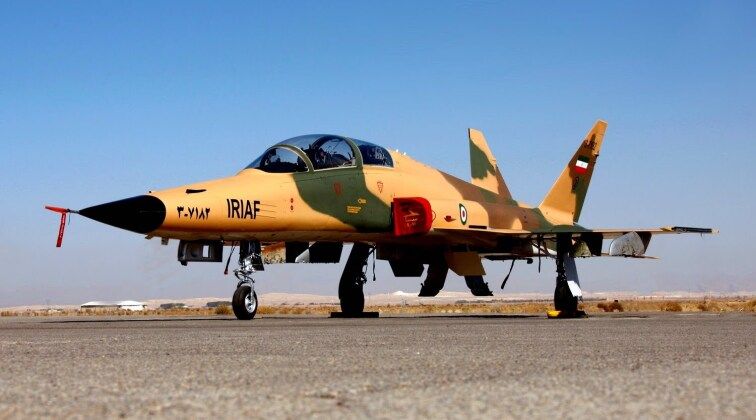
According to Iranian state media sources, the performance of the Saeqeh is comparable to that of the F-18 Hornet previously fielded by the U.S. Navy. While these claims have been widely dismissed by Western sources, they could well prove to be true. The F-18A in particular was hardly a highly sophisticated platform by today's standards, and the fighters which first entered service in the U.S. Navy in 1983 are in many ways less capable than the upgraded F-5 fighters fielded by Taiwan or Thailand today. The F-18 was itself developed based on the YF-17 concept design, which was an enhanced derivative of the F-5 built for combat at a fourth generation level. The Saeqeh and F-18 fighters share the same origins and roles and several common design features, making them somewhat comparable platforms. Even the older F-18A and F-18C twin engine light fighters, however, are much larger than the Saeqeh and benefit from access to much more advanced and longer ranged weaponry, meaning while the jets may have comparable avionics and some similarities the newer F-18 variants are likely much more capable overall.
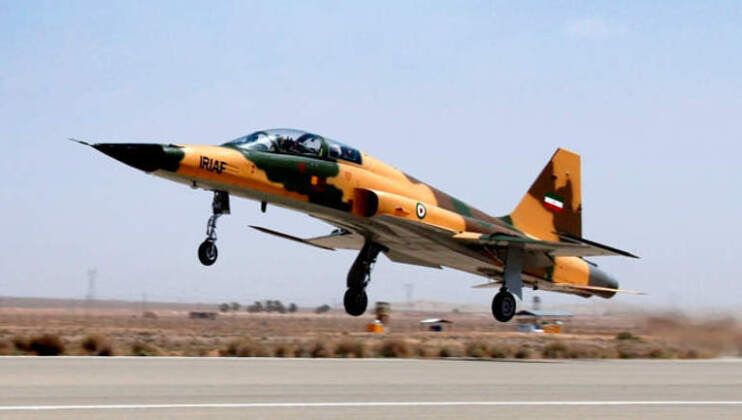
It remains uncertain how may Saeqeh fighters Iran ever produced, but 14 years after its first flight an apparent successor to the design, the Kowsar light fighter, was unveiled. The fighter appears to be being built on a larger scale, and like the Saeqeh it is also closely based on the F-5E design. The Kowsar is expected to provide a lighter complement to the foreign jets which Iran is expected to purchase over the coming decade, and depending on advances in Iranian radar and air to air missile technologies it could potentially evolve into a dangerous fighter on par with the F-5TH. Iran is reportedly also developing a much heavier fighter domestically, and although details have yet to be released it is speculated to be loosely based on the F-14. Should this more ambitious program be seen through to serial production, experience developing the Saeqeh and Kowsar is likely to play an important role in laying the ground for its success.
