
Hypersonic Warning Shot; China Tests Revolutionary New JL-3 Submarine Launched Nuclear ICBM
Military Watch Magazine Editorial Staff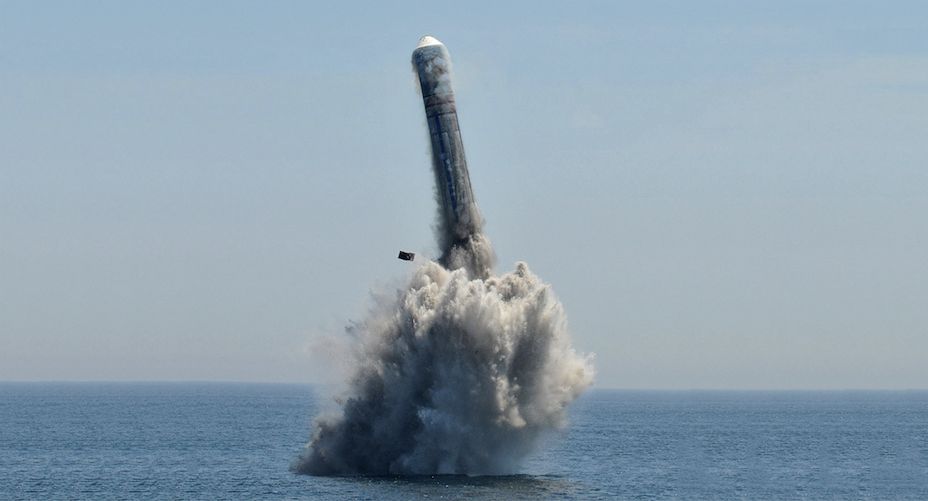
Chinese JL-2 Submarine Launched ICBM
Amid fast growing tensions with the United States, China’s People’s Liberation Army (PLA) Navy has test launched the JL-3 submarine launched nuclear armed intercontinental range ballistic missile (ICBM) for the first time. The missile was tested in the Bohai Sea, and represents the first confirmed launch of the JL-3. The test was widely interpreted as a warning to the United States, the cities of which remain well within the range of the thermonuclear armed missile. On the day of the test Chinese Defense Minister Wei Fenghe warned: “If anyone dares to split Taiwan from China, the Chinese military has no choice but to fight at all costs.” He further added that if the U.S. chose a hostile policy towards China, whether economically or militarily, China would “fight to the end.” The induction of the JL-3, which is expected to replace the older JL-2 onboard Chinese ballistic missile submarines from 2020, comes as part of a wider effort by the PLA to modernise its nuclear delivery capabilities. With a nuclear arsenal a small fraction of that of the U.S. or Russia, the development of more effective delivery systems is key to maintaining a viable deterrent at a time of growing perceived threats from the United States.
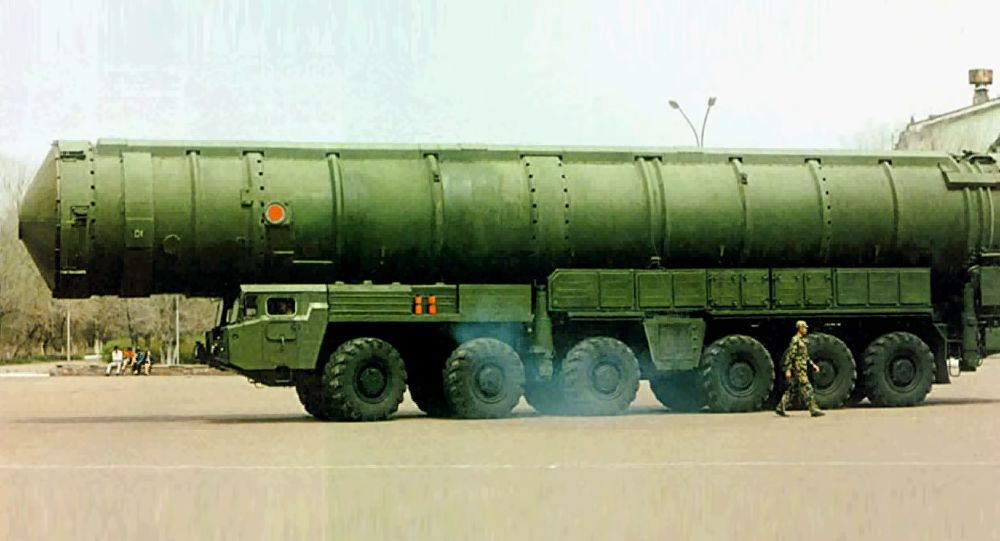
While China’s defence sector has become a world leader in many key military technologies, from the J-20 stealth fighter to the Type 055 Class destroyer and the YJ-18 cruise missile, the country’s submarines and submarine launched missile capabilities continue to lag behind those of Russia and the United States - though still considered ahead of India, North Korea and European states. The PLA Navy began to invest in the development of a submarine launched nuclear capable ballistic missile in the 1970s, with the first Type 092 submarine armed with JL-1 ballistic missiles entering service in 1981. This development came almost thirty years after the USSR had first tested such a system closely followed by the United States in the 1950s. China has since emerged as a world leader in ballistic missile technologies, with platforms such as the DF-41 ICBM and DF-21D ‘carrier killer’ tactical ballistic missile standing out for their highly unique capabilities. Although Chinese ballistic missile submarines such as the Type 094 Class are considered easier to detect and less survivable than those in American or Russian service, by applying China’s state of the art ballistic missile technologies to arm the warships the country’s second stage deterrent capabilities can be seriously strengthened. While the full specifications of the JL-3 are currently unknown, the missile is considered a close analogue to the land based DF-41 with a highly comparable performance. The missile is estimated to have a range of 12,000-14,000km and an impact speed of Mach 20 - make it effectively impossible to intercept for American or other air defences. The missile carries multiple independent warheads, which serve to multiply its destructive potential and make it even more difficult to intercept.
