
How the Su-35 Beat More Capable Aircraft to Lead Russia’s Fighter Fleet in Air-to-Air Kill Counts
Military Watch Magazine Editorial Staff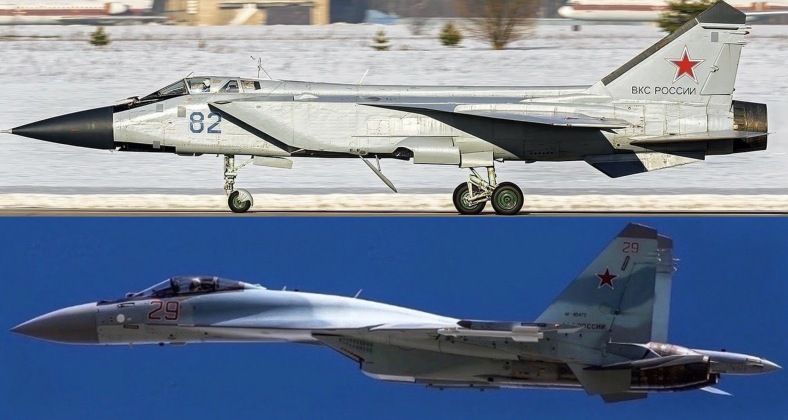
Russian MiG-31 Interceptor (top) and Su-35 Fighter
Russian state defence conglomerate Rostec reported that the Su-35S has destroyed more targets in air-to-air combat than any other fighter type in the Russian Armed Forces. A statement by Rostec’s press office stressed that the Su-35 remains one of the most actively employed fighters in the ongoing Russian-Ukrainian War, highlighting that its advanced avionics including its electronic warfare and defensive suites in particular were major factors that led it to earn high praise from pilots. Developed as a heavily enhanced derivative of the Soviet Su-27 air superiority fighter, the Su-35 places a particular emphasis on advanced air-to-air capabilities, in contrast to the significantly less costly and more well rounded Su-30SM2, and to the much heavier and longer ranged Su-34 optimised for strike operations. It has accordingly consistently been assigned for air-to-air operations against a wide range of targets in the theatre.
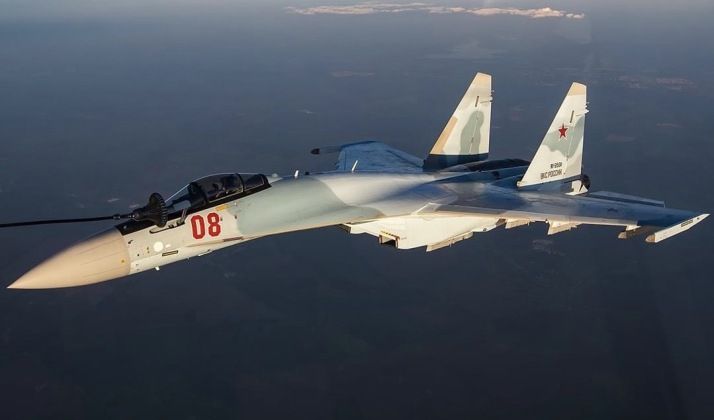
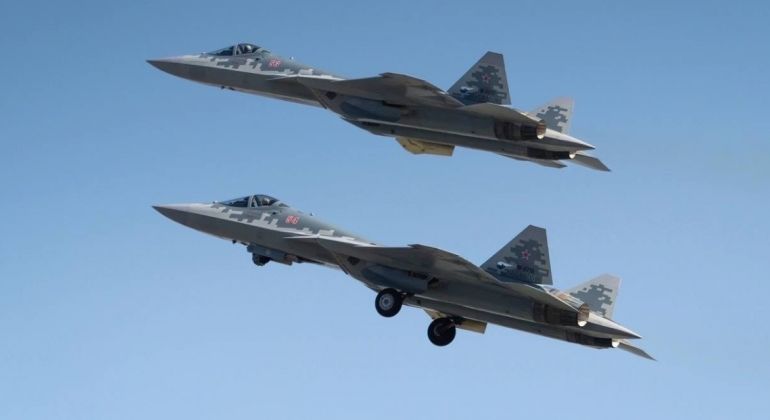
Although the Su-35 has more advanced air-to-air capabilities than any other Russian fourth generation fighter type in production, its remains significantly more limited than the more advanced Su-57 fifth generation fighter or than the MiG-31 interceptor, the latter which is no longer in production. Both carry significantly more powerful sensor suites than the Su-35, with the MiG-31 also having a much greater weapons carrying capacity and being able to launch missiles against targets across far greater distances due to its considerably higher speed and altitude. Despite its more limited air-to-air capabilities, the Su-35 is likely to have been responsible for more air-to-air kills due to the far greater numbers in which it is deployed in the theatre, with major delays to the Su-57 program meaning that only around a single regiment is estimated to be in service. The MiG-31 fleet, meanwhile, is prioritised for the defence of the Arctic, with the aircraft fielded in more limited numbers due to its far higher operational costs.
Speaking in early January, a Ukrainian Air Force F-16 pilot specifically singled out operations by Su-35s as a primary factor preventing F-16 units from operating in line with NATO doctrine, forced them to adopt a "low-altitude flight" strategy that focused on terrain masking using ground clutter to avoid the more advanced Russian aircraft. A prior report by Rostec CEO Sergey Chemezov observed in November 2024 that Ukraine’s newly delivered Western F-16 and Mirage 2000 fighters had been forced to operate exclusively at low altitudes in airspace far behind the frontlines to avoid being targeted by Su-35s. Ukrainian Air Force sources have consistently warned that new Western-supplied F-16 and Mirage 2000 fighters are wholly incapable of matching the capabilities of the Su-35.
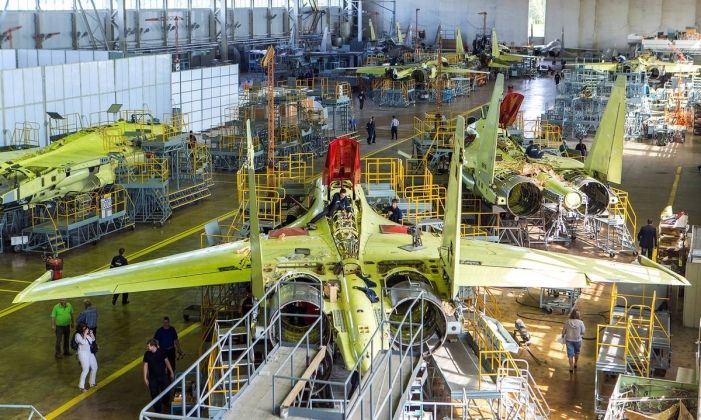
In late July the Su-35 was confirmed to have integrated the Su-57’s R-77M air-to-air missile, which has revolutionised its beyond visual range combat capabilities that previously lagged far behind those of modern Chinese and American fighter types. General Director of the Russian state run United Aircraft Corporation Vadim Badekha had two months prior in May confirmed that work was underway to increase production of the aircraft, reflecting both growing demand from the Aerospace Forces, and a significant surge in export demand. Increased exports of the Su-35 are considered a primary factor allowing Russia to reverse the significant annual decline in defence exports that began in 2022, with 2025 marking a major turning point in the program’s previously underwhelming record on foreign markets. Following deliveries to Algeria from early 2025, both Iran and Ethiopia are expected to begin receiving the fighters in 2026.
