
French Rafale Scrambles to Intercept Large Ukrainian Drone in NATO Airspace
Military Watch Magazine Editorial Staff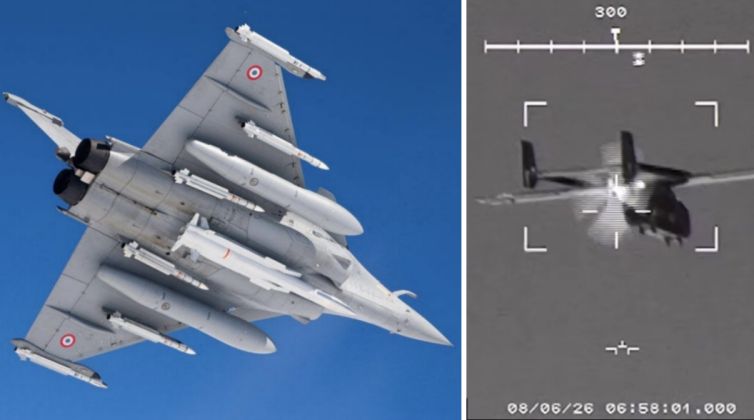
Rafale Fighter and Targeting of Ukrainian Maya Drone
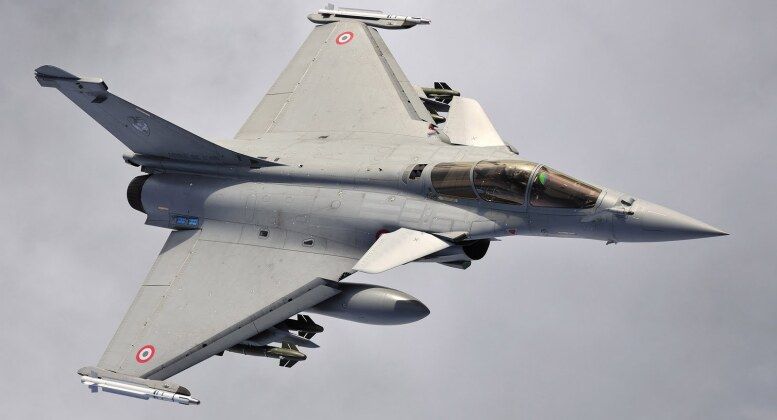
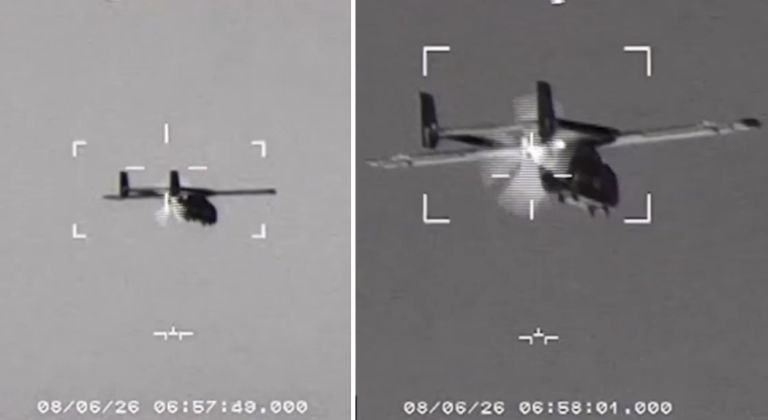
At least one French Air Force Rafale fighter deployed on NATO’s Baltic Air Policing mission intercepted a Ukrainian Maya drone after it entered NATO airspace from the direction of Russia. The incident occurred amid a growing number of cases in which long-range Ukrainian drones targeting Russia have entered NATO airspace. Analysts have assessed that many of these deviations are caused by intensive Russian electronic warfare systems, which jam or spoof GPS signals, causing hostile autonomous drones to drift from their programmed routes. Other sources have speculated that they could be intended to raise tensions between NATO member states and Russia should the aircraft be mistaken as being of Russian origin, thus increasing support for the Ukrainian war effort. French Rafales have been operating under NATO’s Baltic Air Policing mission from Lithuania since March.
The Maya drone is a relatively inexpensive design developed primarily to imitate the radar and infrared signature of larger strike drones. Such decoys are intended to force an adversary to activate radars to reveal defensive positions, and to expend costly surface-to-air missiles. Compared with cruise missiles or large one-way attack drones, decoys typically have little or no explosive payload and are optimized for cost-effective mass production. Drone production in Ukraine has received very large scale support from countries across NATO, particularly in Europe, including supplies of components from factories across the continent, as well as funding and technologies. Russian analysts have increasingly highlighted the Armed Forces’ inability to provide a viable defence against the increasingly frequent launches of large scale Ukrainian drone attacks, which have continued to expand in scope as more major cities are placed within range.
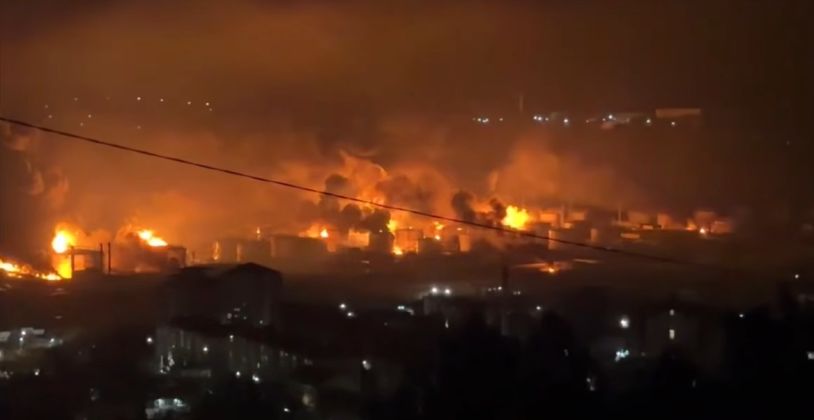
Drone attacks on Russia have benefited from deployment of Western specialists on the ground in Ukraine, as well as from intelligence provided from satellites and other aircraft. Western officials have repeatedly stressed the need for Ukraine to further escalate attacks on Russian critical infrastructure and military bases using its low-cost drone fleet. In July 2025, for example, German Army Major General Christian Freuding advocated for further Ukrainian attacks targeting Russian airfields and defence related production facilities. “Use long-range air warfare assets to strike aircraft and airfields before they are used. Also, target weapons production facilities,” he stated at the time.
The recent interception illustrates how NATO air policing is increasingly expanding beyond intercepting Russian aircraft to include counter-drone missions. The Baltic region has experienced several recent incidents involving drones crossing into allied territory, forcing NATO air forces to adapt procedures originally designed for manned aircraft to deal with much smaller and slower aerial threats. Serious questions have been raised regarding how well optimised fighter aircraft are for drone interceptions, after multiple attempted interceptions by Western aircraft over Eastern Europe, and on a much larger scale over the Middle East. The difficulties and high risks from manoeuvring fighters to achieve gun kills, and the high costs of air-to-air missiles which are often an order of magnitude more expensive than the drones themselves, are primary challenges. French Air Force Rafale fighters deployed to defend the United Arab Emirates from Iranian drone counterattacks from early March have themselves suffered from severe shortages of air-to-air missiles.
