
Four Leading Clients For Boeing’s New F-15EX Super Fighter: From Israel and India to the Persian Gulf
Military Watch Magazine Editorial Staff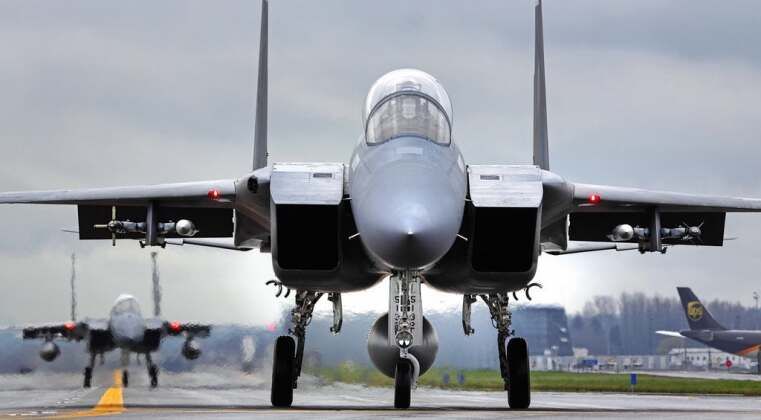
F-15 Eagle Fighter Jets
With the U.S. Air Force planning orders for over 100 F-15EX next generation heavyweight fighters, which are considered the most sophisticated Western twin engine fighters ever developed, it its expected that the design will see export sales not only as an upgrade package for older F-15s, but also as complete 'off the shelf' aircraft. The latest F-15 variant from Boeing is both the fastest and the most heavily armed fighter in the world, and has considerable advantages over its rival from Lockheed Martin the F-35A. These primarily pertain to firepower, range, flight performance, ease of maintenance and combat readiness. Air Combat Command commander General Mike Holmes notably stated regarding the new aircraft: “The F-15EX is ready to fight as soon as it comes off the line” - a stark contrast to the F-35 which is still far from ready for high intensity engagements. This could potentially be a major attraction for countries which require advanced fighters for combat deployments in short order. Although the F-15EX lacks the F-35’s stealth capabilities, the two have comparable levels of situational awareness, electronic warfare capabilities and network centric warfare capabilities with the avionics of both being the most advanced in the Western world. A look at the leading potential clients for the F-15EX is given below:
Israel
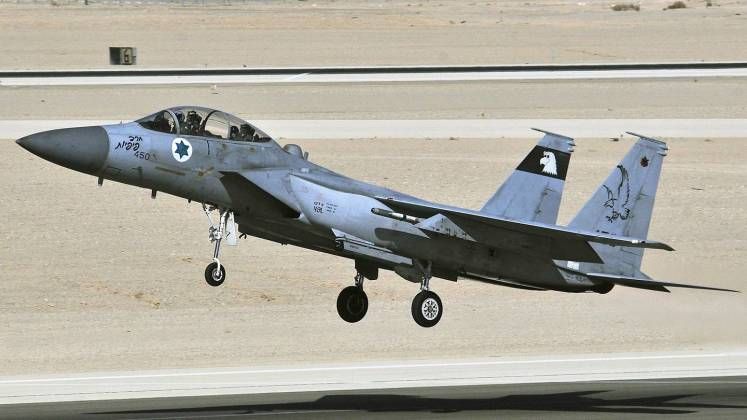
Israel was the first foreign operator of the F-15, and the only one to deploy three separate variants of the jet including ageing F-15A platforms acquired in the 1970s. Boeing’s Vice President and Program Manager for the F-15 Prat Kumar stated that the company was responding to a request for information from Israel for up to 25 new F-15s and upgrades for 25 existing F-15I jets. The F-15I was developed in the 1990s as the first strike variant of the F-15 deigned for export, but is today considered one of the poorer variants in service with inferior capabilities compared to South Korea’s F-15K, Singapore’s F-15SG and the latest export variants marketed to Saudi Arabia and Qatar. Kumar said Boeing expected to see the next steps in the potential requirement over the “next year or so,” with upgrades to the F-15I likely to include new cockpit displays, integration of AESA radars and IRSTs and equipping the jets with new electronic warfare systems.
The F-15I is currently the only Israeli fighter capable of striking targets deep into Iranian territory without relying on aerial refuelling, which is particularly critical given that Iran has invested in a wide range of assets to neutralise refuelling tankers at range. With Iran potentially soon acquiring a range of advanced new fighters, including J-10C ‘4++ generation’ platforms and Russian Su-30SM Flankers, the F-15EX could be pressed into an air superiority role as well as a strike role to counter elite new Iranian air units. It is uncertain whether the Israeli Air Force will consider 25 F-15EX fighters sufficient, or whether it will move to invest in more aircraft to replace older F-15A and F-15C jets acquired in the 1970s and 1980s.
Qatar
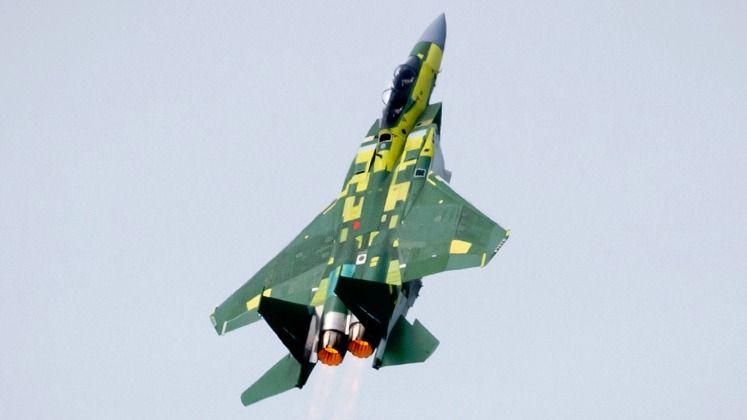
Qatar placed an order for 36 F-15QA strike fighters in June 2017, which represented a major upgrade for the country’s aerial warfare capabilities where the Qatari Air Force previously relied on much lighter and more mediocre French aircraft. The F-15QA is the most advanced F-15 variant in service today, and shares several significant similarities with the F-15EX which is closely based on it. Qatar was reportedly considering a purchase of 36 more F-15QA jets to further expand its fleet, although with the F-15EX entering production it is unlikely that the country would show an interest in acquiring the older variant of the Eagle. The Qatari Air Force could instead look to F-15EX jets to provide its second batch of fighters, which would provide it with the most capable fully operational combat jets of any Middle Eastern state.
India
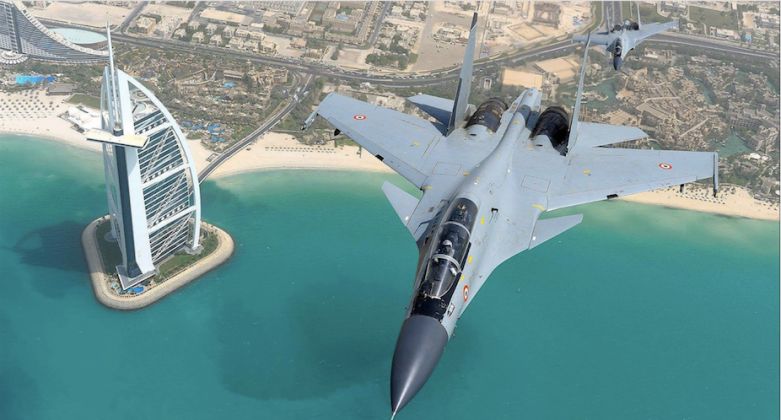
Boeing previously sought to market the F-15EX to India by joining the MMRCA tender, although the Eagle’s chances of being chosen, given the mismatch of its heavy weight and high operational cost relative to what the Indian Air Force was asking for, were low. Boeing Vice President Pratyush Kumar previously stated that the firm was in the process of requesting a marketing license from the U.S Government to begin discussions with India on a potential sale, which comes at a time when defence ties between the two countries are growing. India notably has never operated American fighter aircraft in the past, and the difficulties of integrating them and their unique maintenance infrastructure and munition types with its existing French, indigenous, British and Russian fleets could make a deal unattractive. India already operates over 250 heavyweight fighters, the Su-30MKI, which Russia is offering to upgrade to a ‘4+ generation’ standard for a small fraction of the cost of F-15EX purchases, and the country is also considering acquiring Su-57 next generation fighters which are both more capable and considerably cheaper than the F-15. The perceived need to increase interoperability with the U.S., however, could prompt India’s Defence Ministry to purchase F-15s regardless of these issues.
United Arab Emirates
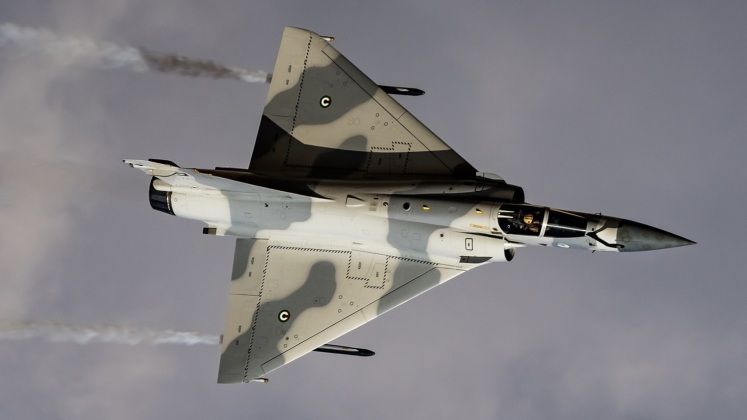
The United Arab Emirates has not been highlighted as a potential client for the F-15EX in the past, but power trends in the Persian Gulf region could lead to its emergence as a leading potential client. The Emirates stands out as a country with a major Air Force which lacks any class of heavy or even medium weight classes of aircraft - leaving it qualitatively outmatched by Saudi Arabian and Qatari F-15s, and even to some extent by Omani Eurofighters. The significant possibility that Iran will acquire heavyweight Russian jets after the expiry of the UN arms embargo on the country in October 2020, possibly including Su-30SM and eventually Su-57 platforms, is likely to be further cause for concern in Abu Dhabi. The UAE has shown interest in Russian heavyweight fighters in the past, including the Su-27 in the 1990s which it was dissuaded from purchasing due to Western pressure, and more recently the Su-57 which Russia has indicated it could to allow for localised production of. The UAE is also currently pursuing a joint fifth generation medium weight fighter program with Russia, which will reportedly use many technologies from the MiG-35 and Su-57 programs.
As the UAE’s Mirage 2000 jets grow increasingly obsolete, the country may well face redoubled Western pressure to cancel plans to acquire Russian fighters. This being the case, the F-15EX and F-35A are the leading candidates to modernise the country's fleet, and with the U.S. potentially denying Abu Dhabi the right to purchase the F-35 this could make the F-15 its best choice among Western aircraft.
