
Footage Confirms First Integration of Hypersonic Ballistic Missiles Onto China’s Primary Destroyer Class
Military Watch Magazine Editorial Staff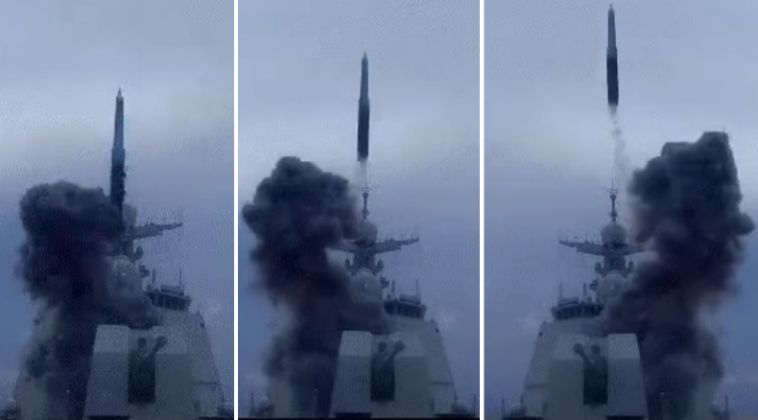
YJ-20 Launch from Type 052D Destroyer - First Footage
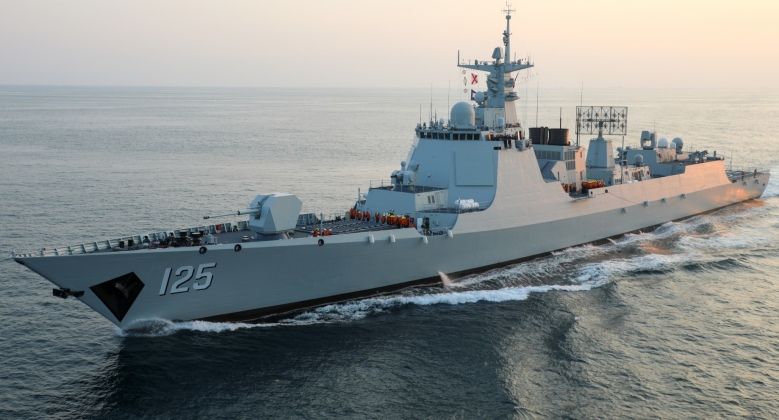
Newly released footage has for the first time confirmed the integration of the YJ-20 hypersonic anti-ship ballistic missile onto the Chinese People’s Liberation Army Navy’s Type 052D class destroyers, representing the most significant upgrade to their combat capabilities since the first ship of the class entered service in 2014. The footage appeared in the documentary ‘Winning the Battle,’ produced to commemorate the 99th anniversary of the founding of the People’s Liberation Army, and showed a Type 052D conducting a launch of the missile from its vertical launch system. The Type 052D is by far the most widely produced post-Cold War destroyer type in the world with at least 35 currently in service, while several have been laid down.
The development of the YJ-20 has in many respects had the greatest impact for the Chinese People’s Liberation Army’s overall anti-shipping capabilities of all its new missile types, including ground-based and air-launched designs. The missile’s most outstanding feature is that its highly compact design can be accommodated in the standard vertical launch cells of modern destroyers and attack submarines, thus revolutionising the anti-shipping capabilities of Chinese warships. Cruising at speeds of over Mach 6, and with a Mach 10 terminal speed, the YJ-20 has a 1,500-2,000 kilometre range and is considered the most capable ship-launched anti-ship missile type in the world.

While only the larger Type 055 class destroyer had been shown launching the YJ-20 in the past, the common vertical launch system on both destroyer classes has meant that the Type 052D was long expected to also integrate the new missiles. Both destroyers integrate the exact same missile types, including HHQ-9 long range surface-to-air missiles, YJ-100 land attack cruise missiles, and YJ-18 anti-ship cruise missiles as their primary armaments. The YJ-20 is expected to displace the YJ-18 as the primary anti-ship weapon of Chinese destroyers, and may potentially also displace the YJ-100 in land attack roles. The older missile types are expected to remain in service to for their complimentary capabilities.
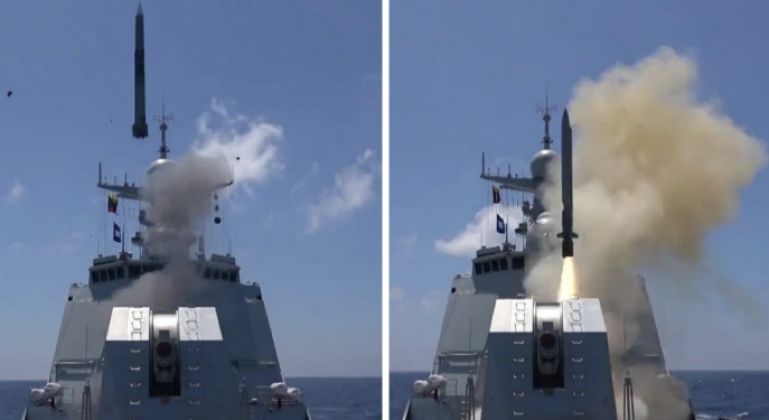
Unlike smaller anti-ship cruise missiles, the YJ-20’s substantial size and weight necessitate the use of a cold launch system. Similar to the launch method employed by the HQ-9 long-range surface-to-air missile, compressed propellant gases eject the missile from its vertical launch cell before the main motor ignites once it has reached a safe distance above the ship. This approach reduces thermal stress on the launch system and allows the integration of significantly larger missiles into universal vertical launch cells. The missile’s ability to reach speeds exceeding Mach 10, when combined with its manoeuvrable ballistic trajectory is expected to provide an advanced penetrative capability against hostile air defences.
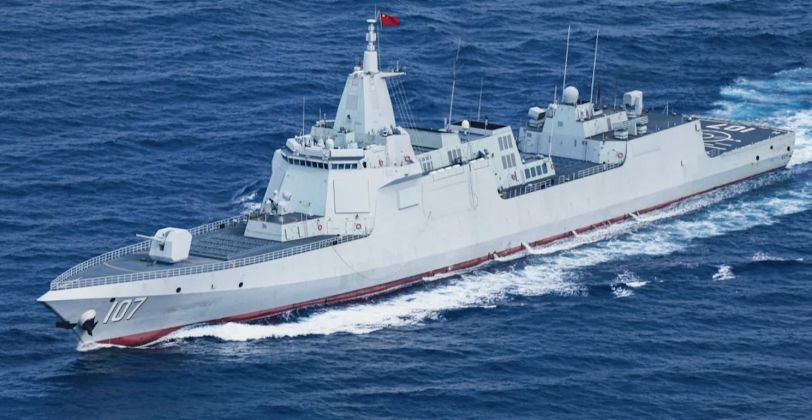
The confirmation that the Type 052D can deploy the YJ-20 considerably enhances the offensive potential of China’s surface fleet. Although the larger Type 055 class destroyer has frequently been regarded as the primary platform for long-range anti-ship strike missions, the Type 052D forms the backbone of the People’s Liberation Army Navy’s destroyer force. Equipping this far more numerous class with hypersonic anti-ship ballistic missiles substantially increases the number of platforms capable of conducting long-range maritime strike operations, and will have far greater implications for Chinese war fighting capabilities than the missile’s integration onto the much more limited number of Type 055 class destroyers. The 052D class destroyers have been produced on a much larger scale than any other destroyer class in the world, and for close to 15 years, including in multiple sub-variants with advanced sensor capabilities.
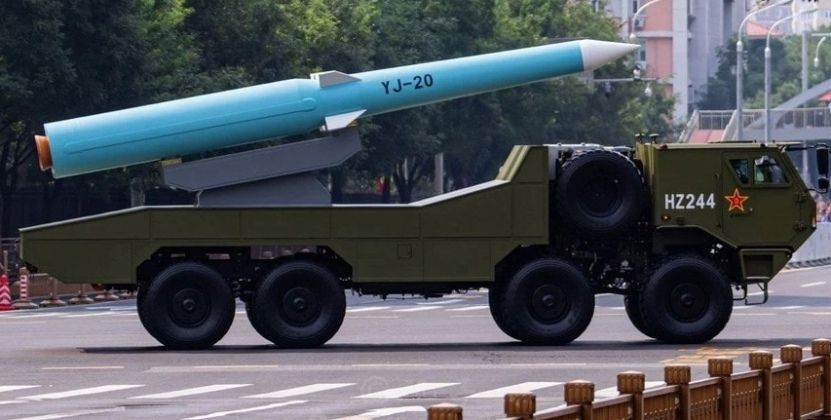
In December 2025 the Pentagon provided new insight into how Chinese forces were expected to utilise their missile, anti-space and cyber assets to engage and destroy the most advanced U.S. Navy carrier groups, with the capabilities of Chinese anti-ship ballistic missile assets gaining significant attention. The leaked Overmatch Brief concluded based on simulations of multiple engagement scenarios that Chinese forces could, under a wide range of scenarios, successfully sink the Navy’s newest Gerald Ford class supercarriers and their strike groups. In doing so, it highlighted both the central role of both lower value missiles capable of exhausting strike groups’ limited missile defence arsenals, and of hypersonic missiles like the YJ-20 capable of evading interception attempts entirely. The integration of the new missile type across the destroyer and attack submarine fleets will be a game changer for the anti-ship capabilities of China’s naval forces.
