
China’s Top Five ‘Carrier Killer’ Weapons: Ballistic Missiles Designed to Destroy U.S. Navy Strike Groups
Military Watch Magazine Editorial Staff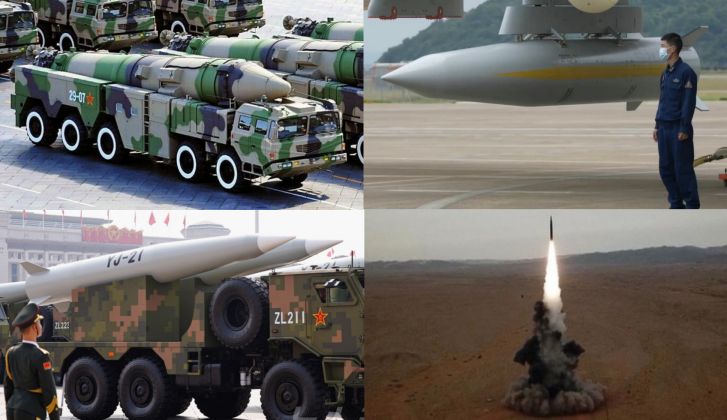
Chinese DF-21D, Air Launched YJ-21, DF-26 and Ship Launched YJ-21 Anti-Ship Ballistic Missiles
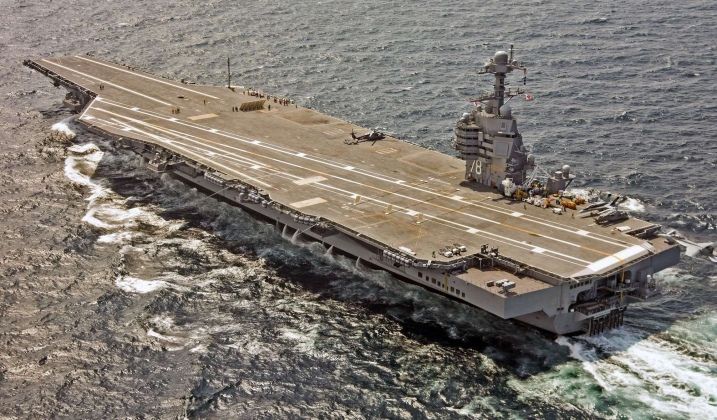
Following the Pentagon’s provision of new insight into how the Chinese People’s Liberation Army is expected to utilise its missile, anti-space and cyber assets to engage and destroy the most advanced U.S. Navy carrier groups, the capabilities of China’s most advanced anti-ship ballistic missile assets have gained growing attention from analysts. The leaked Overmatch Brief concluded based on simulations of multiple engagement scenarios that Chinese forces could, under a wide range of scenarios, successfully sink the Navy’s newest Gerald Ford class supercarriers and their strike groups. In doing so, it highlighted both the central role of both lower value missiles capable of exhausting strike groups’ limited missile defence arsenals, and of hypersonic missiles capable of evading interception attempts entirely. An assessment of five of the most dangerous anti-ship missile types fielded by the People’s Liberation Army provides invaluable insight into the nature of the challenges faced by American and allied naval forces operating in the Pacific.
DF-27 Upper-Intermediate Range Hypersonic Ballistic Missile
The DF-27 is the longest ranged anti-ship missile type known to have been developed anywhere in the world, with its absence from the People’s Liberation Army’s victory parade on September 3 indicating that it has not yet been brought into service. The missile is expected to have a range of between 5000 and 8000 kilometres, and was reportedly designed to engage enemy warships using hypersonic glide vehicles. China’s global lead in the field of hypersonic glide vehicle development makes it highly likely that the DF-27 will be a particularly potent weapon, with the capabilities which Chinese intercontinental range glide vehicles have demonstrated during testing having caused particularly significant concerns in the Western world.

Commenting on one such glide vehicle test, Vice Chairman of the U.S. Joint Chiefs of Staff General John Hyten in November 2021 observed: “They launched a long-range missile. It went around the world, dropped off a hypersonic glide vehicle that glided all the way back to China, that impacted a target in China.” He added that the vehicle struck accurately, calling the pace at which China's military was developing new capabilities "stunning," and warning that the country could gain the capability to launch a surprise nuclear attack on the United States. A primary shortcoming of the DF-27 remains the difficulties that the People’s Liberation Army may have in collecting targeting data far out in the mid-Pacific or Eastern-Pacific. The development of increasingly advanced surveillance satellites using artificial intelligence, and of medium and intercontinental range unmanned stealth aircraft, however, raises the possibility that a reconnaissance strike complex can be established over 5000 kilometres from Chinese shores.
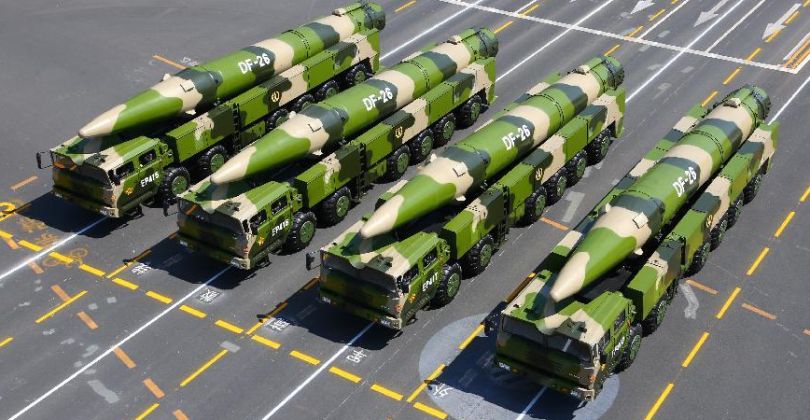
DF-26 Intermediate Range Ballistic Missile
First entering service in 2016, the DF-26 caused particularly significant concerns in the Western world due to its wide ranging implications for the balance of power in East Asia, with its 4500 kilometre range and carriage of a large 1500-1800 kilogram warhead providing a potent strike capability against targets as far as Guam and slightly beyond. The missiles can deploy both conventional and nuclear warheads, and it was revealed in 2018 that they are capable of targeting moving warships at sea. The DF-26 has continued to be modernised during its time in service, with the new DF-26D variant having first been unveiled in September 2025, although very little is known regarding its capabilities. Carriage of more warheads, and possibly of hypersonic glide vehicles, has been speculated. Much as the development of the DF-26 paved the way for the development of the much longer ranged DF-27, so did an annual Defence Department update to the U.S. Congress on Chinese defence and security developments in 2023 highlight the possibility of an intercontinental range anti-ship missile being developed. The DF-27 program could similarly be a major stepping stone to achieving this capability.
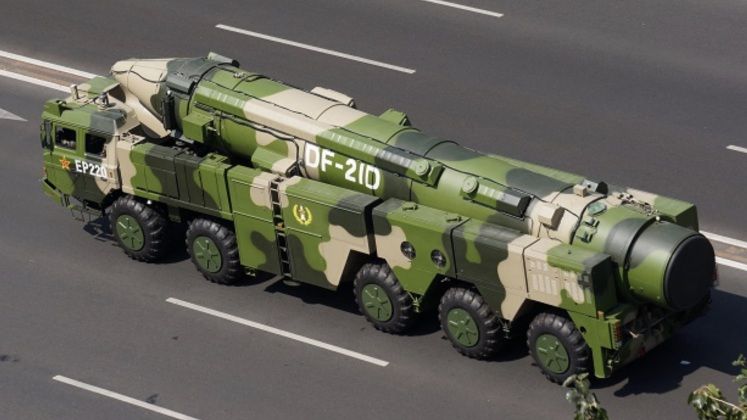
DF-21D Medium Range Ballistic Missile
The DF-21D was first reported to have achieved an initial operating capability in 2010, and was the world’s first known weapons system capable of targeting a moving aircraft carrier strike group from land-based mobile launchers at ranges far exceeding 1000 kilometres. The missile uses manoeuvrable reentry vehicles with terminal guidance systems to strike warships at hypersonic speeds with high precision, with assessments by the United States Naval Institute having concluded that one missile could destroy a supercarrier, and that the U.S. Navy lacks any means of reliably intercepting it. The DF-21D pioneered many of the capabilities that were later expanded on with the DF-26 and DF-27, and marked a major milestone in the development of Chinese anti-ship ballistic missile capabilities.
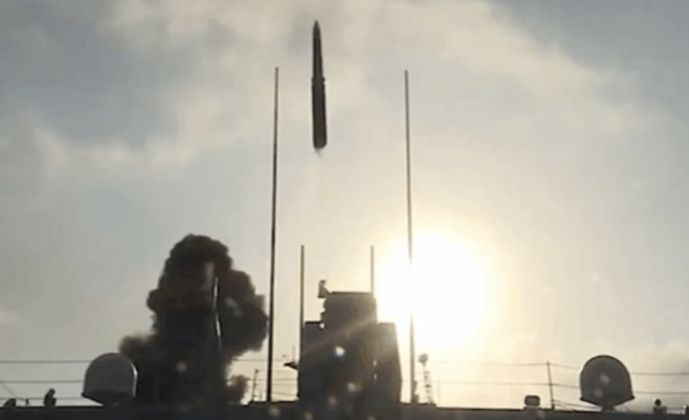
YJ-20 Ship-Launched Anti-Ship Ballistic Missile
The development of the YJ-20 hypersonic ballistic missile has in many respects had the greatest impact for the People’s Liberation Army’s overall anti-shipping capabilities of all its new missile types, with its highly compact design able to be accommodated in the vertical launch cells of both Type 052D and Type 055 class destroyers, and in the cells of both nuclear and diesel-electric powered attack submarines. The YJ-20’s entry into service has revolutionised the anti-shipping capabilities of Chinese warships, with the ability of destroyers to carry several dozen of the missiles allowing a single destroyer to potentially sink entire fleets.
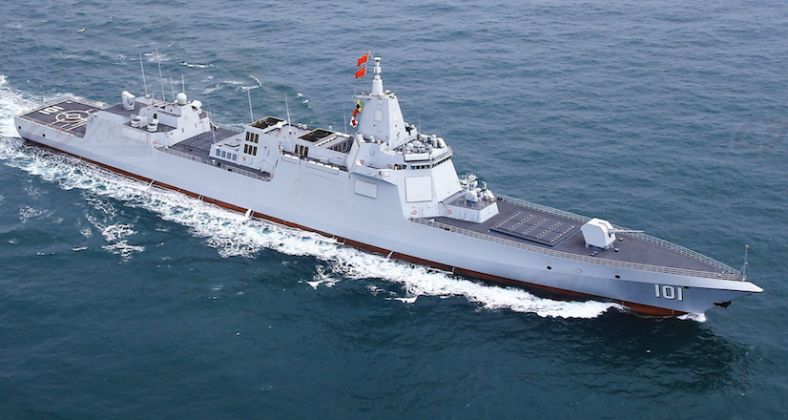
Cruising at speeds of over Mach 6, and with a Mach 10 terminal speed, the YJ-20 has a 1,500 kilometre range and is considered the most capable ship-launched anti-ship missile type in the world. It surpasses the capabilities of the new Russian Zircon which has a range of just 1000 kilometres and a Mach 9 speed. The ability to evade enemy air defences and cause tremendous damage with the sheer kinetic energy of its impact makes the YJ-20 a particularly significant threat to U.S. Navy carrier groups, particularly when considering the shortcomings of the American SM-6 as an anti-ship weapon by comparison.
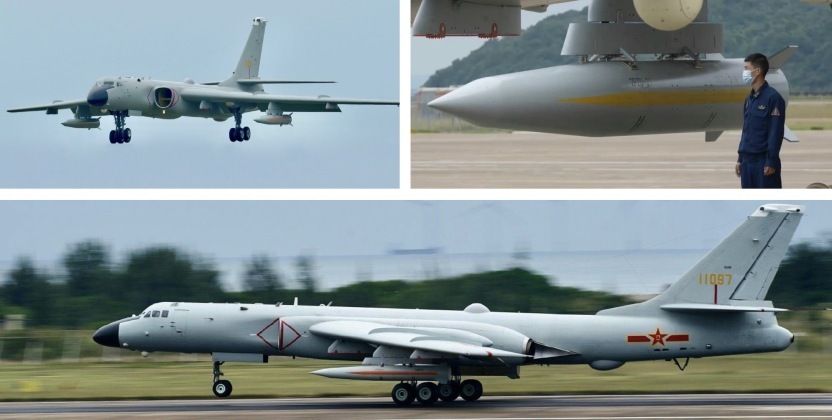
YJ-21 Air-Launched Anti-Ship Ballistic Missile
Developed to equip the H-6K bomber, an air launched counterpart to the YJ-20, the YJ-21, was first unveiled at the 2018 Zhuhai Airshow, and is estimated to have an engagement range of approximately 2000 kilometres and Mach 8-10 speed. With a significantly lighter weight than the larger CH-AS-X-13 strategic ballistic missile deployed by H-6N bombers, up to four YJ-21 missiles can reportedly be carried by a single H-6K, allowing squadrons of bombers to overwhelm adversaries’ defences. The long range of these aircraft, combined with the growing availability of aerial refuelling support from YY-20 tankers, allows then to provide support to naval contingents far out to sea, and potentially be deployed for ship-hunting missions independently. The YJ-21 compares highly favourably to the AGM-158C Long Range Anti-Ship Missile LRASM developed to equip U.S. Air Force B-1B bombers, which is restricted to a range of around 900 kilometres and to a subsonic speed, and carries a small 450 kilogram warhead.
