
First Footage Shows Iranian F-14 Tomcat Long Range Fighters on Combat Mission Against U.S. Forces
Military Watch Magazine Editorial Staff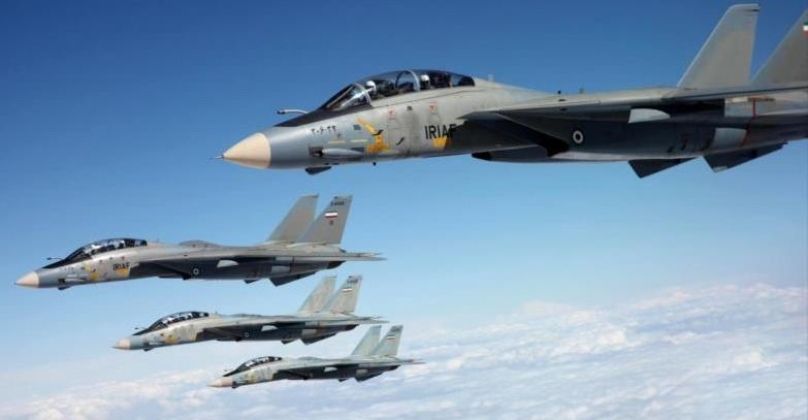
Iranian Air Force F-14 Fighters
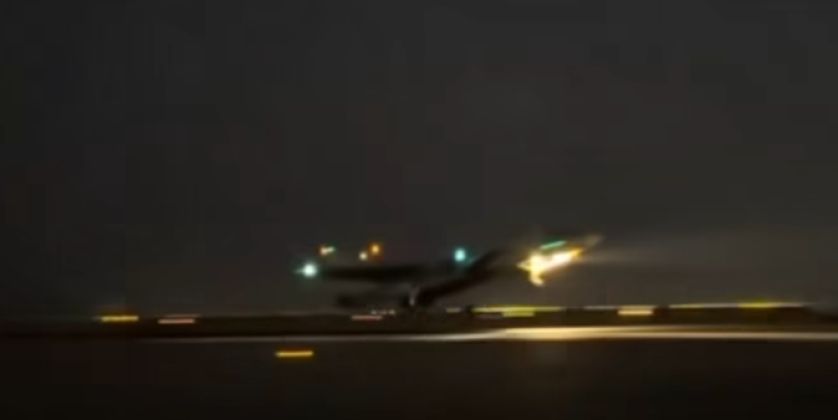
Footage released from Iran on June 10 for the first time showed F-14 Tomcat long range fighter aircraft landing after completing a mission, providing the first indication that the aircraft are actively involved the ongoing war effort against the Untied States and its Western and regional strategic partners. While previously Iran’s Vietnam War era F-4 and F-5 fighters, and newer Soviet MiG-29A and Russian Yak-130 fighters, were seen launching multiple sorties against hostile targets, the footage provides the first confirmation of ongoing F-14 operations. Iran is the sole operator of the fighter type, after having procured 79 of the aircraft during the 1970s, of which two to three dozen are estimated to currently still be in service. The F-14 was the first fourth generation fighter type ever exported, and while old, Iran’s demonstrated ability to use even older less capable fighter types for highly demanding missions, including penetration bombing raids, has raised the possibility that the Tomcats will play important roles in the war effort.
Although the F-14 is largely considered obsolete for air-to-air engagements with modern fighter types, the aircraft was the first in the world designed with an advanced anti-missile capability, and is heavily optimised for long range interception of cruise missiles. The aircraft was designed for such roles to defend U.S. Navy carrier groups during the Cold War. Thus while the age of the fighter’s AN/AWG-9 radar leaves it vulnerable to jamming in engagements with modern aircraft, it is still highly capable of guiding air-to-air missiles to shoot down cruise missiles, such as the Tomahawk and JASSM missiles that the U.S. Navy and Air Force respectively have fired in their thousands. At a time when U.S. forces are suffering a severe shortage of cruise missiles and other beyond visual range weaponry, the ability to blunt major strikes using fighters may be highly valued by the Iranian Air Force, as it places further pressure on adversaries’ stockpiles.
The F-14’s radar is by far the largest integrated onto a Western fighter type, allowing it to track and engage multiple cruise missiles simultaneously so long as they are flying in proximity to one another. Its primary armament the AIM-54 air-to-air missile, although prone to jamming if used to target modern aircraft, could potentially provide invaluable for shooting down cruise missiles. While U.S. forces have collected considerable electronic intelligence on Iranian ground-based air defences, limiting Iranian forces’ ability to use radar-guided weapons to intercept hostile missiles or fighters due to the high risk of being targeted, the F-14’s functioning as an airborne radar platform could allow it to provide a much more viable missile defensive capability. The AIM-54 has been succeeded in service by a more advanced indigenous missile with a very similar but more sophisticated design, the Fakour 90, although it is unknown what numbers these have been built in.
