
F-22 and GBU-57 in Tel Aviv? America Could Soon Sell Israel the World’s Stealthiest Fighter and the Biggest Bunker Buster Bomb
Military Watch Magazine Editorial Staff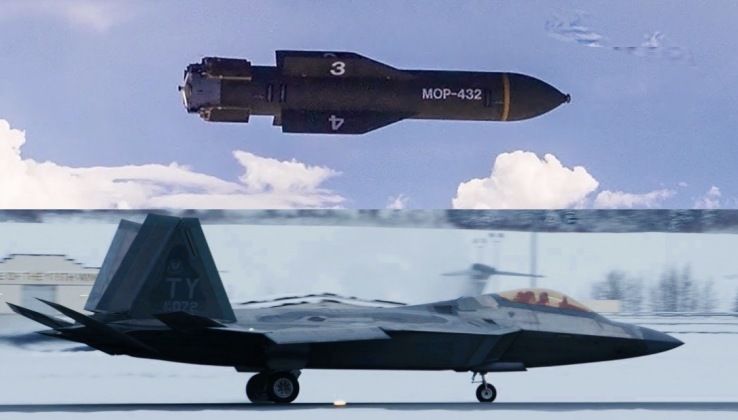
GBU-57 Bomb and F-22 Fighter
Israel has long been limited in its offensive military capabilities by the kinds of arms it is able to acquire from abroad, with the country’s close defence partnership with Western states and reliance on American military aid meaning it is unable to purchase arms from non-Western sources such as China or Russia, and with the U.S. itself having been unwilling to provide it with a number of high end weapons systems. The Bush administration’s blocking of the sale of F-22 heavyweight stealth fighters was a case in point, as was the Obama administration’s refusal to supply V-22 Osprey tiltrotor helicopters, with both decisions denying Israel key capabilities which it sought to gain advantages over regional adversaries such as Iran. The Donald Trump administration appears poised, however, to provide Israel with two highly sensitive weapons systems which have never been approved for export, and which would increase the Israeli Air Force’s offensive options profoundly against Iran in particular.
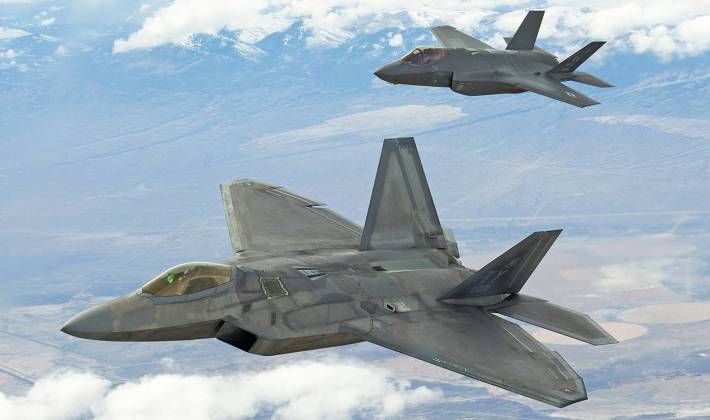
Leading Israeli media outlet Haaretz reported that Tel Aviv requested permission to purchase F-22 Raptor fighter jets, a higher end and more expensive analogue to the F-35A Israel already fields, which benefits from a stealthier airframe, twice the internal missile payload, and an overwhelmingly superior flight performance with a much longer range, higher altitude ceiling and speed and greater manoeuvrability. Moreover, while the F-35 is still far from fully combat ready, the F-22 has been in service for almost 15 years and has considerably fewer performance issues. A number of Arab media outlets have reported that the sale of the F-22 has already been approved, with the jets presumably set to be sold second hand as orders to terminate production were given in 2009. Unlike the F-35, the F-22 has the range needed to operate over all of Iran from airbases in Israel without the need for aerial refuelling, which is particularly critical given Iran’s deployment of advanced long ranged anti aircraft weapons which threaten to leave aerial refuelling tankers highly vulnerable. With the U.S. having already test flown a prototype of a sixth generation fighter, which will likely begin to replace the Raptor around 2030, the country may be more willing to part with a portion of its F-22 fleet.
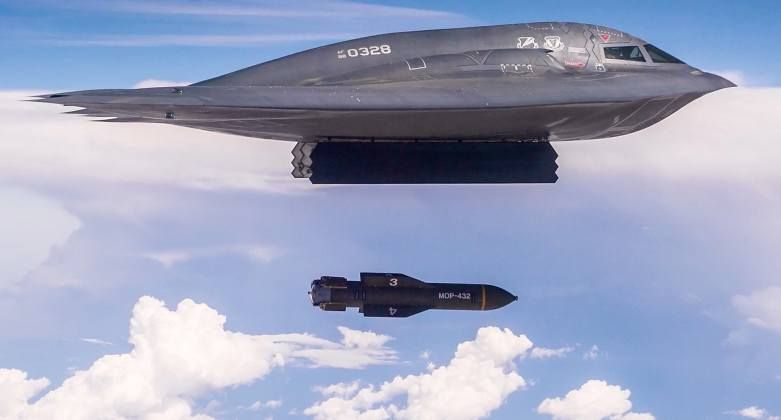
Alongside the F-22, two members of the U.S. House of Representatives are preparing to introduce legislation to facilitate the supply of GBU-57 Massive Ordnance Penetrator (MOP) bombs to Israel - the most powerful non-nuclear penetrative weapon in the world. These 30,000 ton bombs were designed to reach targets deep underground, and were reportedly developed with attacks on North Korea in mind due tot the country’s extremely deep tunnel fortifications which protect underground factories, arms depots and even bases for tank and fighter units. With Iran’s own nuclear facilities having been hardened by North Korean experts, the GBU-57 is an essential weapon should Israel seek to damage these targets without using nuclear weapons. While the nature of Korean hardening techniques means a single penetrative bomb may be insufficient, its precision guidance capabilities allow multiple bombs to be dropped on the same target to reach deeper underground. Although the U.S. deploys the GBU-57 from B-2 stealth bombers, Israel notably lacks a sufficiently capable delivery aircraft. While its F-15I strike fighters can potentially carry the bombs over the required distance if refuelled in the air, they notably lack stealth capabilities and will be unmaneouvrable when outfitted in such a way. With the sale of B-2 bombers being highly unlikely, it remains to be seen how Israel could use the bombs if the legislation to sell them does indeed pass.
