
European F-18, F-16 and Gripen Fighters All Scramble to Escort Russian Tu-160 Strategic Bombers Over Baltics
Military Watch Magazine Editorial Staff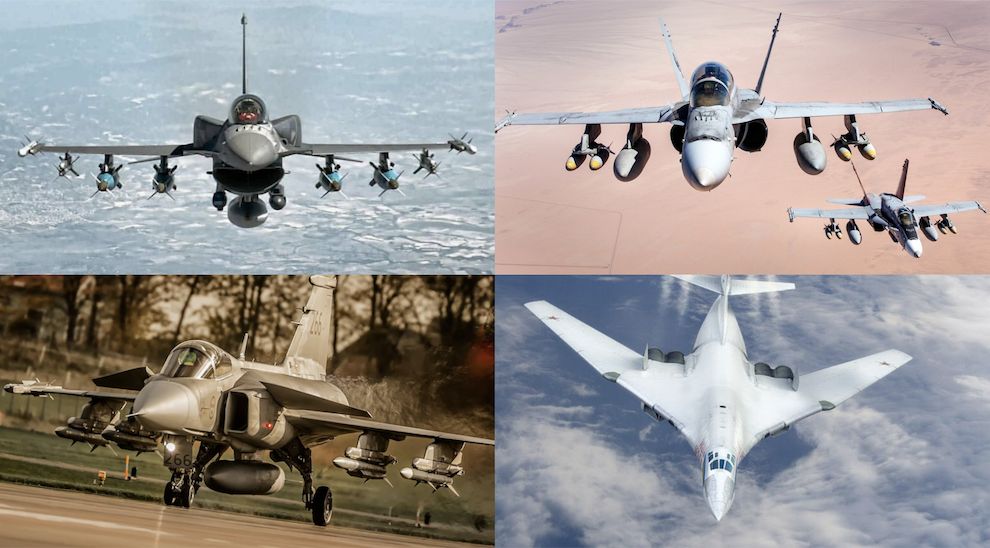
F-16, F-18 and Gripen Fighters and Tu-160 Heavy Bomber
Two Russian Tu-160 Blackjack strategic bombers performed overflights of neutral waters in the Baltic Sea on July 16th, a region the country’s combat jets and other military aircraft have frequently conducted manoeuvres. According to a statement from the Russian Defence Ministry Finland, Denmark and Sweden all scrambled fighter jets to escort the bombers, with Moscow’s relations with the latter two in particular increasingly strained in recent years. The respective aircraft deployed by the European countries were the F-18C Hornet, F-16C Fighting Falcon and the Gripen fighter jets - all light-medium weight fourth generation platforms using U.S. engine and missile technologies. These included the F404 used to power the Gripen and Hornet, and the more powerful F100 used by the F-16. All aircraft rely exclusively on the Raytheon AIM-120 for long range air to air engagements - Mach 4 missiles ideally suited to intercepting heavy bombers such as the Tu-160. All three aircraft are set to be phased out of service in the coming years in favour of next generation replacements - the ‘4+ generation’ F-18E Super Hornet and Gripen-E for Finland and Sweden and the fifth generation F-35A Lighting II for Denmark. New tensions between the Western Bloc and Russia have increasingly seen northern European parties take a stronger stance in support of the former, with Sweden in particular has seen growing calls for an expansion of the military and the defence budget under the pretext of countering Russia.
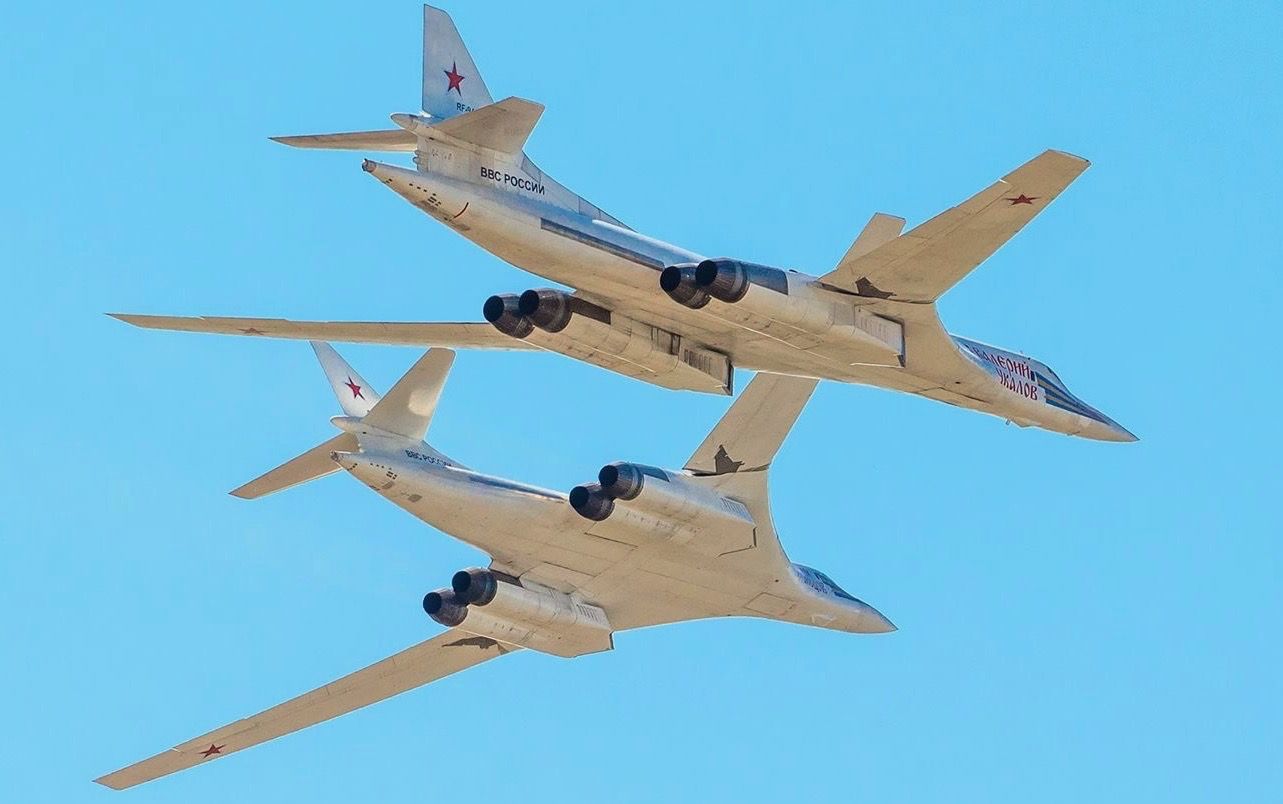
The Tu-160 is unrivalled in many of its capabilities and is widely considered the most capable strategic bomber in the world - although this is likely to change in the 2020s with the United States and China deploying next generation B-21 and H-20 bombers respectively. The Russian Defence Ministry announced in 2015 that production lines for the Tu-160 would be reopened, and a new more advanced variant of the bomber, the Tu-160M, begun flight testing in February 2018 with several dozen planned for entry into service. The bombers benefit from a heavy payload, access to state of the art sensors and a high speed of over Mach 2 among other attributes. The Tu-160 provides Russia with an effective means of projecting power overseas, and two bombers were temporarily deployed to Venezuela in December 2018 in a sign of solidarity with Caracas amid escalating tensions between the South American state and the Western Bloc. Russia's Tu-160 fleet were equipped with Kh-101 and Kh-102 cruise missiles in the early 2010s, which provides an engagement range against ground targets estimated at up to 5,500km - although more modest estimates of just 3000km have been made by some sources. This allows the bombers to strike targets with precision for extreme distances well beyond an enemy’s retaliation range - a capability demonstrated in the Syrian theatre against Islamist insurgents. The Kh-101 and Kh-102 have an effectively identical performance and are distinguished only by their payload - with the Kh-102 variant deploying tactical nuclear warheads while the Kh-101 deploys conventional warheads.
