
Diversion of Forces to Fight Iran Threatens to Diminish American Influence in South Korea
Military Watch Magazine Editorial Staff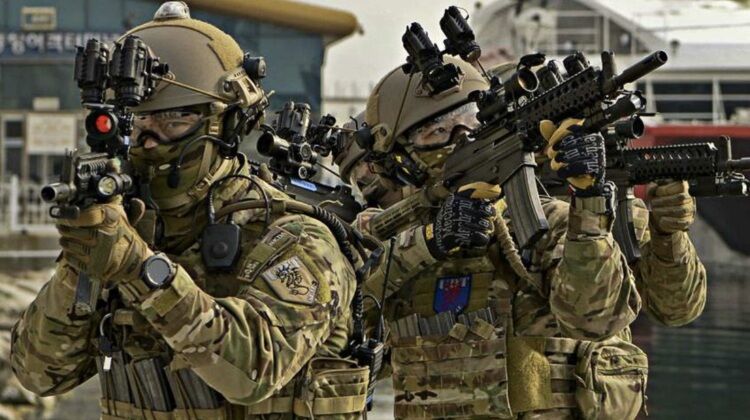
South Korean Navy UDT/SEAL Team
The U.S.-led war effort against Iran is reportedly placing increasing pressure on U.S. Armed Forces stocks of air-defence interceptors and precision-guided weapons, raising concerns that Washington’s ability to respond to a major contingency in East Asia could be seriously weakened. According to a report by The New York Times, the conflict has resulted in severe munitions shortages and forced the United States to divert hundreds of advanced missile-defence systems from South Korea and elsewhere in East Asia to protect American forces and bases in the Middle East. This has raised serious questions particularly in South Korea regarding the continued viability of relying on the United States for military support, for which Seoul has made extensive geopolitical concessions over decades including extensively subsidising the U.S. presence.
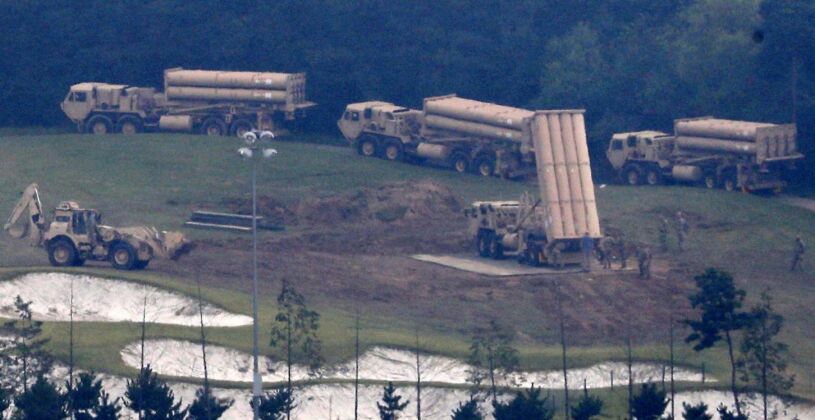
The U.S. Army is estimated to have expended more than half of its Patriot interceptors and the large majority of its THAAD interceptors during hostilities with Iran, which it initiated on February 28 after a several month military buildup. The United States has also used significant numbers of Tomahawk cruise missiles and other long-range weapons, after stockpiles had been built up over several years to prepare for a potential conflict with China. With the Korean Peninsula already exposed to one of the world’s largest concentrations of ballistic missiles, as North Korea possesses a large and diverse arsenal, including short-, medium- and long-range systems, the withdrawal of U.S. Army Patriot and THAAD systems without consulting the local government caused particular controversy.
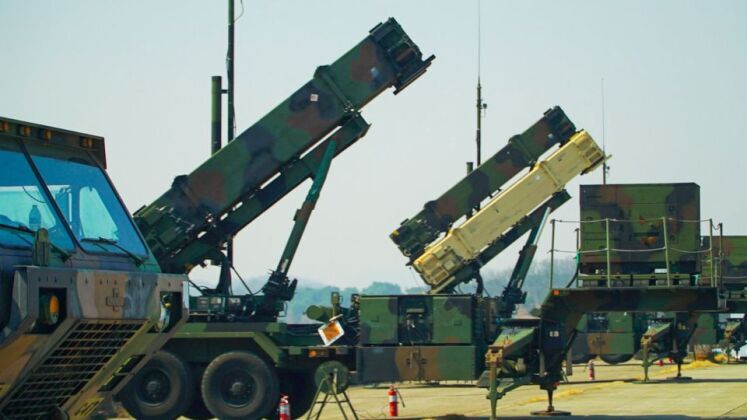
While China’s military modernisation was already shifting the balance of power in East Asia rapidly against the U.S. and its strategic partners, the withdrawal of U.S. assets has further compounded this. Whereas Japan remains much more closely aligned with the Western Bloc, South Korea has moved to improve ties with China, and may begin to shift towards a more neutral geopolitical position, in line with its close trade ties with Beijing. While Commander of U.S. Forces Korea General Xavier Brunson in May stated that the Korean Peninsula represented a “dagger in the heart of Asia” from China’s perspective, echoing decades of rhetoric regarding the importance of maintaining forces in South Korea, the assault on Iran has served to strengthen the emerging consensus in Seoul regarding the need to rebalance away from reliance on the United States.
