
Commander of U.S. Forces in Korea Hails Forward Bases as ’Dagger’ Pointed at China: Will America Drag Seoul Into Conflict?
Military Watch Magazine Editorial Staff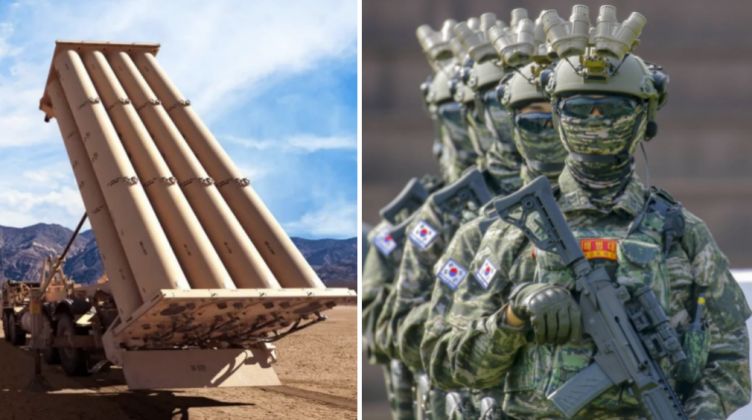
Launcher From THAAD System and South Korean Personnel
Commander of U.S. Forces Korea General Xavier Brunson has stated that the Korean Peninsula represents a “dagger in the heart of Asia” from China’s perspective, resulting in diplomatic complaints from Beijing. His comments point to the Korean Peninsula’s position since the late 1940s as a stepping stone for Western power projection into East Asia, which has caused growing controversy in recent years. “When they look out from the east coast of China, what they see is there’s Korea, the dagger in the heart of Asia,” Xavier observed, elaborating that Japan served as “that shield that’s sort of a backstop” in the South China Sea, and the Philippines lay to China’s southeast to complete the regional picture. This strategic framing was delivered through a formal academic military channel, the U.S. Army War College podcast, and provides official re-affirmament to longstanding assessments by analysts that U.S. forces in these countries are intended for the containment of China, the leading challenger to the current Western dominated regional order.
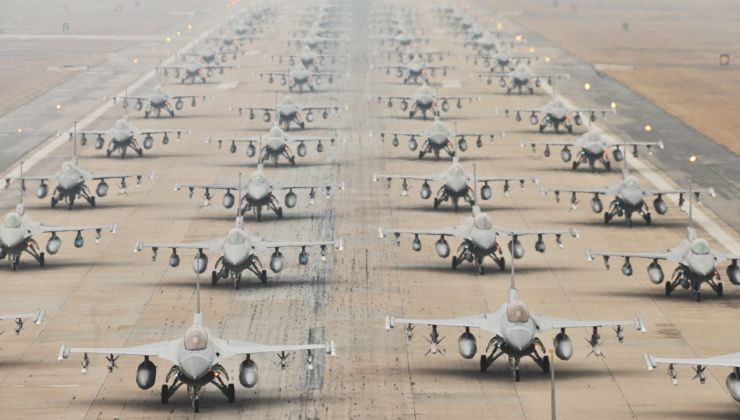
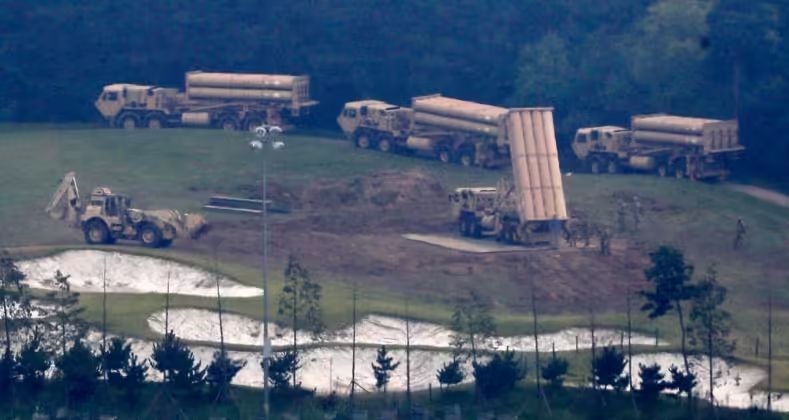
The U.S. military presence in South Korea has caused growing controversy domestically, particularly since the deployment of U.S. Army THAAD long range anti-ballistic missile systems in 2016 fuelled a rise in tensions with China, marking a major negative turning point in ties between the two neighbours. Controversies recently worsened after these same systems were withdrawn from the country by the U.S. Armed Forces without consultations with the local government, as deployments to the Middle East to support an assault on Iran were prioritised. The U.S. Army was also confirmed to have withdrawn MIM-104 Patriot missile systems, and a range of unspecified other weaponry, and is reported to have withdrawn surface-to-air missiles from the Patriot systems steadily over the preceeding months.
South Korean President Lee Jae-myung in March issued a warning against overreliance on the United States to support the country’s security, observing on March 9: “While we oppose the transfer of some air defence systems by U..S forces stationed in South Korea, the harsh reality is that we cannot fully assert our position.” He emphasised that the advanced capabilities of the Republic of Korea Armed Forces had ensured that dependance on the U.S. was far lower than it had been in the past. “Objectively speaking, South Korea's military spending is very high compared to other countries. Although North Korea's nuclear weapons are a special factor, it is clear that our conventional combat capabilities and military strength are overwhelming.” “National defence is actually the responsibility of every country. If we rely on other countries, that dependence will collapse,” the president added. This has raised speculation that Seoul could gradually seek to decouple from Washington to enjoy better ties with its neighbour and largest trading partner. There have been concerns in the Western world that South Korean efforts led by President Lee to regain wartime operational control over its forces from the United States will represent on the first step in this process.
