
COVID Era Decline? Seven American Fighter Jets Have Crashed in Just Two Months
Military Watch Magazine Editorial Staff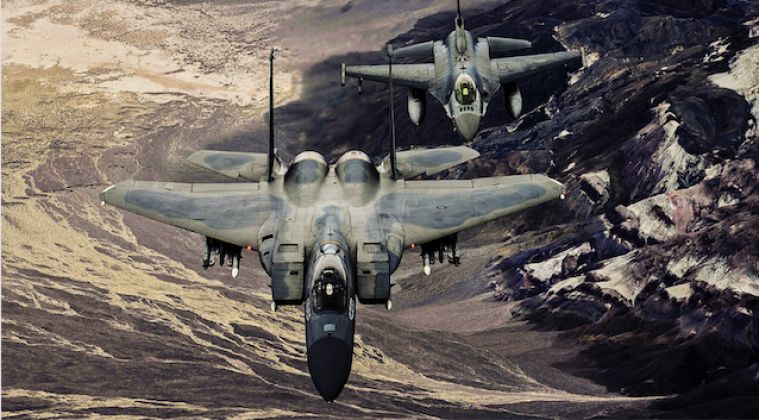
U.S. Air Force F-15 (front) and F-16 Fourth Generation Fighters
On July 13th an F-16C Fighting Falcon from the U.S. Air Force’s 49th Air Wing crashed at Holloman Air Force Base, with the pilot ejecting successfully and suffering minor injuries. This notably marked the seventh fighter crash in the U.S. Military in just sixty days, with the cause of the rising rate of accidents widely speculated but having yet to be confirmed. The fighters which have crashed have notably come from a wide range of classes and served in both the Navy and the Air Force. These included the crashes of three fifth generation stealth fighters in May and June, including F-35A jets on May 19th and June 9th and an F-22 Raptor on May 15th. June 15th saw the crash of an F-15C Eagle heavyweight fighter operating over the North Sea from a base in England, in which the pilot was killed, and three days later a Boeing F-18F Super Hornet from the U.S. Navy crashed into the Philippine Sea. Less than two weeks later an F-16C from the Air Force’s 20th Fighter Wing crashed at Shaw Air Force Base killing the plot and causing a major fire.
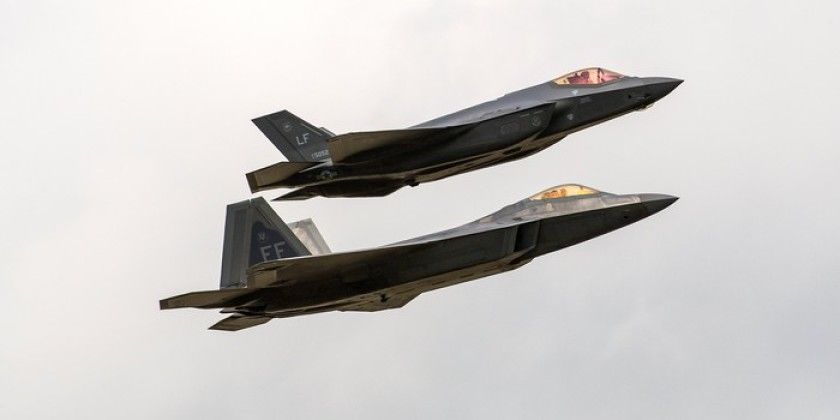
Details have yet to emerge regarding the causes of the crashes but considering the range of aircraft involved including F-15s and F-16 jets designed for the Cold War-era, F-22 Raptors built in the 2000s and F-35As which have only begun to enter service in the past five years, there is no pattern which could lead one to conclude that ageing equipment is the cause or to find some clear commonality. Pilot training, maintenance issues or software glitches may be responsible however. The U.S. Military is notably looking to phase its Cold War era fighters out of service in the near future, something the Navy has already achieved, though at the cost of diversity, replacing all carrier based combat jets in its inventory with F-18E Super Hornets.
The Air Force is set to phase its ageing F-15C Eagle fighters out of service with replacements being ordered under the F-15EX program. It has been speculated that, due to its inability to easily incorporate upgrades and its immense maintenance requirements and operational costs, the Air Force may consider phasing the F-15’s next generation successor the F-22 Raptor out of service ahead of schedule as it looks to induct the much more capable sixth generation F-X fighters into service in the 2030s. American made fighters have generally had low crash rates, as perhaps best demonstrated by the Taiwanese Air Force where the contrast between crash rates and reliability rates on its European and U.S. made fighters is very stark - with European jet crashing far more often despite being fielded in much smaller numbers. The fact that crash rates have affected aircraft from all generations in the American inventory is nevertheless a worrying sign, one which likely points to issues with how they are being used rather than problems with the fighters themselves.
