
Consequences of Latest North Korean Weapons Test as Pyongyang Presses Washington to Negotiate
Military Watch Magazine Editorial Staff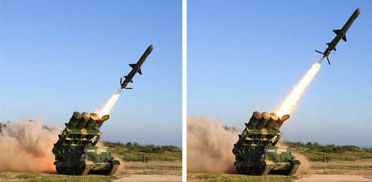
Test Launch of North Korean Kumsong-3 Anti Ship Cruise Missile From Tracked Launcher
North Korea has reportedly tested a new tactical weapon, firing an unknown projectile off its east coast which according to a number of reports may have been a short ranged ballistic missile. The test comes amid stalling negotiations between the United States and the East Asian state, with the former refusing to relax sanctions in return for partial access to its nuclear facilities and demanding an effective complete capitulation and acceptance of highly intrusive inspections of its military and nuclear facilities. Pyongyang for its part set Washington an ultimatum of January 2020 to return to talks in good faith, before it would lift its moratorium on the testing of strategic weapons and advancing of its nuclear deterrence capabilities. While North Korea successfully tested two intercontinental range ballistic missiles (ICBMs), the Hwasong-14 and Hwasong-15, from July to late November 2017 - both of which are capable of delivering the miniaturised thermonuclear warheads also tested that year to the U.S. mainland, there remain a number of venues in which further testing could strengthen its deterrent. Leading among these are testing of a submarine launched ICBM from its new heavier ballistic missile submarine, and testing of a reentry vehicle capable of carrying multiple warheads for existing ICBMs.
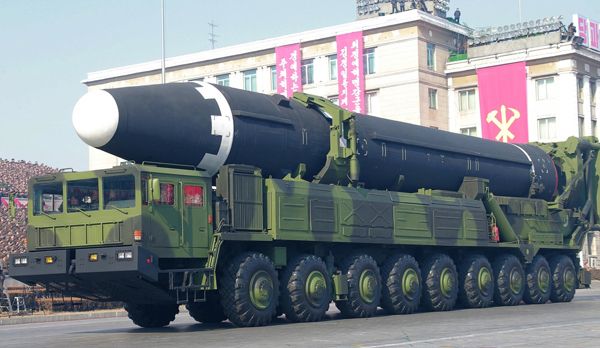
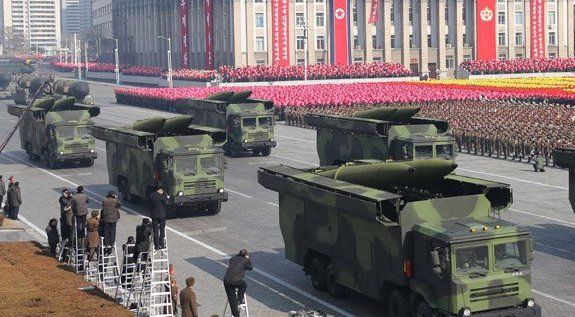
North Korea’s testing of a new weapon comes shortly after a reported test of an unknown ‘tactical weapon,’ which was speculated to be the short ranged ballistic missile first unveiled in February 2018 - an advanced solid fuelled munition which closely resembles the Russian 9K720 Iskander. According to South Korean military sources cited by the Yonhap news agency however, the weapons system recently tested was not a ballistic missile. This leaves its nature open to greater speculation, with North Korea’s armed forces having previously tested advanced cruise missiles including anti ship platforms at sea such as the Kumsong-3 - a highly manoeuvrable system which entered mass production in 2017 and was key to complementing the capabilities of the country’s short ranged submarines to provide maritime anti access area denial several hundred kilometres out to sea. Testing of a form of guided munition for the country’s sizeable Koksan 170mm artillery guns, or a new longer ranged rocket artillery system, also remain possibilities.
North Korea’s new weapons test has placed considerable pressure on the Donald Trump administration in the United States, with much of the president’s personal credibility resting heavily on his ability to resolve the conflict on the Korean Peninsula - which his political opponents have repeatedly expressed skepticism in his ability to fulfil. Pyongyang for its part could seek to benefit form applying such pressure in order to speed up negotiations, with its economic growth stifled considerably by harsh U.S. drafted economic sanctions enforced through the United Nations Security Council. Apparently in response to the test, President Trump stated that he had “confidence” that an ultimate deal with Pyongyang could be reached - though his ability to reach a compromise with the East Asian state, a longstanding U.S. adversary, remains highly uncertain given the hardline position taken both by the Democratic opposition party and by many in his own administration towards a potential resolution.
