
Chinese Liaoning Aircraft Carrier Group Expanding Navy’s Far Seas Presence
Military Watch Magazine Editorial Staff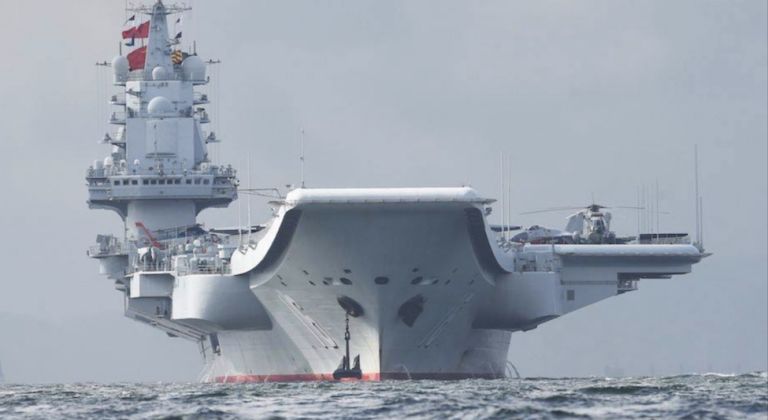
Chinese Carrier Liaoning
Operations by the Chinese People's Liberation Army Navy's aircraft Liaoning and its carrier task force are currently playing a significant role in expanding group training toward far-sea combat application, providing experience in forming system-of-systems combat capabilities at very distant locations in ways that have significant implications for the future balance of power in the Pacific. The carrier group was announced to be beginning training in the region on May 19, with a series of comprehensive exercises currently being carried out. These have focused on far-seas tactical flight, live firing, support and cover, and integrated search and rescue, among other subjects, in order to test and enhance the realistic combat training capabilities of Chinese carrier groups. The Liaoning was the first Chinese aircraft carrier to enter service, and has played a particularly key role in pioneering advances in the wider carrier program.
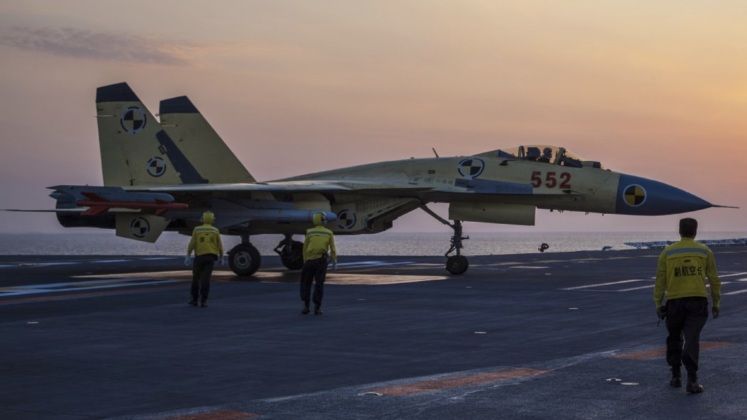
Experience in far seas operations is expected to be increasingly highly valued as the People's Liberation Army Navy is positioned to begin fielding nuclear powered supercarriers better suited to very long range operations, the first of which has recently been observed making significant progress under construction. Far seas operations pose considerable challenges not only due to logistics, but also due to navigation, morale, and the far greater possibility of engagements with hostile aircraft and ships. It is expected that China’s first supercarrier, the Fujian, which entered service in November 2025, will begin training for far seas operations in 2027. Although it is not a supercarrier, the Liaoning is one of the largest aircraft carriers outside the U.S. Navy, and has on multiple occasions demonstrated the ability to launch rapid sorties near major targets. In May 2022, for example, the Liaoning launched over 100 sorties near U.S. military facilities in Okinawa.
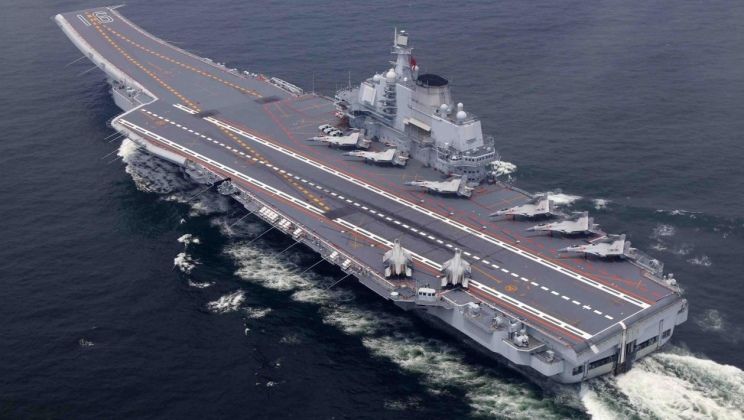
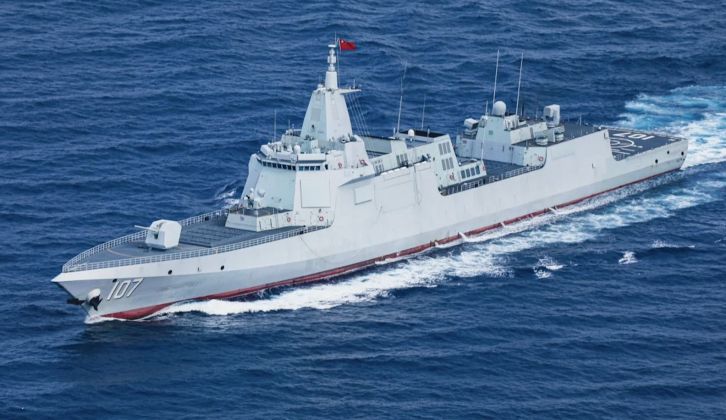
The Liaoning and its sister ship the Shandong were revealed in November 2024 to have seen the capabilities of their air wings significantly improved with the integration of new J-15B ‘4+ generation’ fighters and J-15D electronic attack jets, which are far superior to the baseline J-15s that first joined the fleet in the early 2010s. Improvements including higher use of more advanced composite materials, integration of large and cutting edge AESA radars, and the use of advanced stealth coatings and entirely new avionics, have made the J-15B a close contender for the title of the world’s most capable pre-fifth generation fighter type. The rapidly improving capabilities of Chinese Type 055 and Type 052D class destroyers, Type 093B class nuclear powered attack submarines, and Type 054 class frigates, have also been a key contributors to the growing potency of carrier task forces.
The Liaoning has been deployed for intense exercises over the past six months, with the warship’s air wing on December 7 having begun training flights in the Pacific Ocean, after the carrier task force passed through waters off Japan's southernmost prefecture of Okinawa. J-15 fighters operating from the carrier reportedly formed radar locks on Japanese F-15 fighters over international waters southeast of Okinawa twice on December 6, causing serious concern in Japan due to the vast superiority demonstrated by the Chinese aircraft. These engagements took place following a significant rise in tensions between the two states. The Liaoning was subsequently deployed on April 20 to sail through the Taiwan Strait, in response to the deployment of the Japanese Murasame class destroyer JS Ikazuchi to itself transit the strait on April 17. In late April the Liaoning led a larger carrier task force for operations in the South China Sea, holding exercises near the Philippines, where the Philippines Armed Forces, alongside forces from the United States, Japan, Australia, Canada, France, and New Zealand, had been jointly carrying out their own joint drills from April 20.
