
China’s New J-15T Carrier Based Fighter vs. F-18E Super Hornet: Which Builds a Stronger Naval Air Wing?
Military Watch Magazine Editorial Staff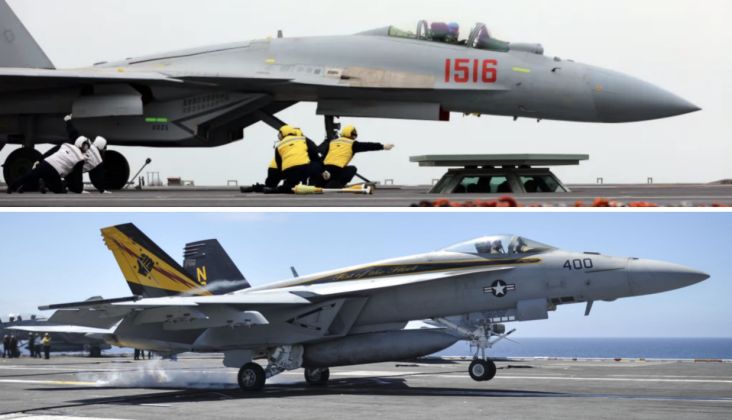
Chinese J-15T (top) and U.S. Navy F-18E Fighters on Carrier Decks
In November 2024 footage released by Chinese state media revealed that a new generation of J-15 carrier based fighter aircraft with significantly enhanced capabilities had been brought into service, the J-15B, which represented a landmark improvement in the potency of the country’s carrier air wings. This was followed by the unveiling of the J-15T in active service in September, which is a variant of the design modified for China’s first supercarrier the Fujian, and made compatible with the ship’s electromagnetic catapult launch system to allow for takeoffs with significantly higher fuel and weapons loads. Following the commissioning of the Fujian into active service on November 5, the J-15T is expected to continue to serve as the backbone of its air wing alongside the J-35 fifth generation fighter, with the two retaining highly complementary capabilities.
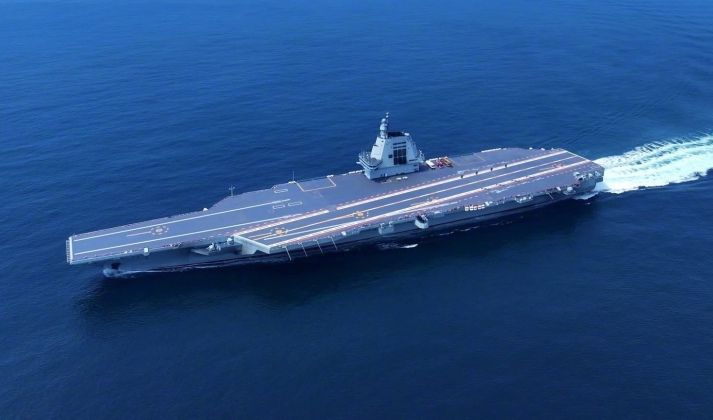
The pairing of the J-15 and J-35 mirrors that between the F-18E/F Super Hornet and the fifth generation F-35C Lighting II on the U.S. Navy’s own supercarriers, although the service’s new Gerald Ford class carriers still lack compatibility with the F-35 and rely solely on the older F-18. With the J-15T and F-18E/F having broadly comparable roles as workhorses of their respective air wings, a comparison of their capabilities provides significant insight into the capabilities of the Fujian and rival American carriers. The two fighters have vastly different origins, with the J-15 being a derivative of the Soviet Su-27 Flanker design, which China has very heavily enhanced to provide distinct superiority over Russian built Flanker derivatives today. While the U.S. Navy considered developing a carrier based variant of the Su-27’s direct rival, the F-15, the aircraft’s high costs led it to favour the much more lighter and conservative F-18.
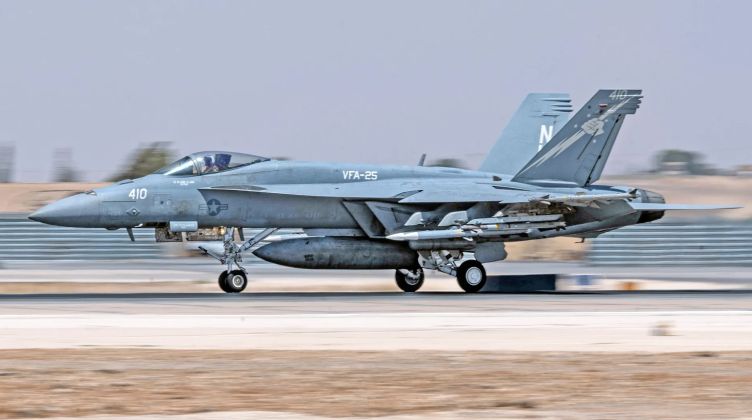
Both the J-15T and the F-18E/F Block 3 make extensive use of technologies developed for their countries’ respective fifth generation fighter programs, and make high use of advanced composite materials for lighter and more durable airframes, while using more advanced AESA radars. The large majority of F-18s, however, continue to rely on mechanically scanned array radars that are considered obsolete, with efforts to bring a greater portion of the fleet to the Block 3 standard with up to date avionics remaining slow. Compared to the F-15, and moreso the J-15, the F-18E suffers from a significantly poorer thrust/weight ratio, and from carriage of a much smaller radar which limits its situational awareness. Its AN/APG-79 radar is approximately half the size of that of the J-15T, which is a significant disadvantage when considering the comparable sophistication of the two countries’ radar technologies.
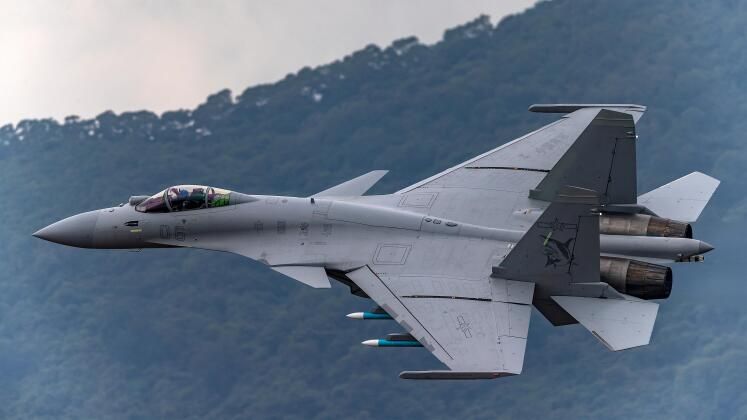
The J-15T not only inherits the Su-27’s large radar size and high flight performance, but also has a particularly long range far exceeding that of any Western fighter type. This is particularly advantageous for a carrier based fighter. The F-18E/F, by contrast, has a range significantly shorter than that of the F-15, and moreso the F-14 which was phased out of service in 2006, with its limited endurance having long been considered a leading shortcoming of the design. Plans to integrate confirmed fuel tanks onto the fighters to slightly extend their ranges were notably cancelled in late 2021 due to budget shortages. The Super Hornet is also restricted to operating at lower speeds and operational altitudes, which can limit the ranges of a number of missile types.
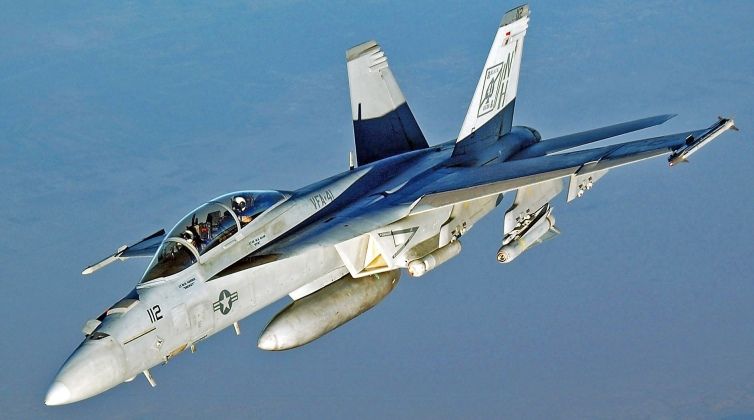
The F-18E was developed at a time of post-Cold War budget cuts, providing an economical alternative to the F-14 and cancelled A-12 with significantly lower maintenance needs and sustainment costs. The J-15, by contrast, is a derivative of a costly high performance air superiority fighter developed in an era of great power competition, with the program having prioritised maximising performance. The Chinese fighter’s capabilities are a significant advantage for the Fujian’s air wing, and place it an entirely different league to other fourth generation carrier based combat jets operating around the world. While the F-18E/F was initially expected to be replaced by the F-35C, and eventually the F/A-XX sixth generation fighter, not only did significant delays to the F-35 fighter force the Navy to expand F-18 orders by several hundred fighters, extending production by over a decade, but the deep cuts being made to the F/A-XX mean that the service may be forced to rely on the old fourth generation aircraft for considerably longer. China, by contrast, appears poised to lead the United States by several years in fielding the world’s first sixth generation fighter aircraft, which is expected to further widen the gap between Chinese and American carrier air wings.
