
China Updates Retired Russian Air Superiority Fighters’ Weaponry to Modernise Ground Crew Training Procedures
Military Watch Magazine Editorial Staff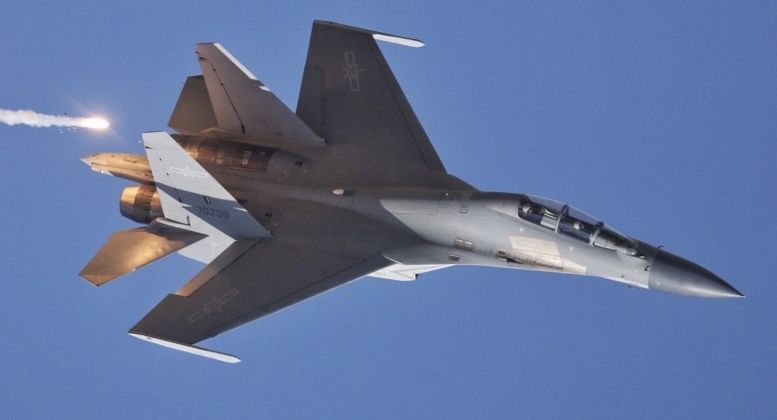
J-16 Fighter
Former Chinese People’s Liberation Army Air Force J-11A fighters at the Air Force Engineering University's Aviation Maintenance NCO School have been modernised to integrate PF10 type wingtip pylons, the same as those on the modern J-15B and J-16 fighters. These pylons are compatible with the Air Force’s latest infrared guided air-to-air missile type, the PL-10, which has been widely assessed by analysts to be the most capable in the world for visual range combat. The purpose of this upgrade appears to be to allow ground crews at the university to train to equip modern fighter types. The J-11A is a derivative of the Soviet Su-27 Flanker design that is almost identical to the original, and first entered service in the late 1990s. The J-15B and J-16 are heavily enhanced derivatives of this same design that are currently in production, and while having no commonalities in terms of weaponry and avionics, the common airframe layout allows J-11A and Su-27 airframes to be used for ground crew training.
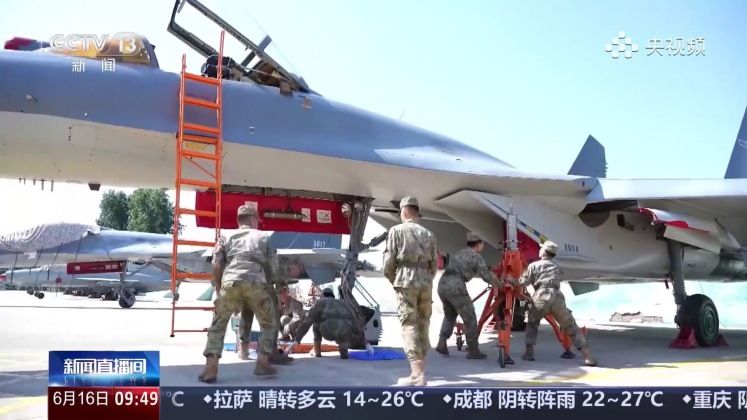
Although the pylons of J-11A fighters at the university have been modified for compatibility with new types of missiles, the aircraft would, if flying and operating, not be able to use the missiles on these pylons, as this would require modifications to their fire control systems and flight control computers, or the installation of pylons with their own independent fire controls. The J-11A is the designation given to Su-27 fighters which were license produced in China from 1998, of which 104 were built. Originally indistinguishable from the Su-27SK in terms of performance and paint scheme, some J-11As were later upgraded by Belarusian experts to be able to launch modern R-77 missiles, and were equipped with a domestically produced missile warning system. Production of the type was cut short in the 2000s as its capabilities fell increasingly behind the cutting edge, resulting in the development of the J-11B which used a high composite airframe and modern Chinese avionics, sensors and weaponry. The J-11B was gradually phased out of production and replaced by the ‘4+ generation’ J-16 from the mid-2010s.
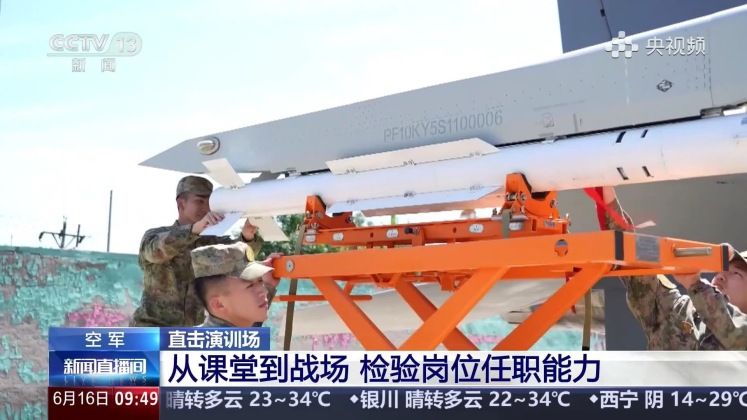
The arrival of retired J-11A fighters from the type’s first production batch at the Air Force Engineering University for ground crew training was first confirmed in December 2025. Their value for ground crew training is particularly significant because the People’s Liberation Army deploys significantly more Su-27-derived fighters than any other military in the world. Although China is currently leading the world in both fifth generation fighter procurements and in sixth generation fighter development, its Su-27-derived J-16 and J-15B are significantly more capable than Russia’s own enhanced Su-27 derivatives such as the Su-35, and have been widely assessed to be the world’s most capable fourth generation fighter types. The J-16 has been procured in particularly large numbers, with over 400 now in service, making it the most widely procured heavyweight fighter type by any single service since the end of the Cold War. Although lacking the stealth capabilities of China’s primary air superiority fighter the J-20, the aircraft integrates a much larger and more powerful radar, has a much greater weapons carrying capacity, and is likely to have lower maintenance needs, making its capabilities highly complementary.
