
China’s Air Force Retires Russian-Origin J-11A Air Superiority Fighters: Airframes Now Used to Train Ground Crews
Military Watch Magazine Editorial Staff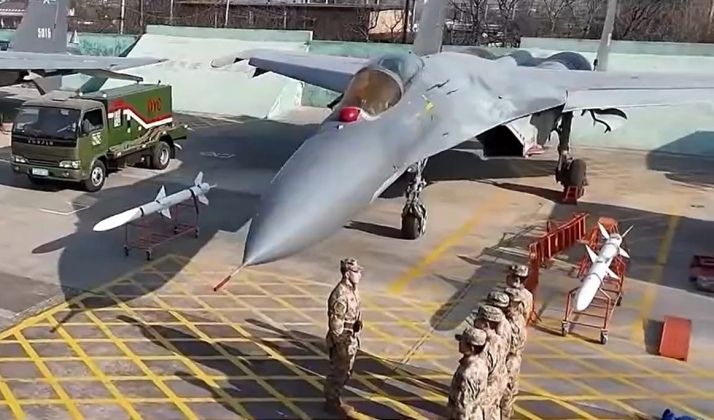
Chinese Ground Crew at the Air Force Engineering University with J-11A Fighters
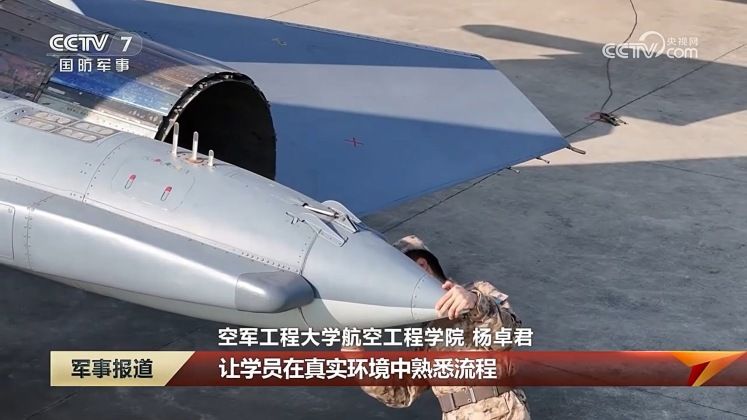
As the Chinese People’s Liberation Army Air Force has continued to retire its Russian-sourced fighter aircraft from service, state media outlets have revealed that the first retired J-11A fighters from the type’s first production batch have been sent to the Air Force Engineering University for ground crew training. These aircraft can be seen carrying the Russian-made R-27 air-to-air missile, as well as its successor domestically produced PL-12 missile, with ground crew seen arming the aircraft and servicing them. Although the J-11A is rapidly being removed from service, it is only one of several derivatives of the Soviet Su-27 heavyweight air superiority fighter flown by the People’s Liberation Army, with the much more advanced J-15 and J-16 fighters both currently being in large scale production and having significant similarities in their maintenance requirements.
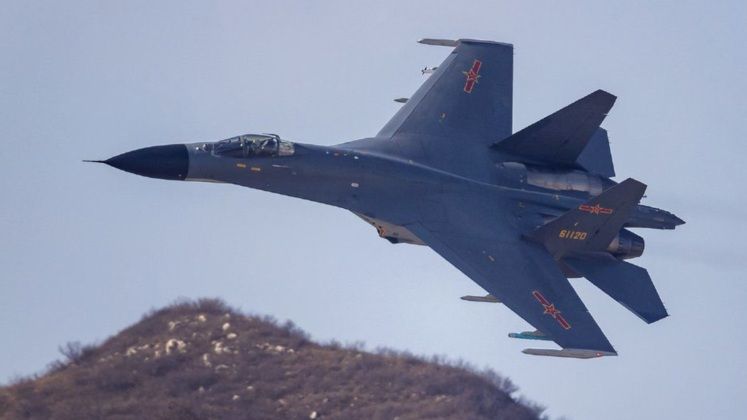
China in late 1991 became the first foreign client for the Su-27 fighter, after which the country produced the aircraft domestically using kits built in Russia as the J-11. As Russian components were gradually phased out, the aircraft was modernised domestically including with use of composite materials in its airframe, with the first domestically modernised variant of the design being designated the J-11A. The program initiated in the mid-1990s paved the way to the development of the much more capable J-11B which entered service in the late 2000s and used no significant Russian inputs other than its engines, after which the ‘4+ generation’ J-16 was brought into service from 2013. Although the J-11B fleet has been modernised with similarly advanced avionics and the same weaponry as the J-16 under the J-11BG program, the older J-11A and Su-27 fighters have been rapidly phased out of service.
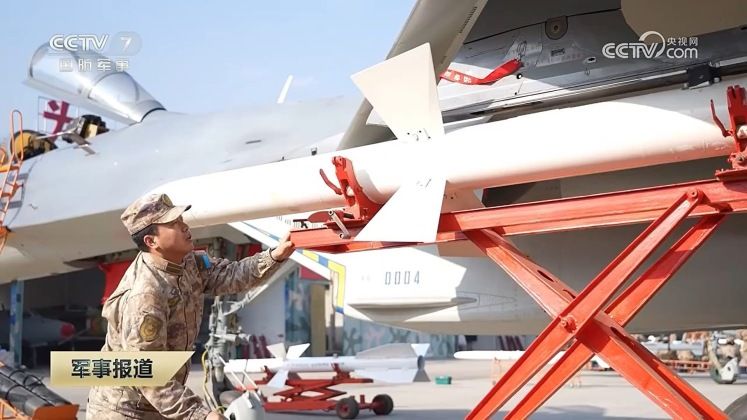
Although J-11A fighters at the Air Force Engineering University were used to train personnel in equipping aircraft with PL-12 missiles, the fighters are not known to be able to carry these armaments. The R-27 was designed to serve as the primary beyond visual range air-to-air armament of the Su-27, and while revolutionary for China’s air force when first procured, it quickly fell out of date in the 1990s, leading the People’s Liberation Army to procure R-77 active radar guided missiles that decade. Belarusian experts reportedly played a central role in allowing Su-27s and J-11A fighters, which still used Soviet avionics, to integrate the R-77, after which the more advanced J-11B fighters would integrate the indigenous PL-12. The PL-12 had superior capabilities to any Russian-produced air-to-air missile type, and marked a major milestone in China’s indigenous air-to-air missile development.
The People’s Liberation Army today deploys significantly more Su-27-derived fighters than any other military in the world, while the considerable and fast growing technological gap between the Chinese and Russian defence sectors has meant that Chinese fighters such as the J-16 and J-15B are significantly more capable than Russia’s own enhanced Su-27 derivatives such as the Su-35. The J-16 has been procured in particularly large numbers, with over 350 now in service, making it the most widely procured heavyweight fighter type by any single service since the end of the Cold War. The Su-27 was considerably more manoeuvrable and had a much longer range than any fighter type serving in a Western air force when it entered service, while carrying a much larger and more powerful radar, and using airframe materials and avionics that were in many respects world leading. Although Russian defence sector decline has limited the country’s ability to enhance the design, China’s defence sector has effectively built on the fighter’s advantages to ensure that modern Su-27 derivatives, in particular the J-16 and J-15B, continue to lead the world in many aspects of their performances.
