
China Deploys Type 052C Class Air Defence Destroyer For Operations Near Japan: How Capable Is It?
Military Watch Magazine Editorial Staff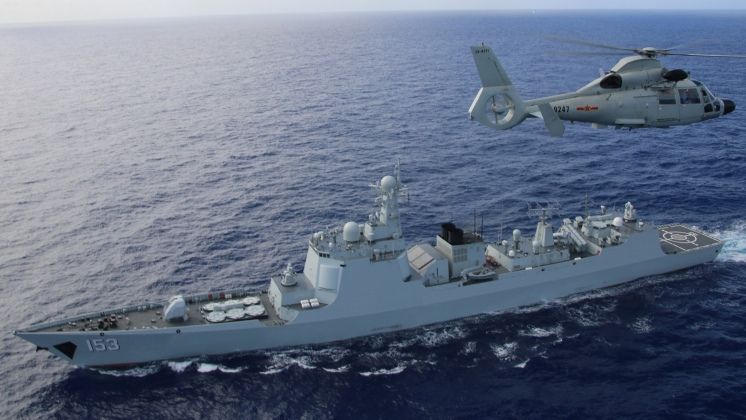
Chinese Type 052C Class Air Defence Destroyer
The Japanese Ministry of Defence reported that the Chinese People’s Liberation Army Navy deployed the Type 052C destroyer Changchun to sail between Okinawa Island and Miyako Island, as part of operations under the Justice Mission 2025 exercises which have simulated complex joint combat operations around the Taiwan Strait. The Changchun was accompanied by two Type 054A class frigates and a Vishnya class intelligence gathering ship, while in the air H-6K bombers, two J-16 fighters, two Y-9 reconnaissance aircraft, and two fighters of an unconfirmed second type flew between the two islands. In contrast to China’s modern Type 052D and Type 055 class multirole destroyers, the Type 052C is heavily specialised in air defence roles, with its deployment expected to have caused significantly less concern in Japan than other newer ships.
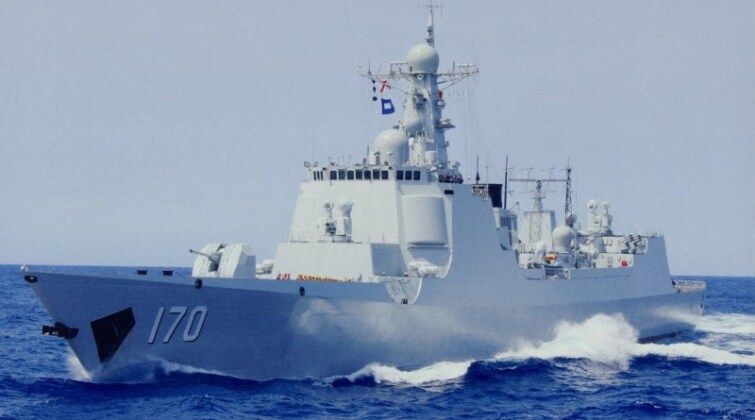
The Type 052C is one of China’s older and less capable destroyer classes, and saw six built from 2002 to 2015, before shipyards transitioned to construction of the significantly more advanced Type 052D. The program played an important role in advancing Chinese military shipbuilding capabilities and technologies, as well as those associated with long range air defence. The ship class was developed in parallel to work on more advanced variants of the HQ-9 long range air defence system. Each Type 052C class destroyer deploys 48 vertical launch cells for HHQ-9 surface-to-air missiles, a navalised variant of the HQ-9. This compares poorly to the Type 052D class, which despite being just seven percent larger, integrates 64 venial launch cells, while the Navy’s most capable destroyer class the Type 055 integrates 112 launch cells.
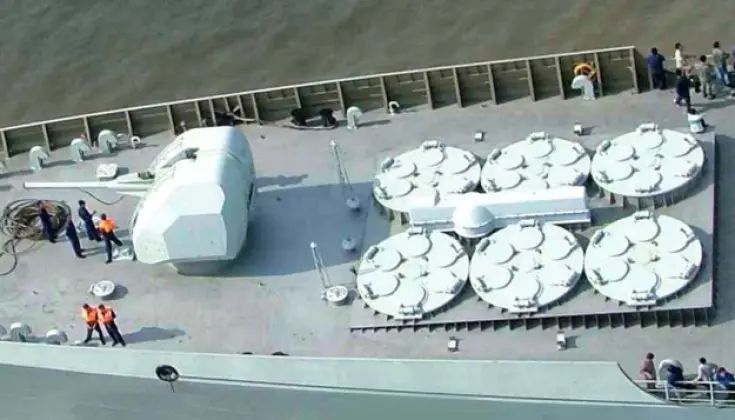
HHQ-9 missiles are carried on eight revolver-type launchers, each of which carries six missiles. The ship’s sensor suite provided a revolutionary improvement in situational awareness compared to prior Chinese air defence destroyers, with each integrating six complementary types of radars, including the large Type 346 air search and fire control radar. The ships have a negligible offensive armament of eight launchers for relatively small YJ-62 subsonic anti-ship cruise missiles. The decision to deploy the Type 052C, rather than more advanced destroyer types with offensive cruise and ballistic missile strike capabilities, may have been intended to signal to Japan an intent to avoid escalation and minimise tensions.
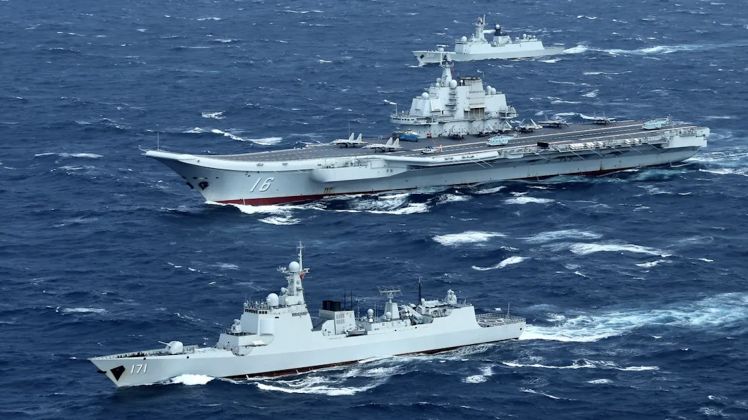
Tensions between China and Japan previously flared in early December after newly appointed Japanese Prime Minister Sanae Takaichi, threatened to intervene militarily in the ongoing conflict between the People’s Republic of China on the Chinese mainland, and the Republic of China based on Taiwan Island, which have for decades remained in a state of civil war. This led Beijing to respond by deploying a carrier strike group led by a Type 055 and two Type 052D class destroyers for exercises near Japanese territory, with the advanced capabilities demonstrated reportedly having caused major concern in the Japanese military leadership. The Navy’s fleet of its latest destroyer classes has continued to grow rapidly, with seven Type 052D class ships having been commissioned in 2025, while the first Type 055 destroyers of a second production batch are expected to be commissioned in 2026.
