
China’s Shenyang Unveils New Carrier Based Stealth Drone
Military Watch Magazine Editorial Staff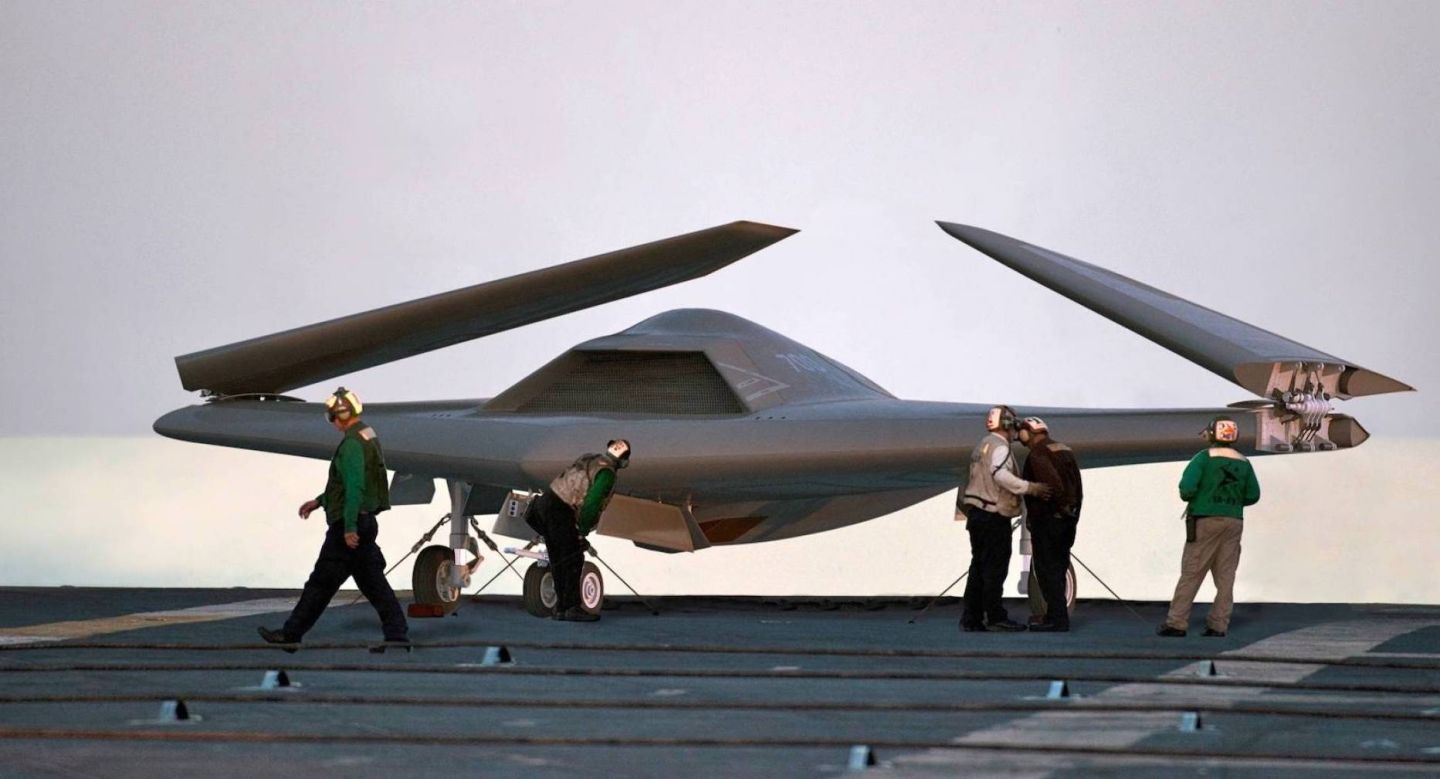
Boeing MQ-25 Flying Wing Carrier Based Tanker Drone
Marking the fiftieth anniversary of the maiden flight of China’s first indigenous combat jet, the Shenyang J-8, Chinese defence manufacturer the Shenyang Aircraft Corporation has unveiled a new carrier based stealth drone currently under development. The aircraft is unnamed, but uses a flying wing design much like the Sharp Sword attack drone and the American B-2 Spirit bomber. This type of airframe is considered optimal for radar evasion, and allows an aircraft to evade even long wavelength radars which can otherwise detect conventional stealth fighters such as the J-20 and F-22. The new Chinese drone features folding wings, and has reportedly been designed for carrier operations. An animation in Shenyang’s celebration video depicted the drone operating from the deck of an aircraft carrier. While the size of the drone is unknown, it appears very large with landing gear as tall as a person - meaning it will likely retain a very long range. The drone somewhat resembles the Boeing MQ-25 Stingray developed for the U.S. Navy, but appears considerably larger.
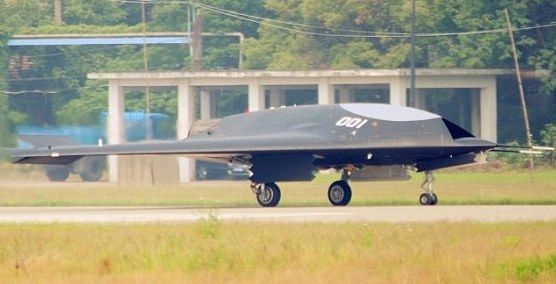
The confirmation that China is developing at least one class of aircraft carrier based stealth drone - but more likely several - ensures that the country’s upcoming carriers strike groups will be able to rely on a wide range of fixed wing aircraft in both combat and supporting roles. The Navy’s sole fully operational carrier, the Liaoning, currently deploys just a single class of fixed wing aircraft - the J-15 Flying Shark air superiority fighter. Aircraft under development for new carriers include the J-15D (or J-17) electronic attack jet, the KJ-600 airborne early warning and control system, a more advanced J-15 variant of unknown designation integrating next generation technologies, and at least one class of stealth drone. It has also been speculated by a number of sources that a carrier based multirole stealth fighter could be developed to complement the capabilities of the J-15.
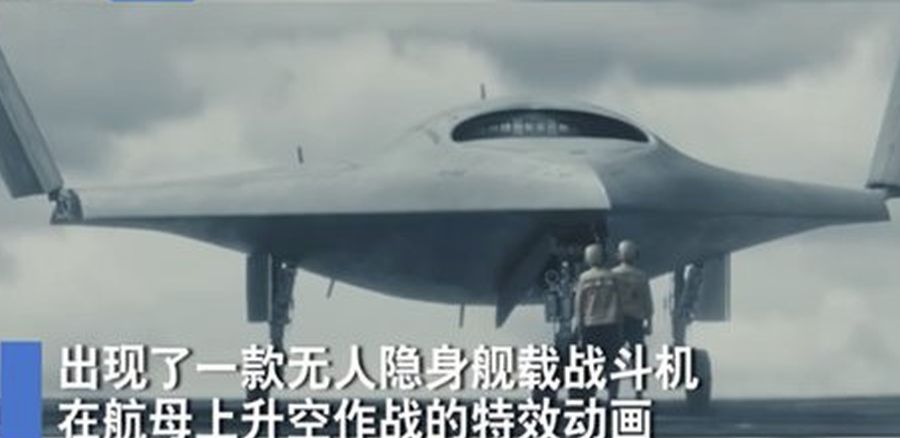
The are a number of possible roles a large carrier based flying wing drone design could play for China’s People’s Liberation Army Navy. The aircraft could be intended for aerial refuelling, much like the U.S. Navy’s MQ-25, to extend the range of other fixed wing aircraft operating from the carrier’s deck. Alternatively, the aircraft could be intended as a carrier based strike platform specialised for air to ground attacks - where the J-15 is specialised for anti aircraft warfare. It is also possible that the drone has an entirely new role - perhaps the deployment of anti ship cruise missiles such as the YJ-12 for silent long range ship hunting missions. The drones are likely to be intended for deployment from Chinese EMALS equipped Type 002 and Type 003 Class aircraft carriers, which will be able to launch aircraft with heavier weights due to their highly sophisticated electromagnetic catapult launch systems. Whatever its role, the drone represents one of many signs of China’s emergence as a leading aircraft carrier power - one which by the mid 2020s is expected to field carrier strike groups with capabilities far ahead of all rival navies other than that of the United States.
