
China’s Massive Bomber Fleet Reassigned a Nuclear Deterrence Mission: New H-20 and H-6N Jets Open Up New Possibilites
Military Watch Magazine Editorial Staff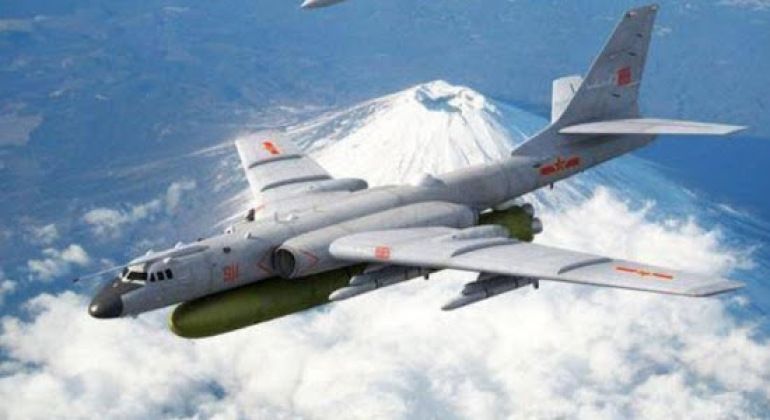
H-6N Bomber with Intermediate Range Ballistic Missile - artwork
A recent report from the U.S. Department of Defence indicates that China’s People’s Liberation Army (PLA) has re-assigned its Air Force’s bomber fleet with a nuclear deterrence mission after several decades operating in a solely conventional role. China deploys the world’s largest bomber fleet in the world today with over 270 H-6 bombers currently in service, although the highly versatile airframes fill a wide range of roles from training and electronic attack to delivery of anti ship cruise and ballistic missiles. While China’s Air Force was responsible for most of the country’s early nuclear testing, nuclear deterrence has long been the responsibility of the PLA Rocket Force and PLA Navy using a range of ballistic missile classes. The American assessment is largely based on then fact that the PLA Air Force’s new H-6N bomber is capable of deploying ballistic missiles - which may be nuclear tipped although this is unconfirmed. The majority of analysts, however, appear to see the H-6N as more likely to have been assigned the role of a long range ship hunter - following on from the PLA’s emphasis on long range anti ship ballistic missiles with the DF-21D and DF-26 platforms with the H-6 providing a complementary air launched capability.
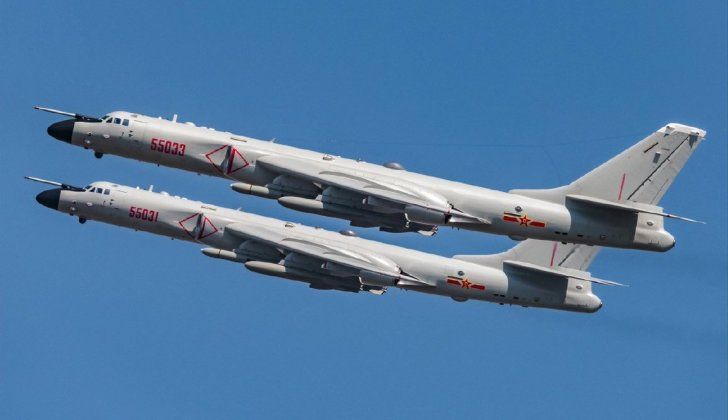
Although the H-6N may well only be conventionally armed, it is possible that the PLA Air Force has again adopted a nuclear role as it expects to soon field its first truly strategic bomber - the intercontinental range H-20 platform. The H-6 is considered a theatre bomber with a primarily tactical role, meaning that unless relying on aerial refuelling and deploying standoff ballistic missiles it will not be able to strike targets at intercontinental ranges. This differs from strategic bombers such as the American B-2, B-52H and B-1B or the Russian Tu-95 and Tu-160 - instead resembling the Russian Tu-22M and the now retired Russian Tu-16. The H-20 is expected to carry much heavier payloads over longer distances, however, which will allow it to carry out nuclear attacks deep into enemy territory including across the U.S. mainland without relying on standoff weapons or aerial refuelling. The H-20 and H-6N could possibly form the third arm of China’s nuclear triad, complementing the Rocket Force’s wide range of nuclear tipped ballistic missiles such as the DF-41 and the Navy’s own submarine-launched nuclear missiles such as the JL-2.
