
China’s Completes New Long Range ‘Anti Stealth’ Radar - And Its Immune to Anti Radiation Missiles
Military Watch Magazine Editorial Staff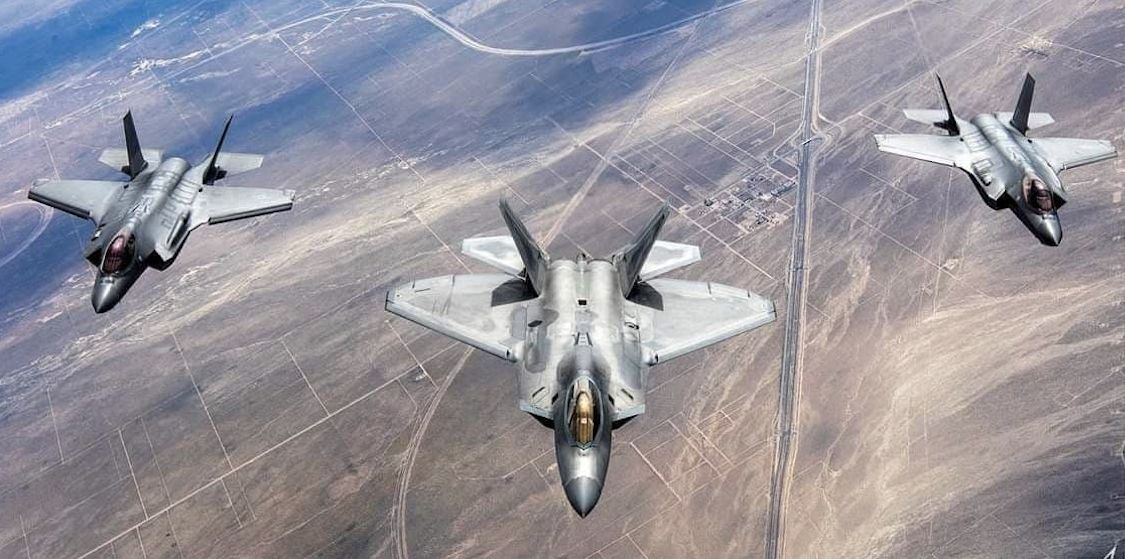
U.S. Air Force F-22 Raptor Leads Two F-35 Stealth Fighters in Formation
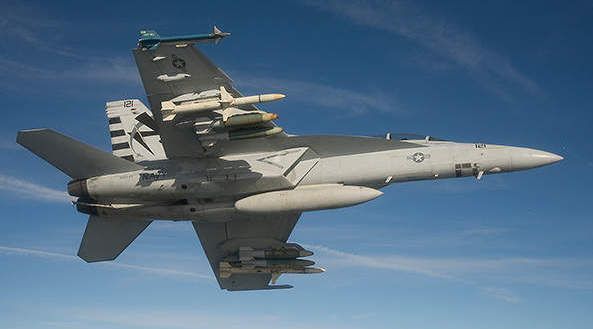
The rapid growth in deployments of radar evading stealth aircraft by China’s People’s Liberation Army Air Force and by the United States Air Force and Marines in northeast Asia has been accompanied by growing investments in counter-stealth systems by both parties. The U.S. has equipped its new F-18E Block III Super Hornets with powerful infra red search and track systems specifically to seek and destroy Chinese stealth jets, and has for the first time formed aggressor squadrons using F-35A stealth fighters for simulated combat to train its airmen to tackle such platforms. China for its part has invested in systems such as the Divine Eagle drone - equipped with SAR, SMTI, GMTI and AESA radars to track stealth jets, and in ground based terahertz and quantum radar technologies. On June 11th 2019 it was reported that China had further developed a maritime early warning system optimised for tracking stealth aircraft. The new system was also reportedly immune to anti radiation ‘radar killer’ missiles such as the AGM-88 HARM widely deployed by the U.S. Navy’s F-18E Super Hornets and E/A-18G Growlers - which are also set to be deployed by the service’s F-35C carrier based stealth fighters. How the new radar system counters these ‘anti radar’ systems, which home in on a platform’s radar signature to eliminate it, remains uncertain. It is reported that the wide beams of the long wave radar waves emitted by the system require antenna larger than those mounted on existing ‘radar killer’ missiles to home in on them.
The new Chinese maritime radar system reportedly retains all-weather capabilities an can track naval and aerial targets hundreds of kilometres away. The system was reportedly developed by a team led by scientist Liu Yongtan - the country’s renowned 82 year old radar specialist and a member of the Chinese Academy of Sciences and Chinese Academy of Engineering. The radar makes use of high frequency waves which travel along the sea surface, and are capable of detecting targets over the horizon. Radar waves are normally emitted by line of sight, which limits their range due to the Earth’s curvature. The system’s use of long wavelengths optimises it for the detection of stealth aircraft even at extreme ranges - with stealth jets such as the American F-35 and F-22 optimised for evasion of shorter wavelength radars. Whether the system will be able to share data with Chinese combat systems, form a lock onto stealth jets at range, or detect the U.S. Air Force’s B-2 Spirit bombers which were designed to evade long as well as short wave radars, remains to be seen. As stealth aircraft and standoff anti radiation missiles are considered the two preeminent threats towards the Chinese air defence network, and are both deployed to the Pacific in large numbers by the U.S. and to a lesser extent its Western partners, the value of the new radar system to China’s defence could be very significant.
