
China's Development of the Terahertz Radar; Could it Potentially Nullify the Survivability of U.S. Stealth Platforms in the Pacific?
Military Watch Magazine Editorial Staff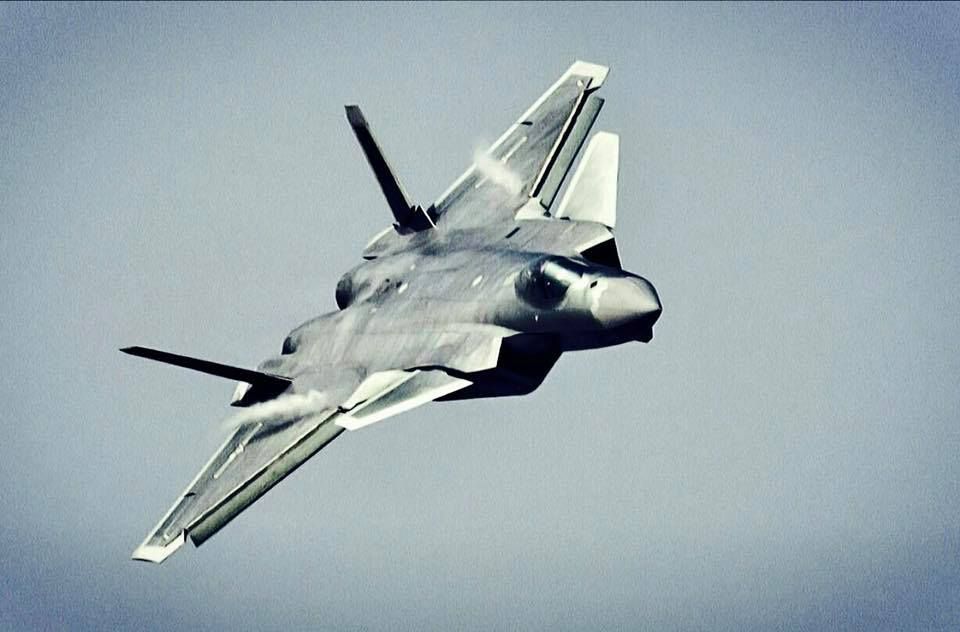
Chinese J-20 Fifth Generation Air Superiority Fighter
In September 2017 the China North Industries Group Corporation claimed to have tested a radar able to detect aircraft using terahertz radiation - a highly sophisticated technology which could potentially track the world's most advanced stealth aircraft. Chinese scientists said the radar has the potential to become a "game changer" for Chinese military - allowing it to detect potent US assets deployed to the Pacific such as the F-22 fighter and B-2 Sprit bomber. Terahertz radiation allows a radar to detect composite materials from which stealth aircraft are made. "The radar-absorbent coatings on the F-35 will look as thin and transparent as stockings if (the Terahertz radar) is as powerful as they claim," a technical executive reported. The development of the radar comes months after China's announcement that it has developed a prototype quantum radar - another advanced technology which, should it enter service in the country's military, would negate the survivability advantage of stealth aircraft.
Such advanced radar systems have never been publicly demonstrated by any military, but if either the United States or China were to deploy them to the Asia-Pacific region they would significantly affect the balance of power. With the United States' strategy for a war in the Pacific so heavily reliant on stealth technology, and particularly on its F-35 multirole stealth fighter as per the Air-Sea Battle strategy, negation of stealth fighters' survivability would seriously undermine their regional strategies. With China itself developing stealth platforms for its Air Force, of which the Chengdu J-20 entered service in early 2017, such technology would also be useful for the United States. With China aware of the United States' reliance on these technologies however, the announcement of successes in the development of both quantum and terahertz radars could well be intended to undermine the United States' confidence in their perceived technological advantage. Even the possibility that China may have developed such weapons would make military operations against it, relying so heavily on stealth capabilities as they do, extremely risky for the United States. The announcement of these capabilities alone, regardless of actual technological progress, could be intended to promote uncertainty and is thereby itself a form of deterrence. While there is little reason to doubt China's technological capabilities - bluffing could potentially be the true purpose of the announcements. Should research into such technologies materialise however, they would leave the United States' multi-trillion dollar fifth generation fighter program near obsolete with few advantages over the fourth generation fighters in service since the 1970s.
