China Considers New Wing Root Radars to Boost Fighters’ Situational Awareness
Military Watch Magazine Editorial Staff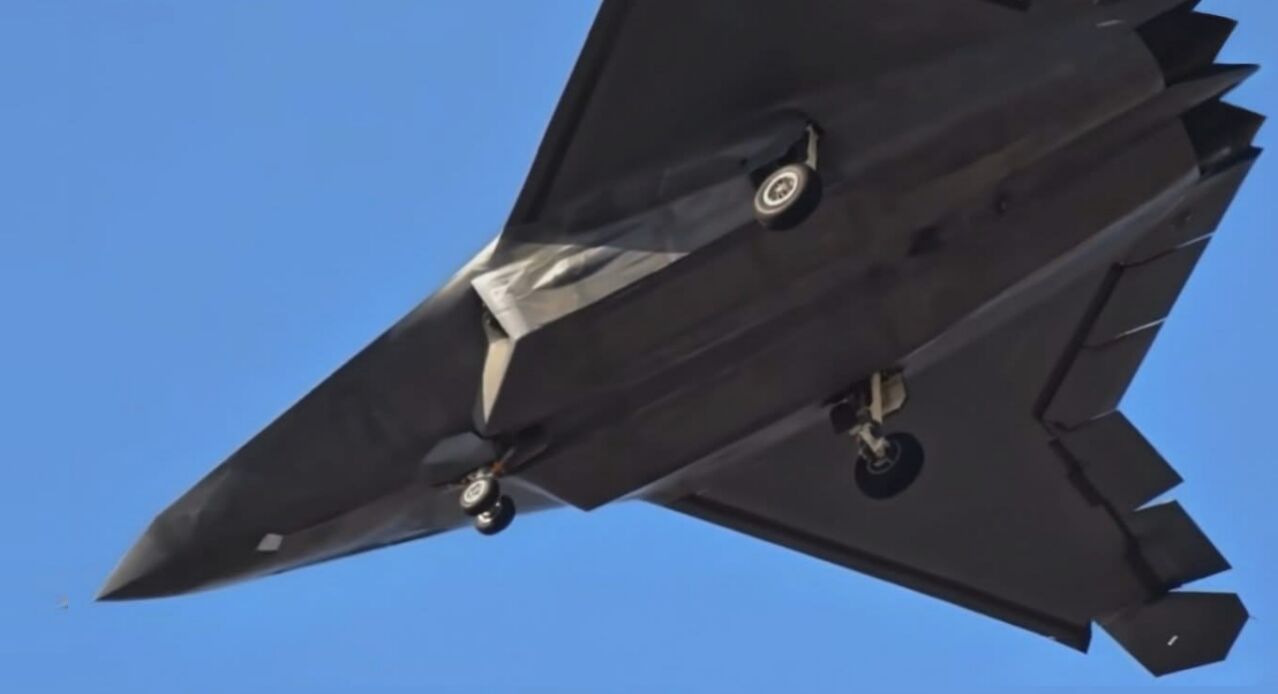
Chinese Shenyang Sixth Generation Fighter Flight Prototype
Chinese aircraft designers have proposed a novel airborne radar architecture that would embed large antenna arrays within the wings of combat aircraft, potentially allowing smaller uncrewed aircraft to undertake surveillance missions traditionally performed by dedicated radar aircraft. The concept was outlined in a research paper published in the Chinese journal Measurement & Control Technology on October 10, with researchers affiliated with the AVIC Chengdu Aircraft Design and Research Institute, the organisation responsible for developing the J-20 fifth generation fighter. Rather than relying on a large radar dome above the fuselage, the proposed system would exploit the wing’s surface area and coordinate multiple aircraft to provide broader radar coverage. While this as widely been interpreted as a proposal for fighter wing root radars, however, the paper may indicate a new configuration for airborne early-warning and control (AEW&C) systems.
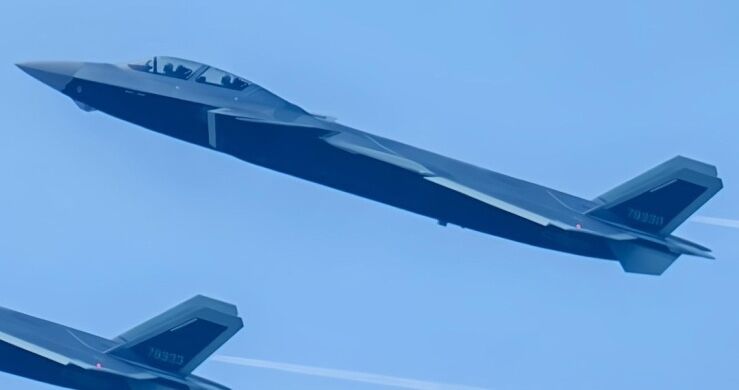
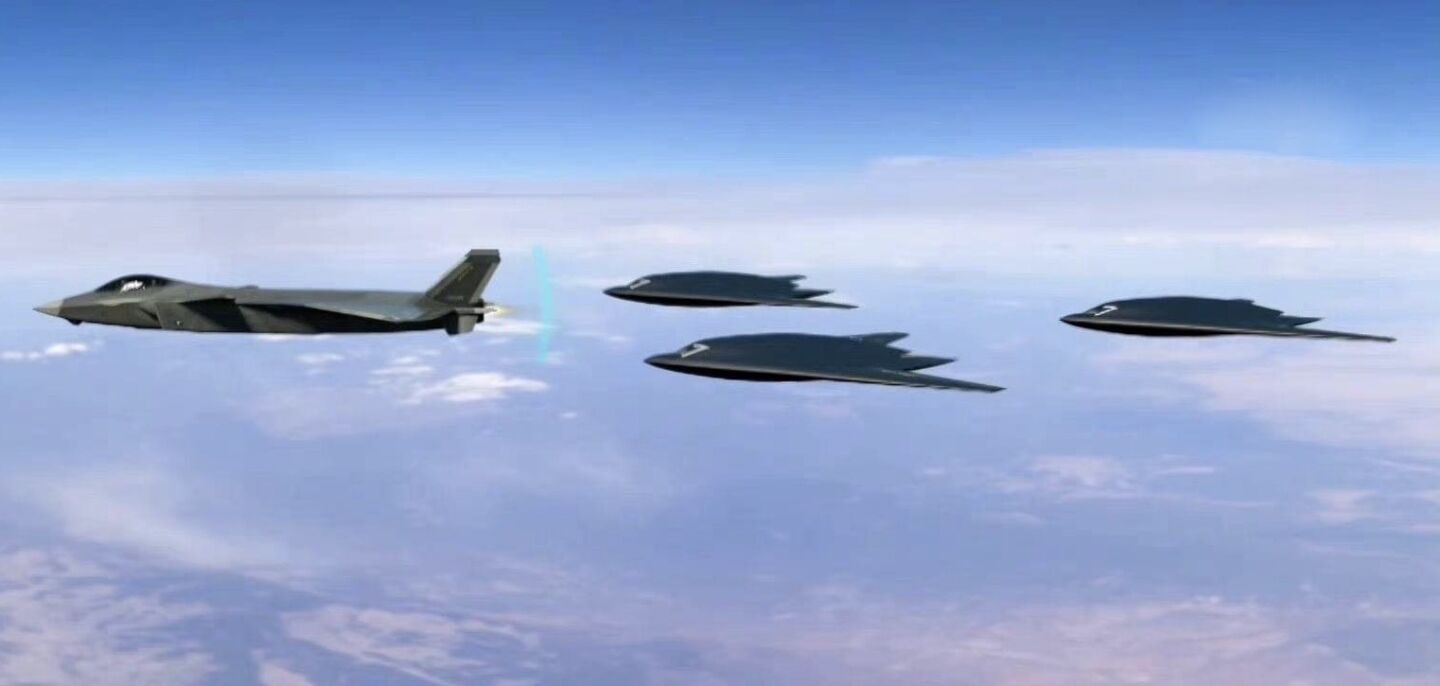
The proposal reflects a broader shift towards distributed airborne surveillance, in which several relatively small platforms cooperate to provide detection and tracking capabilities that would otherwise require a single, larger aircraft. Conventional aircraft carry substantial radar arrays, often housed in prominent structures above the fuselage. These systems provide extensive surveillance coverage and can coordinate friendly aircraft, but the specialised aircraft required to operate them are expensive, conspicuous and dependent on suitable airfields. Distributing radar functions across multiple uncrewed platforms could provide greater flexibility while reducing reliance on a small number of high-value surveillance aircraft.
The Chinese researchers propose integrating the radar antenna, control electronics and associated equipment directly into an aircraft’s wing. The radiating surface would face downwards during level flight, with a protective covering following the wing’s external contours. This arrangement could provide a comparatively large antenna aperture without requiring a conventional dorsal radar dome or a bulky external installation. However, the wing’s relatively thin cross-section presents a significant engineering challenge, limiting the space available for antenna modules, power systems, cooling equipment and other components required for a high-performance radar.
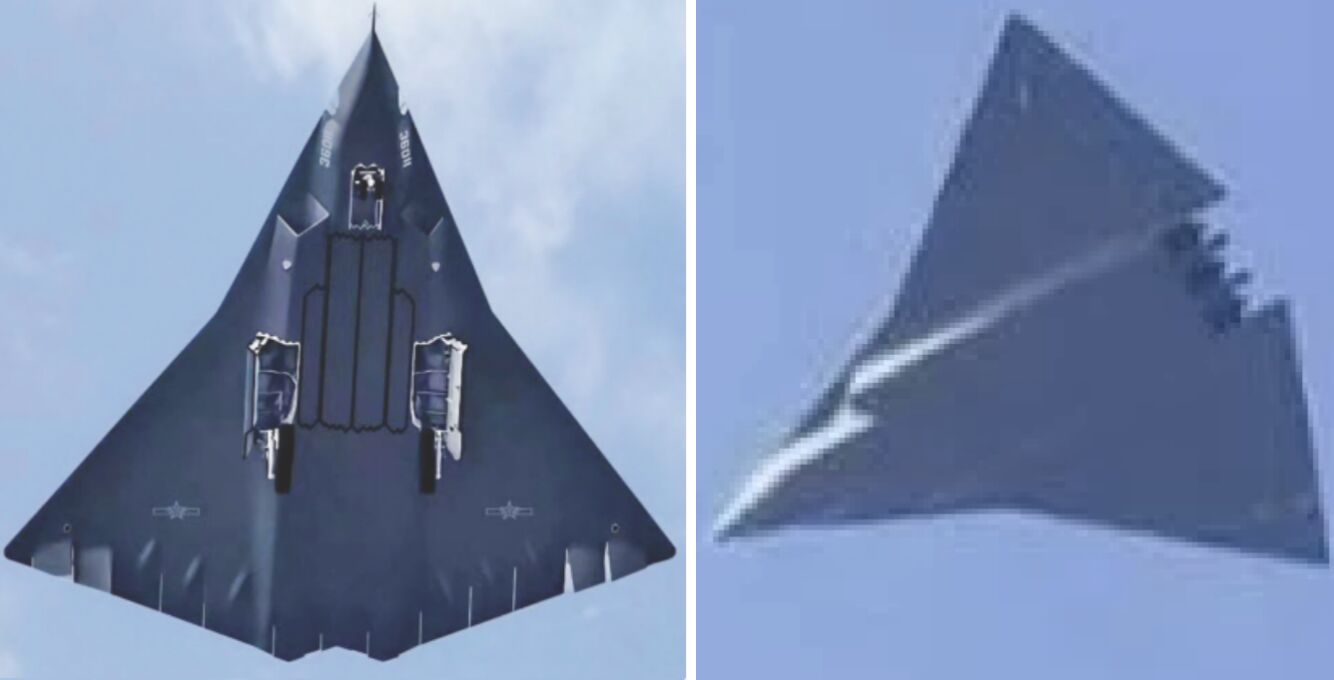
A central feature of the concept is the use of aircraft manoeuvres to redirect the radar’s coverage. Because the antenna would be embedded in the wing and face downwards during normal level flight, its orientation would restrict the directions in which it could effectively observe targets. The researchers propose that an aircraft could roll by more than 45 degrees, tilting the wing and directing the radar towards a different sector of the sky. By combining such manoeuvres with electronic control of the radar beam, the platform could potentially scan areas that would otherwise remain outside its most effective field of view. A platform would need to balance its flight path, radar pointing requirements and assigned surveillance sector, while maintaining sufficient stability to track targets accurately. Multiple aircraft could observe different sectors, but the resulting coverage would depend on their formation geometry, coordination and ability to exchange information rapidly.
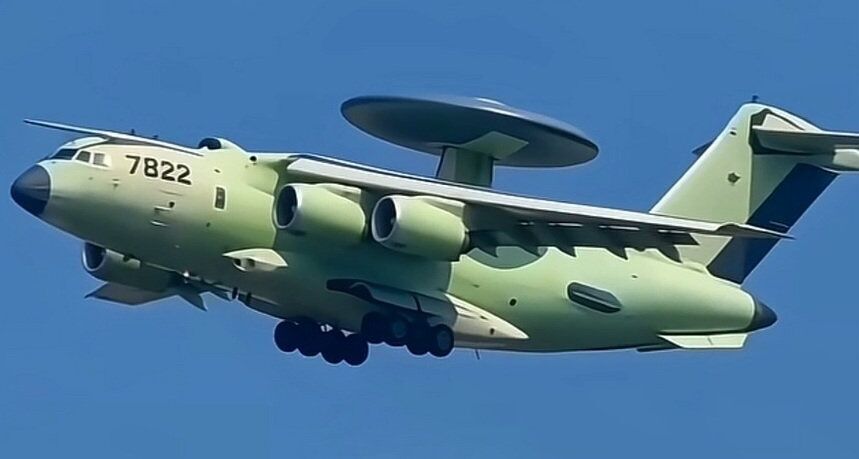
The development of wing root radars is far from unprecedented, and has already been implemented on Russia’s Su-35 and Su-57 fighters that are both in frontline service. The successes of this approach in Russian service remain unknown, although China procured a region’s worth of 24 Su-35 fighters in the mid-2010s providing an opportunity to analyse it. It is likely that a Chinese approach to wing root radar integration would be significantly more sophisticated, reflecting the much more advanced state of the country’s defence sector. China’s defence sector has pursued multiple novel approaches to improving situational awareness, with the new KJ-3000 AEW&C system using an entirely unique new hybrid tracking system employing a rotating dome housing AESA radars to maximise single aperture antenna size to spot low observable targets at extreme ranges.