
China Counters Deployment of U.S. Rocket and Missile Systems on Taiwan with New HQ-16F Missile Defence System
Military Watch Magazine Editorial Staff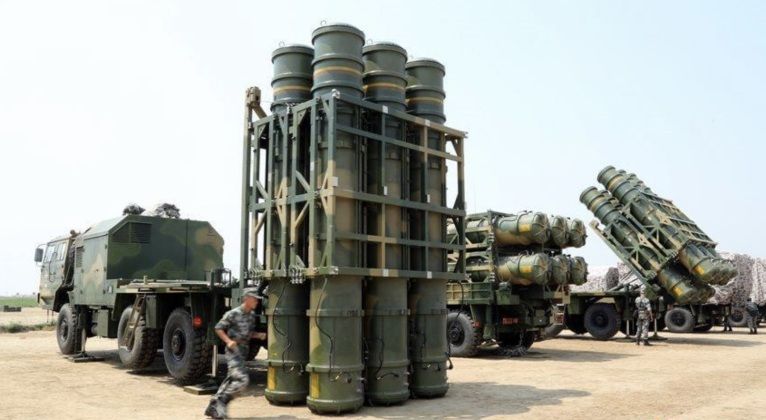
Launchers From HQ-16 Missile Defence Systems
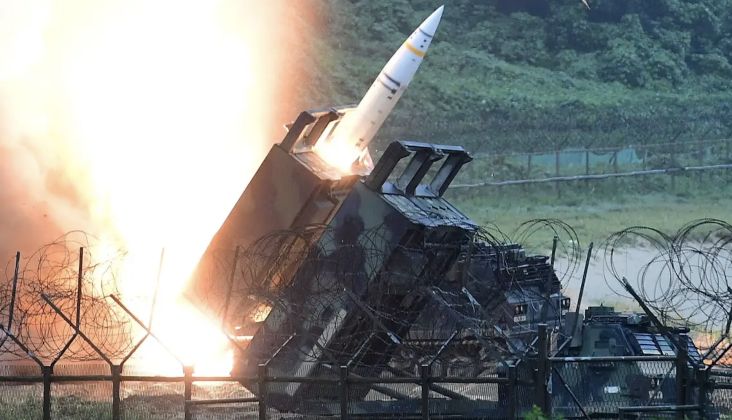
The Chinese People’s Liberation Army 73rd Group Army of the Eastern Theatre Command has re-equipped with a new enhanced variant of the HQ-16 long range air defence system, the HQ-16F, which was first unveiled in 2022. The deployment is significant due the proximity of the unit, based in Fujian province, to the Taiwan Strait, which is a leading potential hotspot for potential hostilities, and due to the very considerable capability advances which the system now provides. The deployment follows sales of U.S. HIMARS rocket artillery and ATACMS ballistic missiles to the Republic of China Armed Forces based on Taiwan Island, which remain in a state of civil war with the Chinese mainland. The establishment of a Joint Firepower Coordination Centre by the Republic of China Ministry of National Defence in late January saw U.S. personnel permanently stationed at the facility in Taipei to oversee planning and potential use of local missile forces, which has been considered an imminent threat to mainland Chinese territory. It early February it was confirmed that ATACMS ballistic missiles were being considered for deployment just 16 kilometres from the mainland coast.
The HQ-16F uses missiles that are slimmer and almost tailless, and has a much improved 160 kilometre maximum range making it the first HQ-16 variant that can be considered a long rather than a medium range system. To put this in perspective, the HQ-16 and HQ-16A have a range of 40 kilometres, and the HQ-16B and HQ-16C both have a range of 70 kilometres, or less than half the range of the new variant. The new system uses strapdown inertial midcourse navigation with active/semi-active terminal guidance to improve its anti-jamming performance and anti-saturation attack capability. Where prior variants of the HQ-16 used passive electronically scanned array radars for guidance, the next generation HQ-16F uses an active electronically scanned array radar.

Facing the threat of ballistic missile attacks, the Chinese People’s Liberation Army has developed a multi-layered anti-missile network that is widely regarded to be the world’s most capable, and which was built around a wide range of advanced and complementary assets deployed both on land and at sea. In September 2025 it was confirmed that the new HQ-29 anti-ballistic missile system had entered service, which is the world’s only mobile system with the ability to shoot down intercontinental range ballistic missiles other than the Russian S-500 and A-235. The HQ-19 has provided a second high tier anti-missile capability below the HQ-29, broadly comparable to that of the American THAAD system, which is optimal for intercepting intermediate range ballistic missile attacks. The HQ-16 is a lower tier system within the network, and appears to have a significant degree of overlap with the long ranged HQ-9 in its role.
