
China’s First Supercarrier Reaches ‘Optimised Operational State’ One Year After Commissioning: More Complex Ops. Beginning
Military Watch Magazine Editorial Staff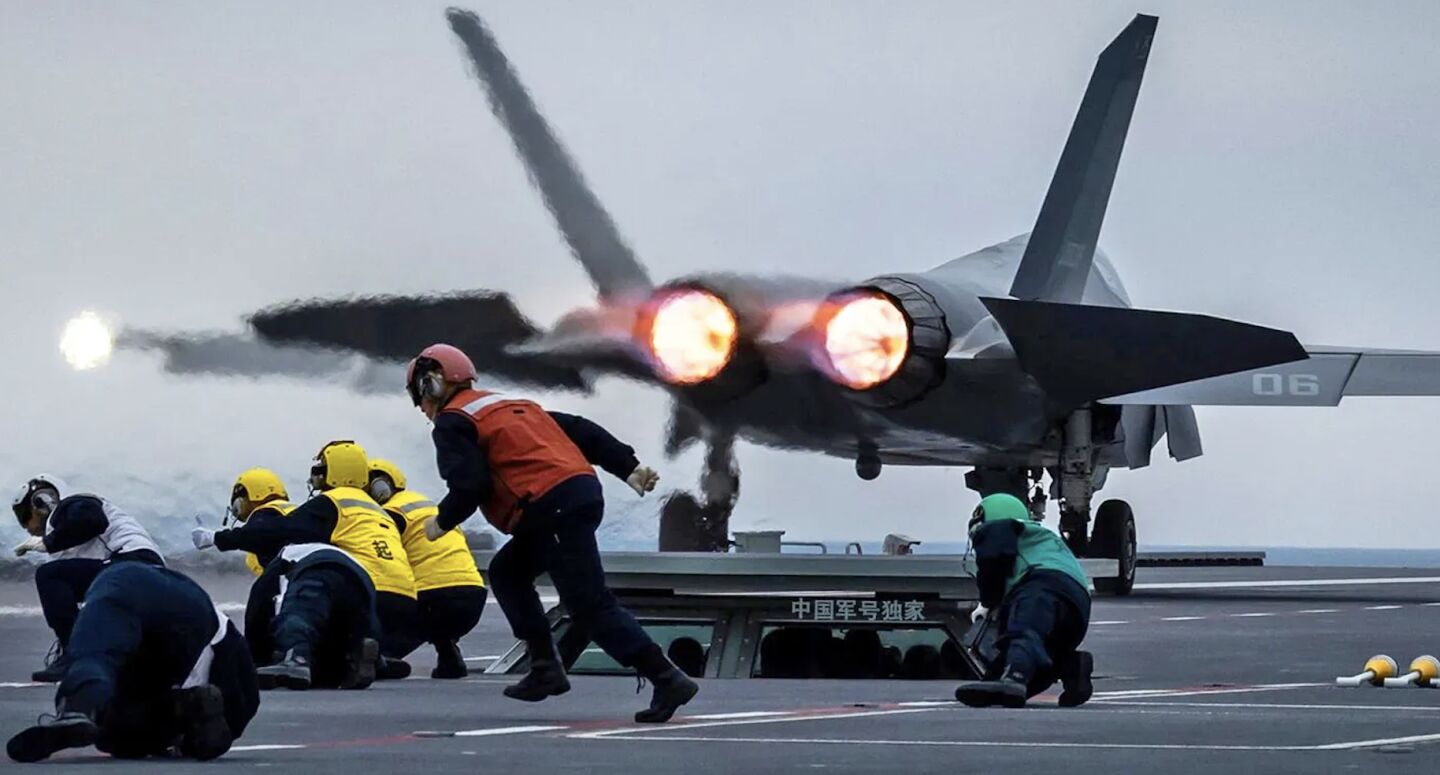
J-35 Takes Off from Supercarrier Fujian
China’s first supercarrier, the Fujian, has reached what Chinese state media describes as an optimised operational state one year after entering service, with the People’s Liberation Army Navy now preparing to expand flight operations and conduct more complex carrier group exercises. The assessment was made by military commentator Wei Dongxu in remarks carried by China Central Television and the official South Sea Fleet media, coinciding with the anniversary of the carrier’s commissioning on November 5, 2025. The future operations are expected to focus on more extensive flight-deck operations and increasingly sophisticated training involving its embarked aircraft and supporting ships such as destroyers and submarines.
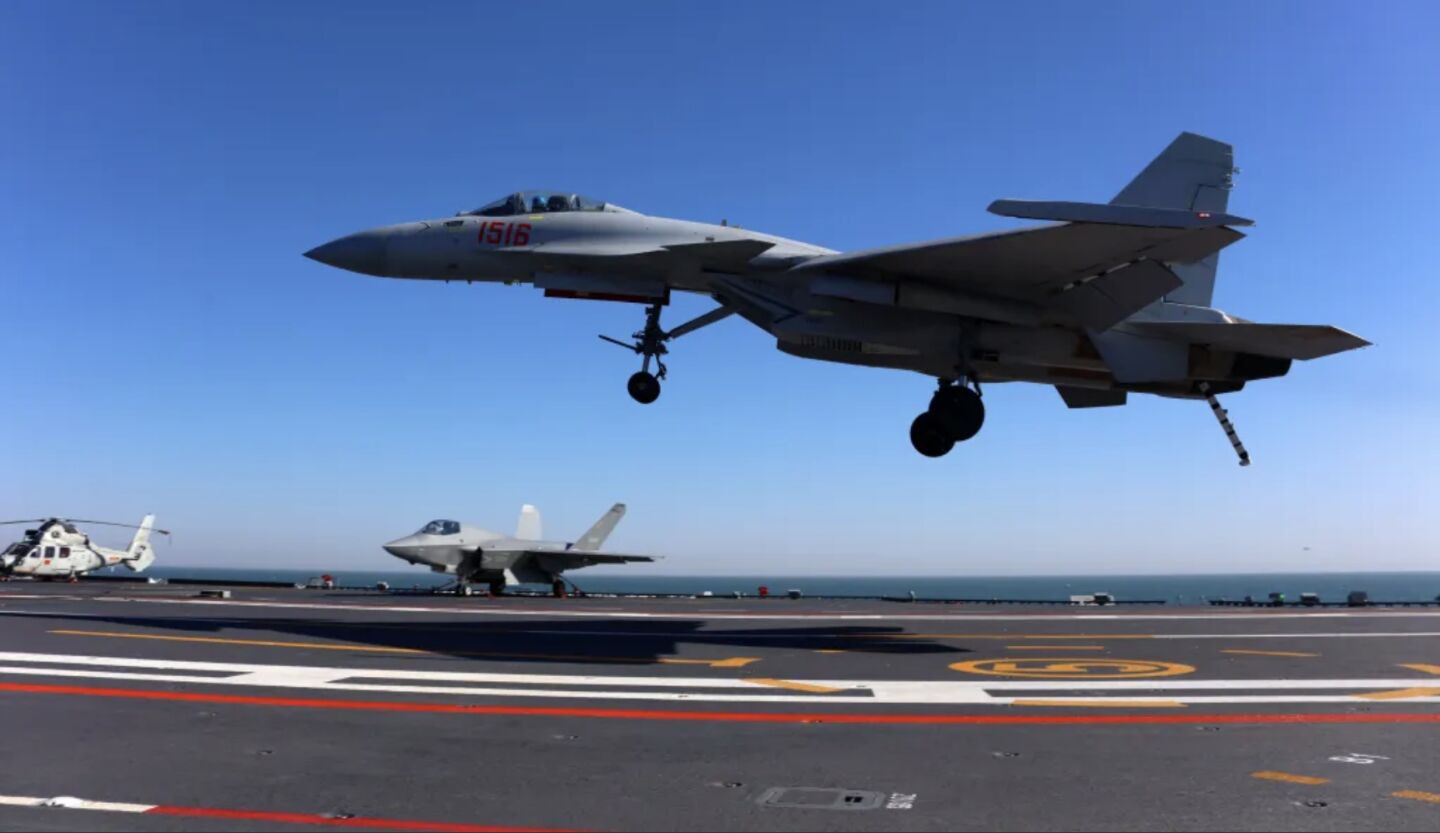
In early November new footage of the Fujian showed the ship at sea with a full flight deck of J-15 Flying Sharks, likely including both fighter and electronic warfare variants, with more aircraft onboard than previously seen. This indicates that the warship has indeed entered a new phase of operations, with the vessel expected to be seen sailing with full decks more often. The J-15 lack the stealth capabilities of the newer J-35 stealth fighter, but is much larger and combines a more powerful radar with more weaponry and a much longer range. Footage in early June showed both fighter types conducting touch-and-go landings on the Fujian, allowing pilots to practice the most difficult portion of carrier operations, namely the final approach and deck touchdown, while conducting many repetitions in a short period of time.
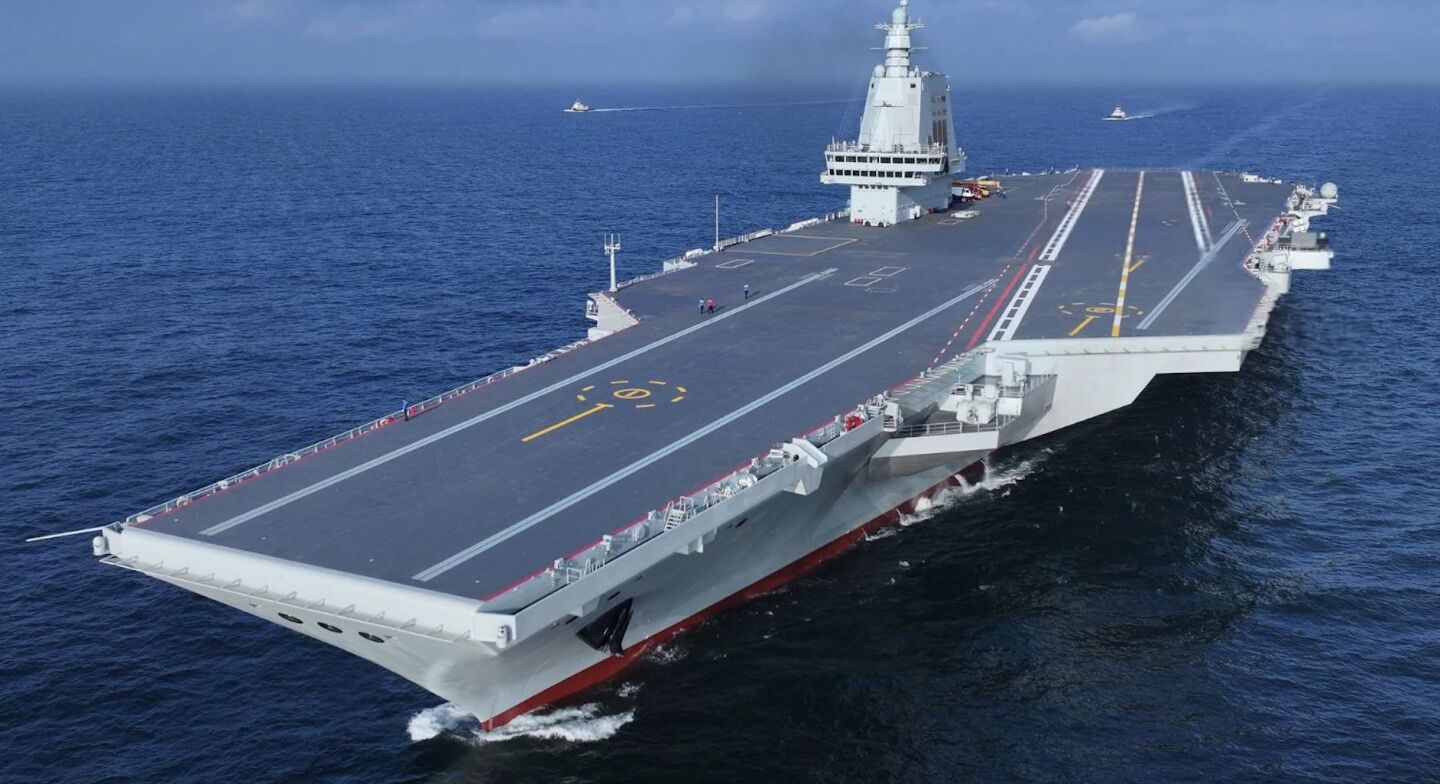
The Fujian’s operational requirements have differed considerably from those of the two prior carriers Liaoning and Shandong, with the new vessel accommodating a much larger and more diverse air wing, and integrating multiple electromagnetic catapults allowing for less strained launches of heavier aircraft, and at much faster rates. Wei Dongxu described the carrier as having reached an optimised state after its first year in service, while emphasising that further improvements would be necessary before its performance and combat capabilities could reach their highest potential. This distinction is significant: the vessel’s commissioning marked its formal entry into the fleet, but the subsequent period has involved developing the procedures, crew proficiency and aviation capabilities required for sustained carrier operations.
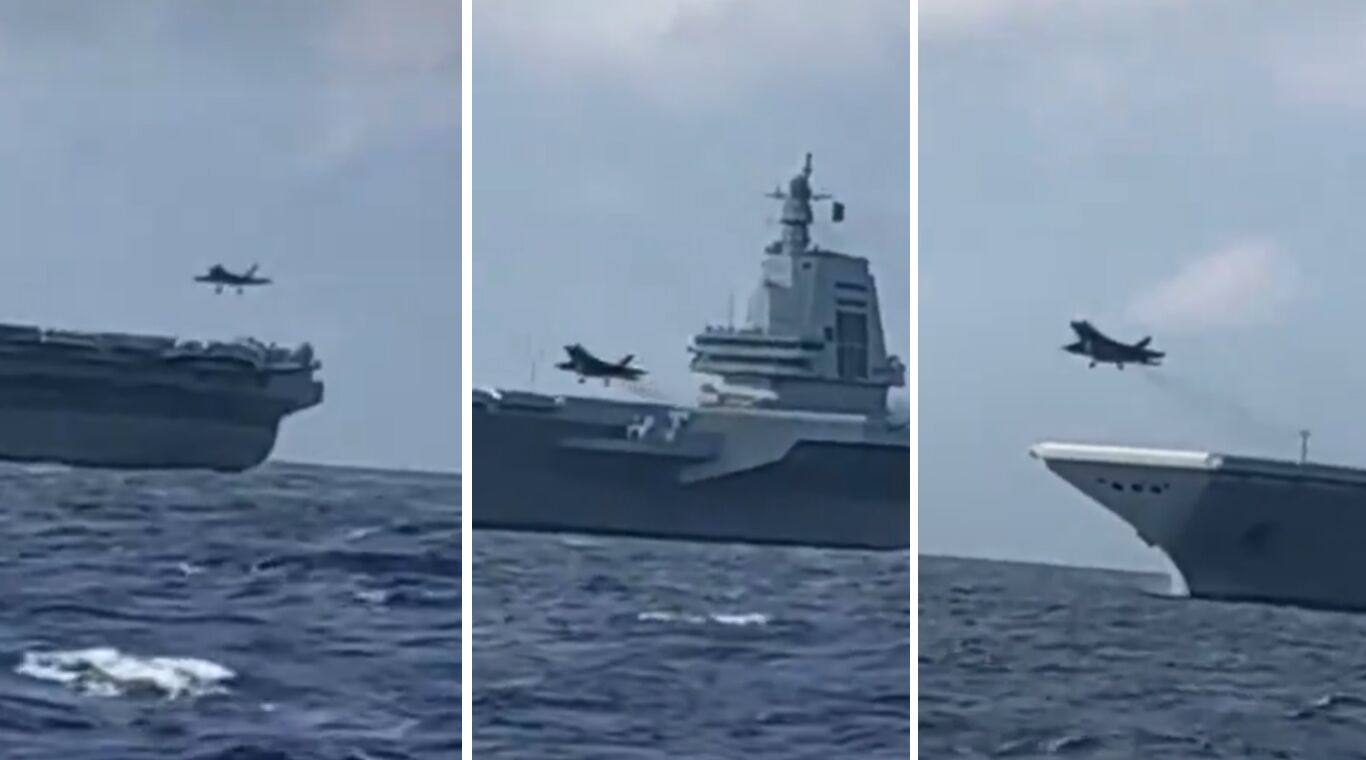
The Fujian is one of the two most advanced operational carriers in the world alongside the U.S. Navy supercarrier USS Gerald Ford. The American ship accommodates a larger air wing and benefits from nuclear propulsion, while the Chinese vessel has avoided many of the wide ranging maintenance and reliability issues plaguing its U.S. rival, has much lower maintenance needs, and integrates an air wing that it in many respects more capable with much newer and longer ranged combat aircraft. The Fujian was the first carrier in the world to integrate a fifth generation fighter, namely the J-35, with an electromagnetic catapult launch system, largely due to major delays integrating the rival F-35C fighter onto the USS Gerald Ford.
