
Canada Plans Fleet Surge to 140+ Fighters as Low Cost Gripens Reduce Expenses
Military Watch Magazine Editorial Staff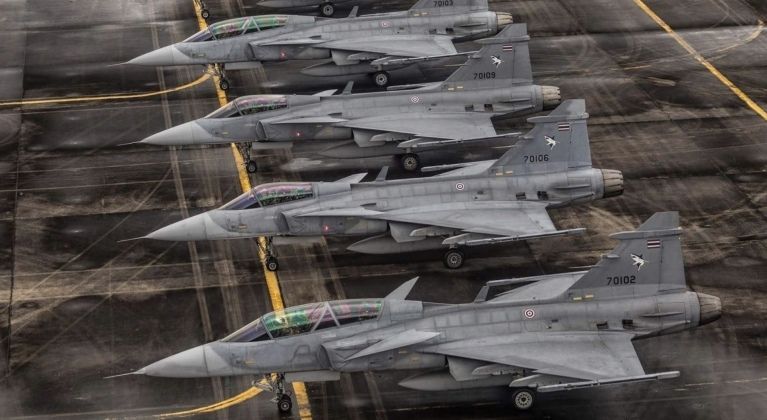
Royal Thai Air Force Gripen Fighters
The Royal Canadian Air Force is projected to field a much expanded fighter fleet of 140 or more aircraft, according to informed sources who spoke to local media regarding the possibility of procuring Gripen lightweight combat jets. As the Swedish firm Saab has launched a renewed campaign to persuade Ottawa that the Gripen offers considerable advantages, a source with knowledge of the ongoing discussions between it and the Canadian government has reported that "there could easily be a fleet of 140 aircraft.” This would reportedly be split between 70 F-35A fifth generation fighters, down from a currently planned fleet of 88, and over 70 Gripens. Saab has offered to establish final assembly, maintenance and long-term industrial support in Canada while transferring significant technology and intellectual property to Canadian industry, contrasting with the F-35 program’s centralisation of sustainment and software updates in the United States. Saab contends that its proposal would provide Canada with greater domestic control over its fighter fleet, while creating thousands of jobs in the aerospace sector.
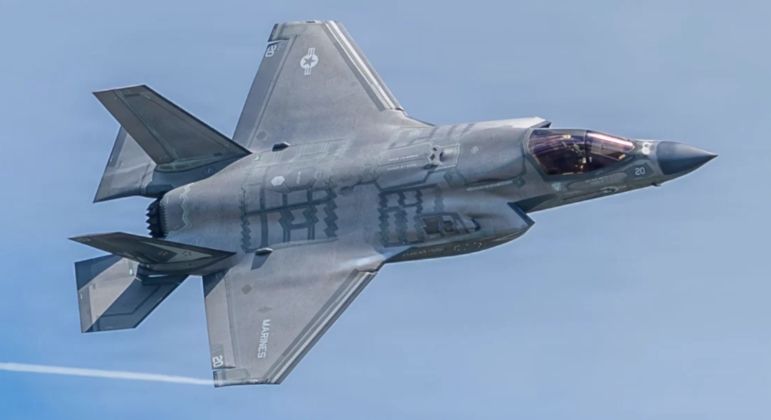
A proposal for Gripen E/F sales as part of a diversified fleet alongside F-35s was first reported to have been presented to Canadian officials in November 2025, after the Canadian Defence Ministry was in April confirmed to be holding talks with Saab regarding procurements. Reports emerged in October that the administration of Canadian Prime Minister Mark Carney was considering deep cuts to its planned order for F-35As with the intention of reallocating funds towards procuring the Gripen E/F, with Carney having advocated greater “diversification” in Canada’s defence and industrial partnerships away from reliance on the United States. Worsening ties with the United States under the Donald Trump administration were a primary factor stimulating renewed interest in the Gripen, which has otherwise fared poorly on export markets with no sales to economically developed countries, and only two sales in the third world.
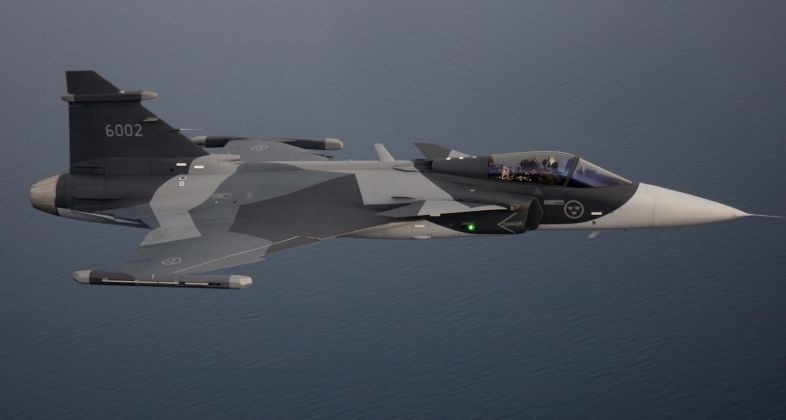
The Gripen was developed as a very lightweight fighter with a design that prioritised minimising maintenance needs and operational costs, which allows operators to field fleets more than twice as large for a similar cost than if fielding higher maintenance heavier fighter types such as F-35s or F-15s. The aircraft is prized for the ease at which it can be sustained at very high availability rates, as most clearly seen in the Royal Thai Air Force. Nevertheless, the aircraft’s combat capabilities remain very limited particularly compared to those of the F-35, which has consistently won every tender in which they have competed against one another. Internal Canadian Defence Ministry reports obtained by Radio Canada in late 2025 confirmed that the F-35 has been favoured by an overwhelming margin when the two were evaluated to equip the Air Force.
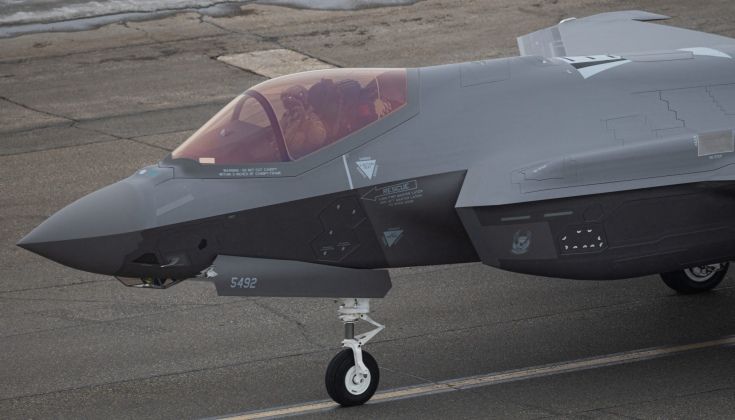
Advocating for continued investment in F-35 procurements, Deputy Minister of National Defence Stefanie Beck stressed that its fifth generation capabilities remain essential to maintaining parity with adversaries. “It is impossible to underestimate the importance of having fifth-generation aircraft because that is what our adversaries have,” she stated, highlighting China’s development of the J-20 and new J-35 stealth fighters, and Russia’s heavily combat tested Su-57 fleet. Royal Canadian Air Force Commander General Jamie Speiser-Blanchet echoed this warning, stressing that both of the Western Bloc’s leading adversaries fielded advanced aircraft and high-speed missile systems. “It is urgent to transition to a new fleet of fighters,” she said.
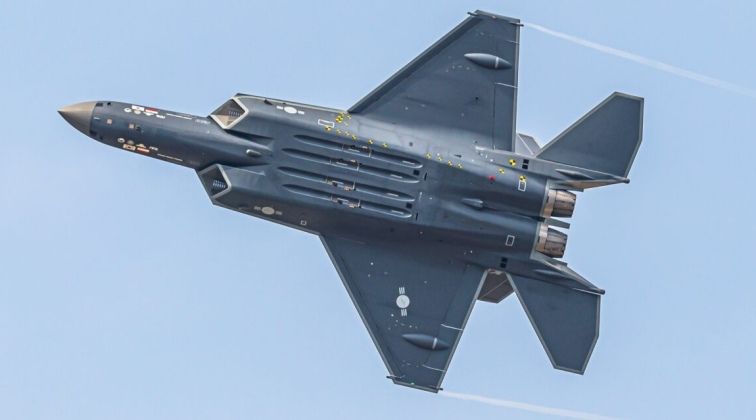
Seeking other alternatives to the F-35 with superior combat capabilities to the Gripen, Canadian officials have reportedly expressed an interest in procuring fighters developed under the Global Air Combat Programme (GCAP) being jointly developed by the United Kingdom, Japan and Italy. While the F-35 was developed by one of the world’s two leading defence sectors and global leaders in key research and development areas, however, where the GCAP is being developed by countries that produced fourth generation fighters that were in many respects highly questionable, and are over 35 years behind the United States in moving to develop post-fourth generation designs. The F-35 is not only expected to be much more cost effectively, but may also be far more capable. One notable alternative that has been raised is to procure the South Korean KF-21 fifth generation fighter, which will likely be available over a decade before the GCAP fighter, and was developed by a defence sector with a much better record for efficiency and performance. The aircraft is significantly more capable by the Gripen, but also has far lower operational costs and maintenance needs than the F-35, and technologies from Lockheed Martin, potentially making it optimal for high-low combination.
