
Belarusian Forces Conduct Nationwide Exercises Confronting Expanding NATO Presence Across Borders
Military Watch Magazine Editorial Staff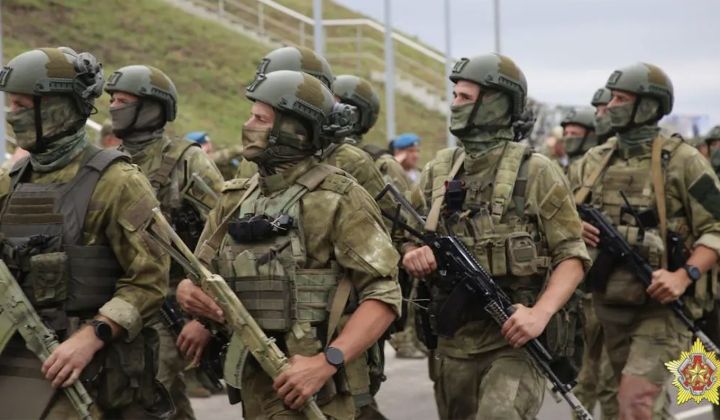
Belarusian Army Personnel
The Belarusian Armed Forces have conducted exercises across all country's largest cities, which according to Chief of General Staff Pavel Muraveyko simulated a “complex situation…. taking into account the specifics of the processes taking place in Europe.” Reflecting prevailing security threats, he highlighted that exercises took place across “all administrative and economic centres of the country, with the involvement of all executive committees of the regions and districts of the Republic of Belarus.” "We have extensive experience in developing territorial defence systems on the scale of one or two regions. This exercise is being conducted on a larger scale. All six regions and the city of Minsk are involved," he added. Belarus has faced rising tensions with multiple NATO members, as their military presences across and operations near its borders have expanded considerably over the past half decade.
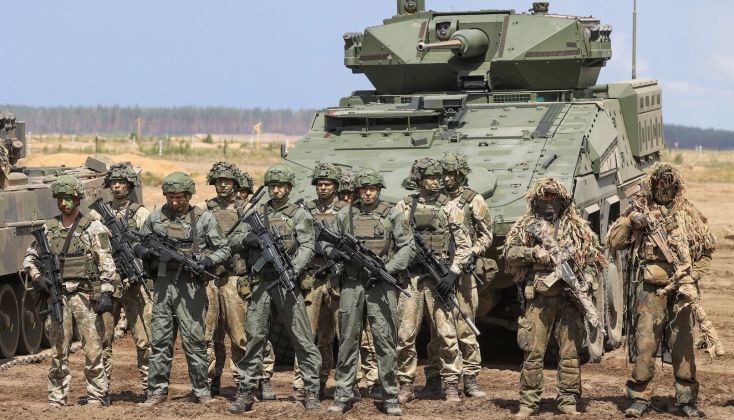
Further elaborating on the exercises, Muraveyko observed: “Over the course of seven days, formations, military units, and subunits of the Western Command troops carried out active manoeuvring operations, employed various artillery and missile systems, conducted live fire exercises with tanks and infantry fighting vehicles, employed anti-aircraft missile systems, and actively used FPV drones and electronic warfare systems.” In mid-February Belarusian President Alexander Lukashenko warned that his country had no option but to further strengthen its defence capabilities, as it NATO had over the past three years been establishing new units and boosting its forces near Belarusian territory. “Whether we like it or not… we will have to strengthen our defence capabilities,” he noted, adding NATO members “are not spending money on tanks and munitions for no reason,” indicating that this buildup was seen to have aggressive intent.
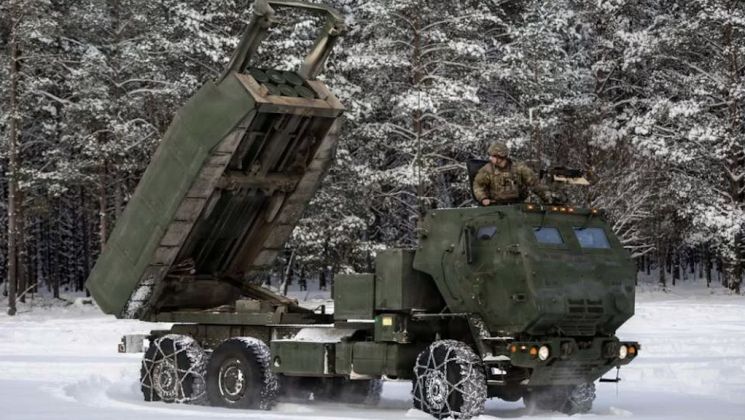
In January U.S. and Lithuanian Army artillery units conducted advanced interoperability training centred on employment of the M142 HIMARS rocket artillery and ballistic missile systems near Belarusian territory. Preceding this, the U.S. Army in September 2025 deployed AH-64 Apache attack helicopters for deep strike live-fire exercises in Lithuania near the border with Belarus. These exercises were part of a broader trend towards a significant increase in U.S. Army deployments and exercises in the Baltic region. Neighbouring Poland has invested particularly heavily it rapidly modernising its air and ground forces, including procuring large numbers of South Korean K2 and U.S. Abrams tanks, as well as Korean Chunmoo rocket artillery and K9 howitzers, U.S. HIMARS and F-35 stealth fighters, among other assets that are rapidly expanding Warsaw’s offensive options. The German Army has also established a presence near Belarus, and on May 22, 2025, inaugurated the 45th Armoured Brigade in Vilnius, Lithuania, providing an elite forward deployed mechanised warfare capability within hours’ drive of the Belarusian capital.
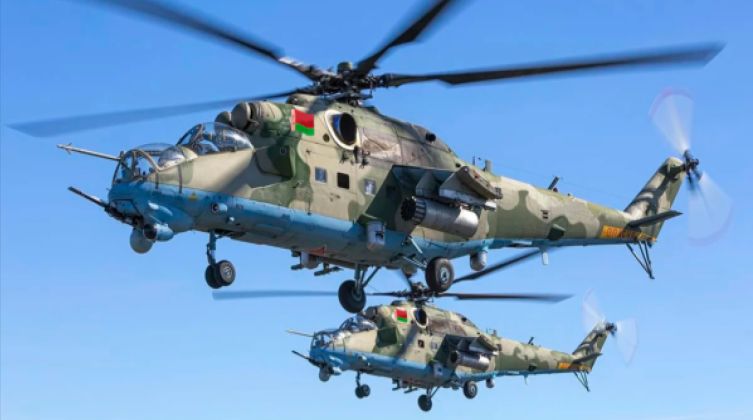
Belarus has recently made unprecedented investments in rapidly modernising its military capabilities with large scale procurements predominantly from Russia. The Air Force has significantly enhanced its operational capabilities primarily by procuring S-400 long range systems from Russia from 2022, Mi-35 helicopter gunships, and the longest ranged fighter type in Europe the Su-30SM2. Exercises earlier in March tested the ability of older S-300 air defence units to rapidly respond to new combat situations. The Defence Ministry has also invested in obtaining both strategic and tactical nuclear delivery systems through a nuclear sharing agreement with Russia from 2023, and in December 2025 operationalised Oreshnik intermediate range hypersonic ballistic missile systems capable of delivering nuclear attacks against targets across Europe. .
