
Belarus Responding to ‘Aggressive’ NATO Military Buildup on Borders with Major Investments in Strengthening Defences
Military Watch Magazine Editorial Staff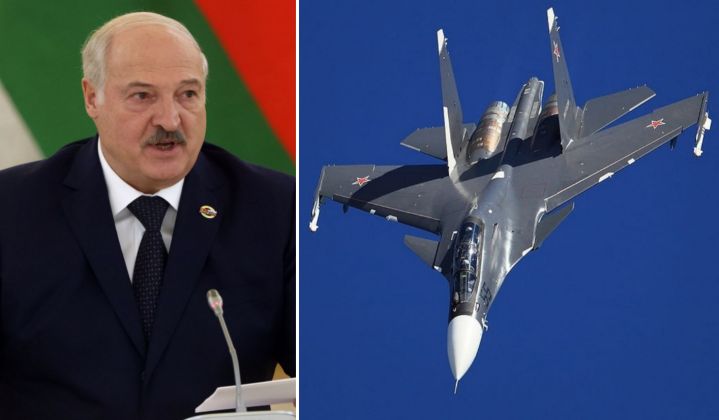
Belarusian President Lukashenko and Su-30SM Fighter
Belarusian President Alexander Lukashenko has warned that his country has no option but to further strengthen its defence capabilities, as it faces a fast growing NATO military buildup on its borders. Highlighting that the Western military bloc has over the past three years been establishing new units and boosting its forces near Belarusian territory, the president cautioned: “whether we like it or not… we will have to strengthen our defence capabilities… The buildup of the military component on our borders, especially by Poland, is not merely of concern to us.” He warned that NATO members “are not spending money on tanks and munitions for no reason,” indicating that this buildup was seen to have aggressive intent.
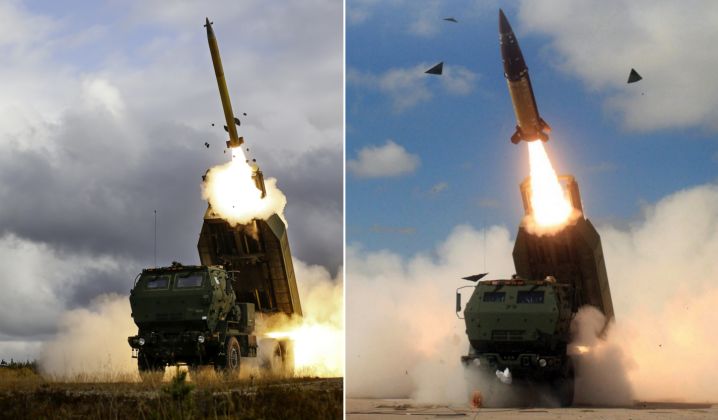
In January U.S. Army and Lithuanian Army artillery units conducted advanced interoperability training centred on employment of the M142 HIMARS rocket artillery and ballistic missile systems near Belarusian territory. Preceding this, the U.S. Army in September 2025 deployed 1st Armoured Division AH-64 Apache attack helicopters for deep strike live-fire exercises in Lithuania near the border. These exercises were part of a broader trend towards a significant increase in U.S. Army deployments and exercises in the Baltic region. In parallel to the U.S. buildup, the German Army on May 22 inaugurated the 45th Armoured Brigade stationed in Vilnius, Lithuania, providing an elite forward deployed mechanised warfare capability on the territory of the former USSR just 150 kilometres from the Belarusian capital Minsk.
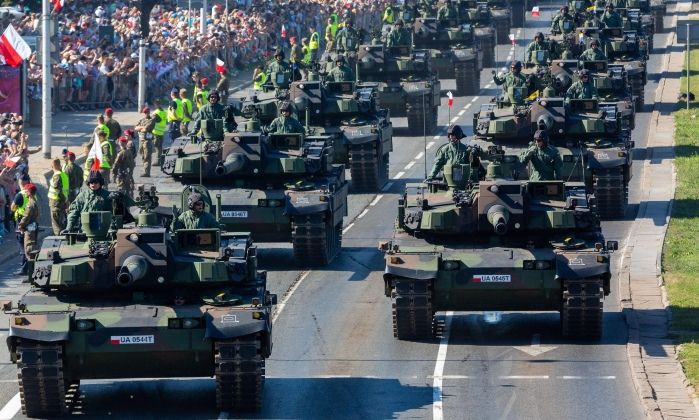
The Belarusian president’s statement closely coincides with a warning by the Russian Foreign Intelligence Service that non-government organisations from the U.S., the United Kingdom, Germany, Poland, and other European countries are “building up assets to again attempt to destabilise the situation and change the constitutional order in Belarus.” According to the agency, a new wave of anti-government protests could be organised to coincide with the 2030 presidential elections. In parallel to these reported planned destabilisation operations, and to force deployments by the U.S. and Germany, Poland has invested particularly heavily it rapidly modernising its air and ground forces, including procuring large numbers of South Korean K2 and American Abrams tanks, as well as Korean Chunmoo rocket artillery and K9 howitzers, American HIMARS, Korean FA-50 fighters, and U.S. F-35 stealth fighters with advanced penetrative capabilities. New assets such as K2s have frequently deployed near Belarus’ borders, while the F-35 threatens to introduce a deep penetration strike capability that is particularly threatening.
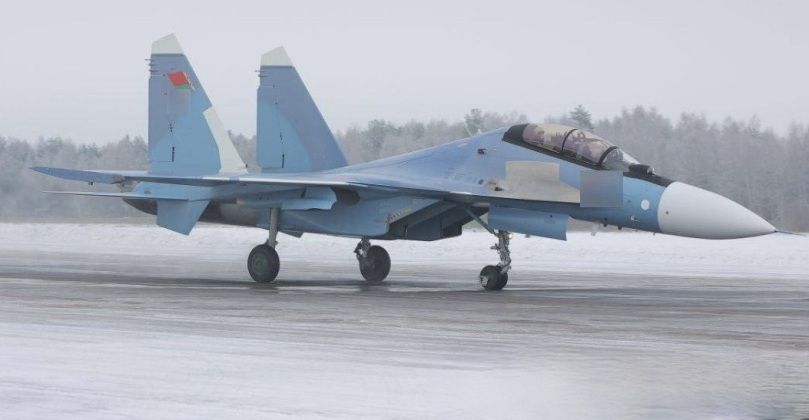
Belarus remains the only country in Europe considered outside the Western Bloc’s sphere of influence, and has recently made unprecedented investments in rapidly modernising its military capabilities with large scale procurements predominantly from Russia. The accelerated modernisation of Belarusian forces appears to be a response to rising threats. The Defence Ministry has otherwise invested in obtaining both strategic and tactical nuclear strike capabilities through a nuclear sharing agreement with Russia from 2023, and in increasing exercises with its strategic partners. Belarusian forces in September 2025 carried out Zapad military exercises with Russia, and 14 months prior in July hosted an unprecedented deployment of Chinese ground forces for the first major joint exercises between the two countries. Belarus significantly enhanced its air defence capabilities primarily by procuring S-400 long range systems from Russia from 2022, and the longest ranged fighter type in Europe the Su-30SM2.
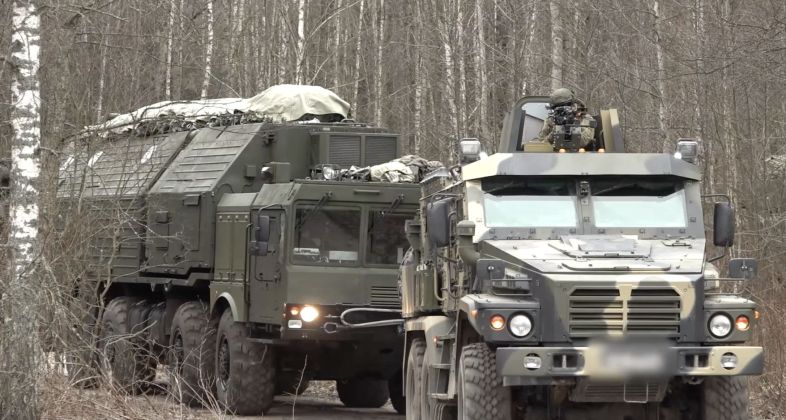
The Belarusian Armed Forces’ ability to launch counter strikes has also been bolstered, and following the procurement of Iskander-M tactical ballistic missile systems, the Armed Forces in December 2025 December operationalised Oreshnik intermediate range hypersonic ballistic missile systems. The local defence sector is also continuing to produce the Polonez long range rocket artillery system jointly with China, while options to integrate nuclear warheads onto the systems were reported in August to be under consideration. Belarusian conventional forces remain outmatched in their equipment by the larger quantities of newer systems being deployed by NATO members, with Poland’s K2 tanks far outmatching and outnumbering updated Soviet-built T-72s in Belarusian service. This has resulted in a strong emphasis on asymmetric high impact systems such as the Oreshnik, Polonez and S-400.
