
America’s Secretive X-37 Plane Could Launch Nuclear Strikes From Space: Can Russia Stop It?
Military Watch Magazine Editorial Staff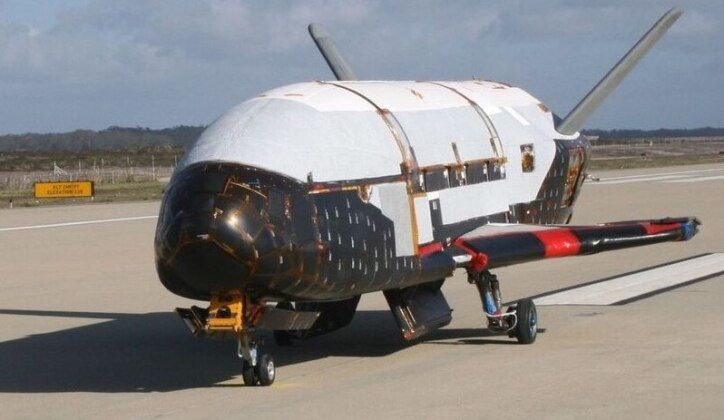
U.S. Space Force X-37 Space Plane
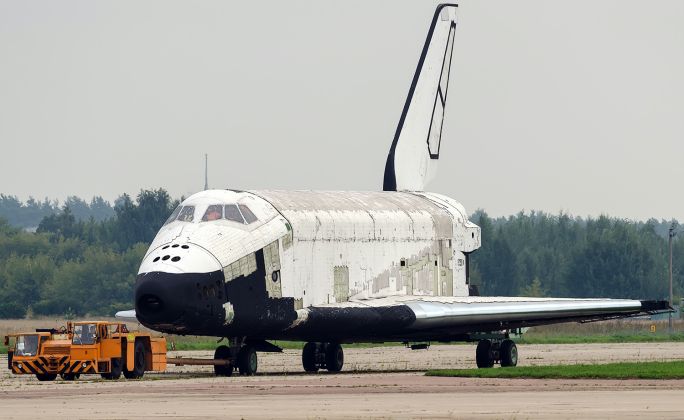
The Boeing X-37 unmanned space plane saw its first flight outside the Earth’s atmosphere ini 2010, and was operated by the Department of Defence from 2004 after seeing initial development as a NASA project. The aircraft represents a unique asset for the U.S. Military, and is currently carrying out its sixth space flight with its purpose remaining highly classified. While the Soviet Union previously led the world in the development of space planes, with its Buran plane which loosely resembles the X-37 having been expected to be the first in the world to complete such missions, political pressure in the latte 1980s ultimately led to the Buran’s suspension and the contraction of the Soviet and later Russian space programs - paving the way for an American lead. The Buran was the first reusable space plane in the world capable of landing automatically upon returning from orbit, with the X-37 being the second.
The possibility that the X-37, and other aircraft based on similar technologies, could give the U.S. a decisive advantage in a potential future war, has been raised multiple times. Director General of Russian defence technology company Almaz-Antey, Yan Novikov, stated on May 22 regarding the potential danger this could pose: "The official story is that these platforms were developed for scientific purposes and, well, surveillance. But we understand that having these capacities and possibilities, the smaller spacecraft can carry up to three nuclear warheads, the large one up to six… This is, without any doubt, a serious challenge.” The U.S. Military reportedly plans to deploy eight similar space aircraft by 2025, and alongside nuclear strike missions they could potentially be used to neutralise enemy satellites.
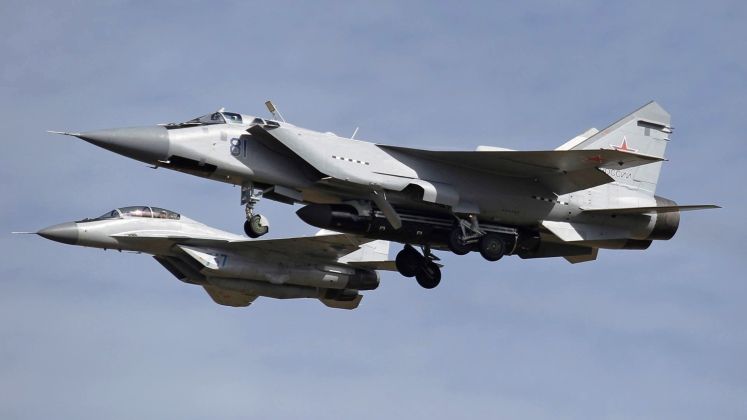
The Soviet Union had long invested heavily against countering high altitude threats, with its MiG-25 Foxbat interceptor able to operate to a limited degree in space at altitudes of over 35km and its successor the MiG-31 Foxhound able not only to operate but also to fire all its weapons, in near space. The Soviet collapse forced Russia to subsequently cancel its MiG-31M interceptor program due to economic crisis, despite the type having completed testing and being ready for serial production. Russia currently relies heavily on upgrade MiG-31 airframes which integrate a number of new technologies, many of them derived from the MiG-31M, although their ability to threaten an aircraft such as the X-37 remains limited.
Russia is currently developing the S-500 long range hypersonic air defence system, which proves a cheaper alternative to interceptors for neutralising space aircraft and satellites. MiG-31s have also been seen from 2018 deploying large new missiles widely thought to be built to neutralise targets in space, and the country is currently developing a next generation interceptor to succeed the Foxhound which will reputedly be designed primarily for space warfare. The affordability of the next generation interceptor program, designated ‘MiG-41,’ remans in question.
