
X-37B Returns: Mysterious U.S. Air Force Space Plane Back From Record 780 Mission
Military Watch Magazine Editorial Staff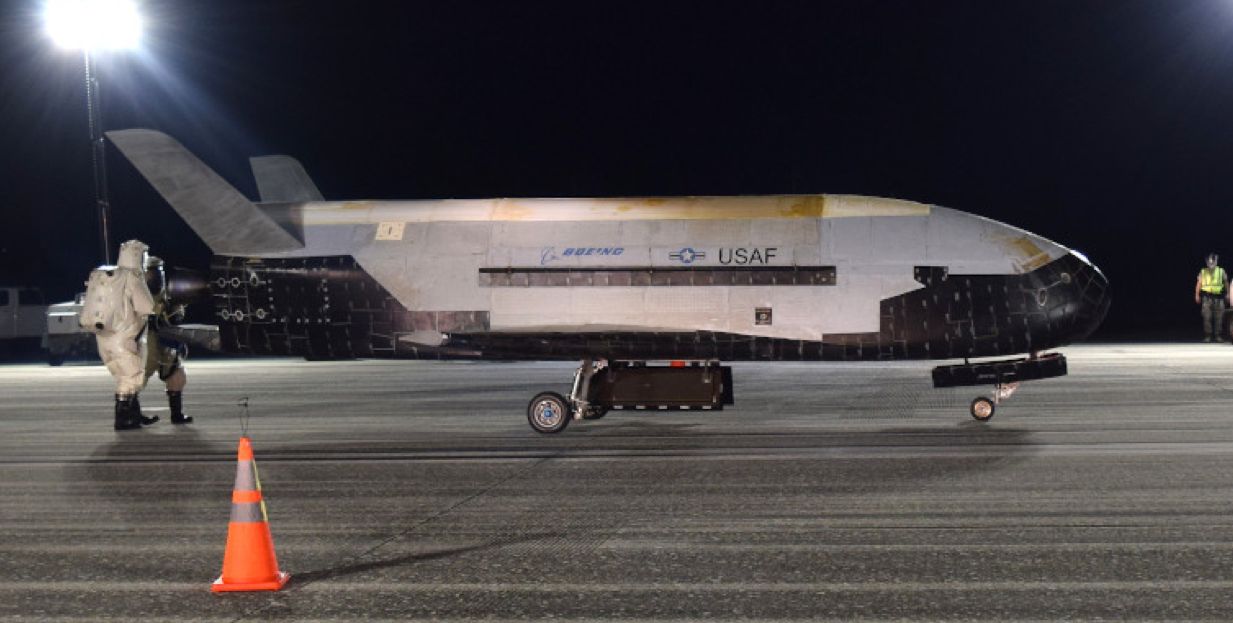
X-37B Space Plane
One of the U.S. Air Force’s two X-37B unmanned space planes has returned after a 780 flight - its purpose as much of a mystery today as it was when it launched in early September 2017. The aircraft landed at NASA's Kennedy Space Center Shuttle Landing, with the director of the Air Force Rapid Capabilities Office stating regarding the mission: "This program continues to push the envelope as the world’s only reusable space vehicle. With a successful landing today, the X-37B completed its longest flight to date and successfully completed all mission objectives… This mission successfully hosted Air Force Research Laboratory experiments, among others." The space plane appears to be designed to deploy and recover objects in space, possibly including small information-gathering satellites or even space based weapons systems. Air Force Secretary Heather Wilson stated earlier in the year that the X-37B was particularly invaluable for its ability to temporarily enter the upper atmosphere and perform turns which altered its trajectory before returning to space flight. This capability: "means our adversaries don't know – and that (turning) happens on the far side of the Earth from our adversaries – where it's going to come up next. And we know that that drives them nuts. And I'm really glad about that."
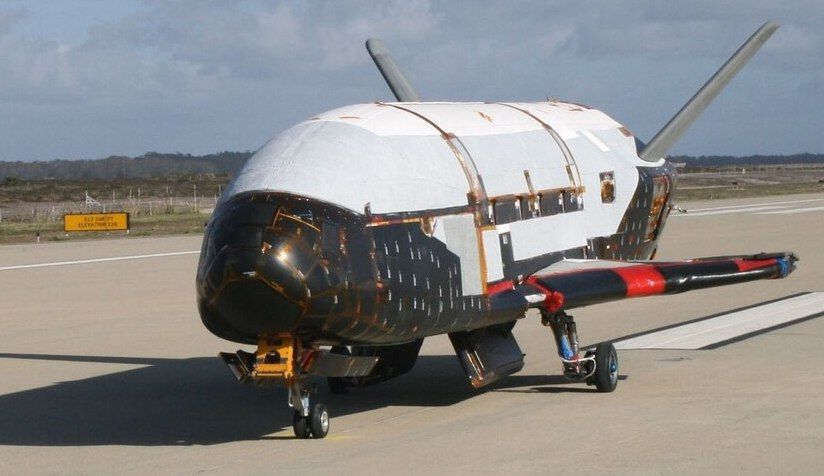
During the Cold War the United States and Soviet Union raced to develop the most capable military space systems, and while the USSR had a significant lead by the mid 1980s with several planned space planes of its own, its last leader Mikhail Gorbachev acceded to an American request to shut down the program unilaterally. This came much to the chagrin of the Soviet military leadership at the time. The U.S. subsequently moved to gain a considerable advantage in space plane technologies which Russia today has invested heavily in compensating for. It is expected that the upcoming SR-72 hypersonic aircraft will be capable of operating in space, and will be available in both reconnaissance and bomber variants for high-end missions over enemy airspace. The creation of an American Space Corps under the Donald Trump administration has further confirmed plans to invest heavily in space warfare capabilities. Russia for its part is developing an interceptor aircraft capable of operating in space under the MiG-41 program, which may see its first flight in the latter half of the 2020s and will be equipped with hypersonic air to air missiles. It is as of yet unclear how the balance of power in space will evolve, what further projects are in the making or whether China and Russia will by sharing technologies be able to outpace the American military space program in the coming years.
