
After Reaper Drone Fleet Takes Heavy Losses, U.S. Turns to Polish Tiguar Drones for Operations Against Iran
Military Watch Magazine Editorial Staff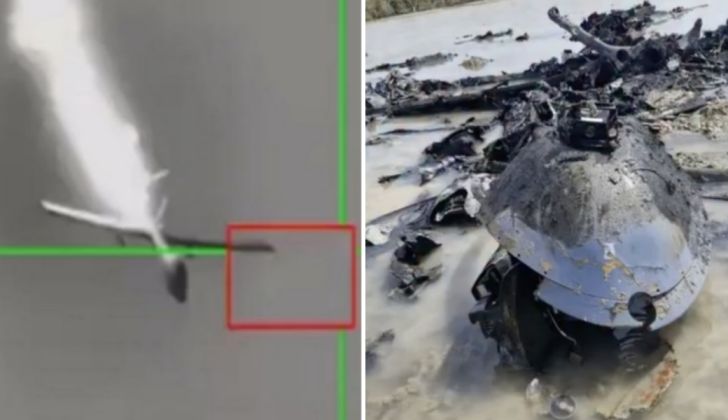
MQ-9 Crash (left) and Separate MQ-9 Wreckage During Clashes with Iran
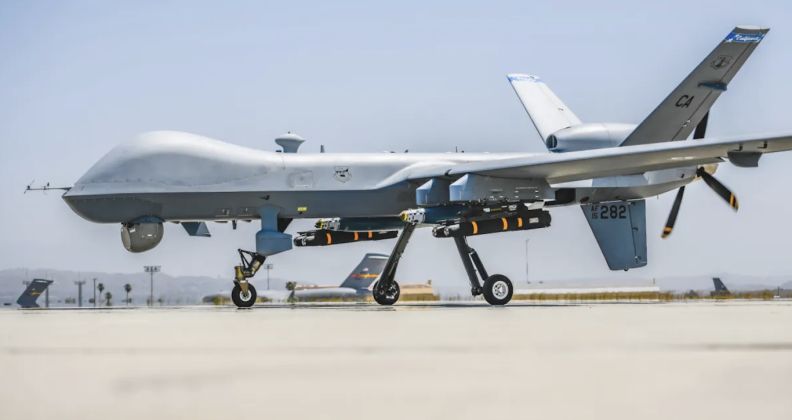
The Iranian Islamic Revolutionary Guard Corps has claimed to have shot down a Polish-made Tiguar M reconnaissance drone in Iranian airspace while supporting U.S. military operations against the country. The aircraft was reportedly being used to identify and designate targets for long-range precision strikes. The reported incident comes after the United States has suffered heavy losses among its fleet of MQ-9 Reaper drones during hostilities with both Iran and Yemen’s Ansurullah Coalition, which between them have downed over 53 of the aircraft, while several further Reaper have been destroyed at air bases by Iranian missile attacks. The unsustainable rate of losses, and the U.S. Air Force’s inability to procure more Reapers, are thought to have been primary factors leading it to procure the Polish Tiguar M as a less capable substitute.
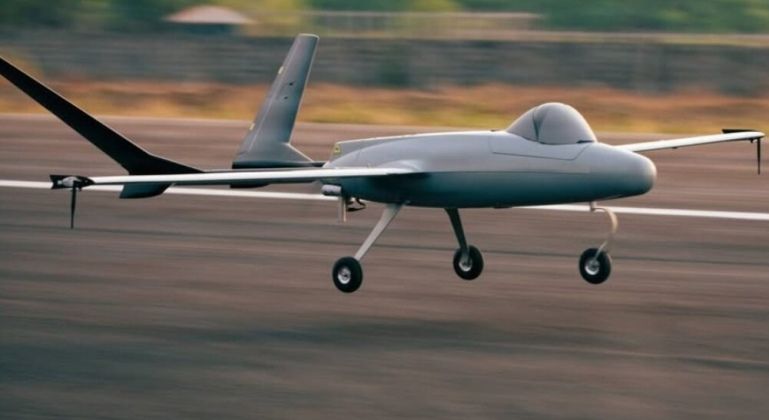
According to Iranian sources, the Tiguar M's primary mission was to support the targeting process for the M142 HIMARS artillery system by identifying targets and relaying precise coordinates to strike units. Such drones provide real-time battlefield intelligence that enables precision-guided rockets and missiles to engage moving or time-sensitive targets with considerably greater accuracy than would otherwise be possible. The U.S. Army has relied heavily on HIMARS systems, initially to deploy PrSM ballistic missiles, although when supplies of these were quickly depleted it transitioned to rely on older and much shorter ranged ATACMS ballistic missiles.
According to publicly available information, the only known operator has been the U.S. Army's 1st Special Forces Group (Airborne), commonly known as the Green Berets, although official details regarding its deployment remain limited. The reported deployment has generated particular interest because Polish Defence Minister Wladyslaw Kosiniak-Kamysz stated that he was unaware that the drone had been exported to equip U.S. units operating in the Middle East. The manufacturer of the Tiguar M has not publicly commented on the reports.
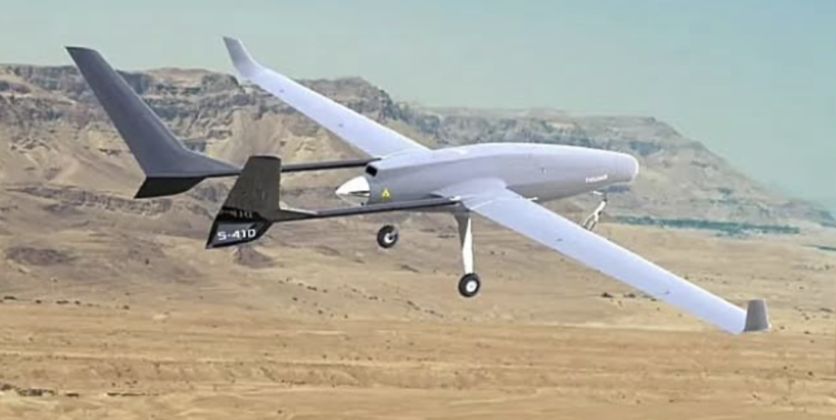
Although the MQ-9 Reaper is vastly more capable in long-range strategic surveillance and strike operations, the Tiguar M is relatively capable for tactical reconnaissance for small special operations teams, while being far less costly. In almost every performance category, the MQ-9 is significantly more capable, with a far higher altitude, superior sensors, a range estimated to be six times as long, and satellite communications systems which the Polish aircraft lacks. A Reaper can remain over a target area for more than a day, allowing continuous surveillance of troop movements, missile launches or logistics routes, while by contrast the Tiguar M generally remains airborne for only several hours. Nevertheless, the extent of the losses which the Reaper fleet has faced has increasingly forced the U.S. Armed Forces to consider alternatives.
