
A Threat to Israel? How Capable is the S-300PMU-2 System Deploying to Syria
Military Watch Magazine Editorial Staff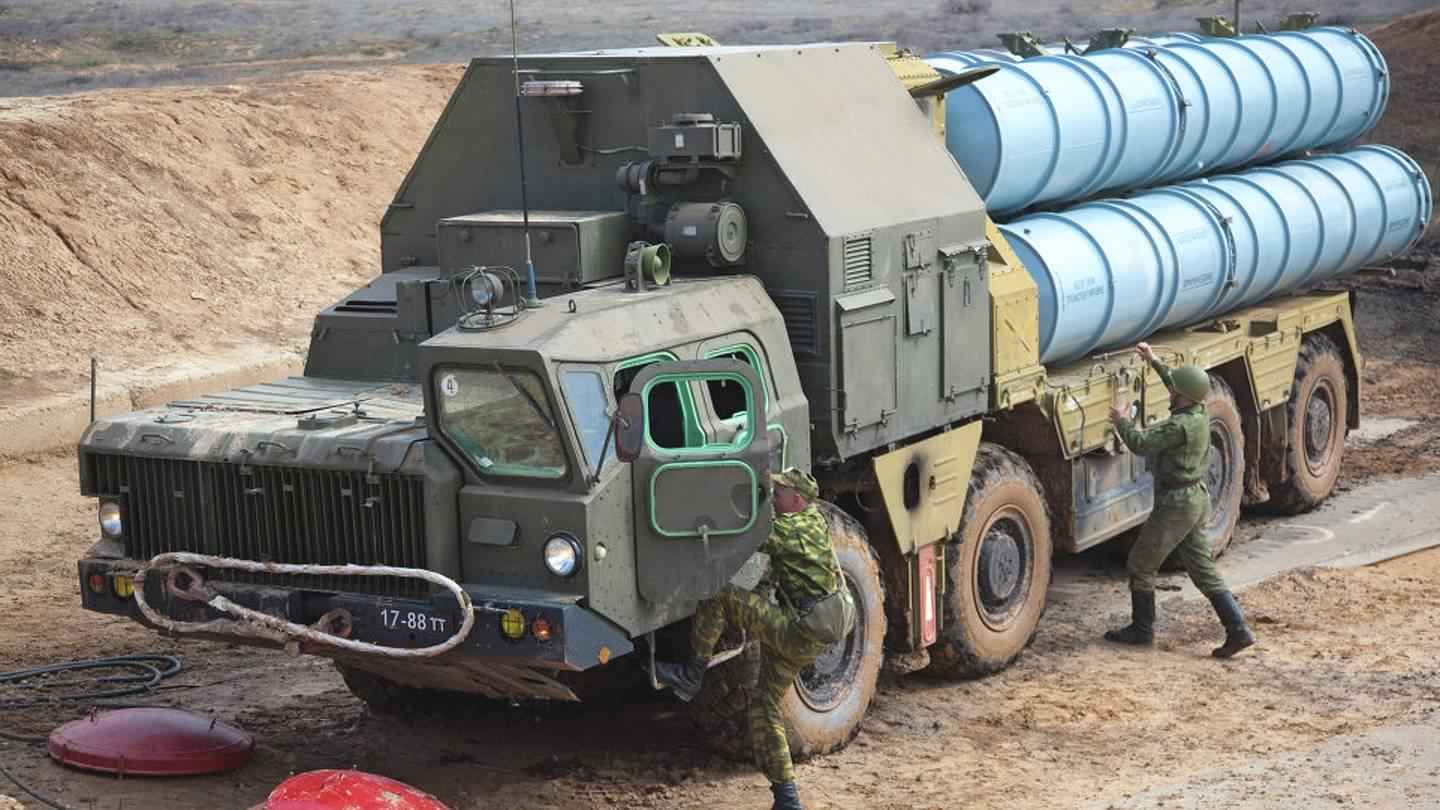
S-300 Surface to Air Missile Battery
With Russia having confirmed the imminent delivery of the S-300PMU-2 surface to air missile system to the Syrian armed forces, a weapons platform Damascus has long sought to acquire which was blocked by Moscow due to an Israeli request alongside requests for MiG-31 interceptors, the air defence system is set to considerably enhance the country’s ability to protect its airspace and engage hostile combat jets. With the S-200 currently relied on for a long range anti aircraft role, alongside the complementary shorter ranged S-125 and Pantsir-S1, the S-300 represents a considerably upgrade over the older weapons system - which were provided by the Soviet Union over 35 years prior from 1982 and used highly effectively against U.S. Navy combat jets during the Lebanon War. The new weapons platform’s ability to distinguish Russian and Syrian aircraft over the country’s airspace due to more advanced command and control systems means that Syrian air defences will be more capable of engaging hostile aircraft at extreme ranges. Linking S-200 batteries into this same network is also set to improve their own capabilities, with the older platform retaining a similar range to the new S-300PMU-2 but currently highly restricted in its deployment due to the risk of downing friendly aircraft as a result of its limited sensory capabilities.
Israeli media reports, citing Russian sources, indicate that Moscow plans to deliver eight S-300 batteries to Syria. While formidable, the S-300PMU-2’s capabilities and their ability to totally seal off Syrian airspace from Israeli or Western attacks remains in serious question. The weapons platform, while more capable than the S-200 or Western analogues such as the American Patriot, is far from state of the art in its capabilities. The weapons system is over 20 years old, having entered service in 1997, and improved on the capabilities of its predecessor the PMU-1 with a longer maximum engagement range and the new ability to target intermediate range ballistic missiles. The systems’ command post, missile storage and maintenance suite, radar and electronic warfare systems were all markedly improved over the PMU-1, and individual firing units also gained the ability to operate autonomously by deploying the self propelled 96L6E acquisition radar. While revolutionary for its time, the system’s capabilities have been eclipsed by more capable weapons platforms which have since entered service.
While considerably surpassed in its capabilities by its successor the S-400, formerly called the S-300PMU-3, and by the S-300VM and S-300V4 developed in a parallel series specialised in missile defence, the S-300PMU-2 is still among the more capable weapons systems of its kind - and if used by the Syrian armed forces it will be by far the most capable platform ever tested in combat. The platform’s advanced 48N6E missiles, with a 195km range - since reportedly extended to approximately 250km with upgrades, and with a large 150kg warhead, will provide the Syria armed forces with some of the most advanced anti aircraft capabilities in the Middle East. With Israel’s small contingent of F-35 fighters highly restricted in their use, due to both the prevalence of bugs in their systems and the need to operate without making use of their stealth capabilities - using luneberg reflectors to deny Russian sensors such as those deployed by its S-400 and S-300V4 batteries in Syria the ability to study their stealth profile - the the Israeli Air Force is set to continue to rely on fighter airframes from the 1970s, namely the F-16 and F-15, to launch strikes in to Syrian territory. With these aircraft heavily upgraded and deploying some of the world’s most advanced electronic warfare suites, their ability to challenge Syrian S-300PMU-2 batteries remains to be seen. Even the F-35 however, once it becomes fully operational, is potentially highly vulnerable to the S-300 - with far older and less capable missile systems having destroyed stealth aircraft in the past, and the fighter's speed, operational altitude and manoeuvrability all leaving much to be desired which undermines its survivability. What is certain however is that the new weapons system will, if employed by Syria against Israeli or even Western aircraft, prove a considerably more serious challenge to either party’s combat jets - decades of anything they have successfully confronted in the past.
