
Defending the Skies for 40 Years; Evolution of Russia’s S-300 Air Defence System - Part Three, S-300F, Naval Air Defence
Military Watch Magazine Editorial Staff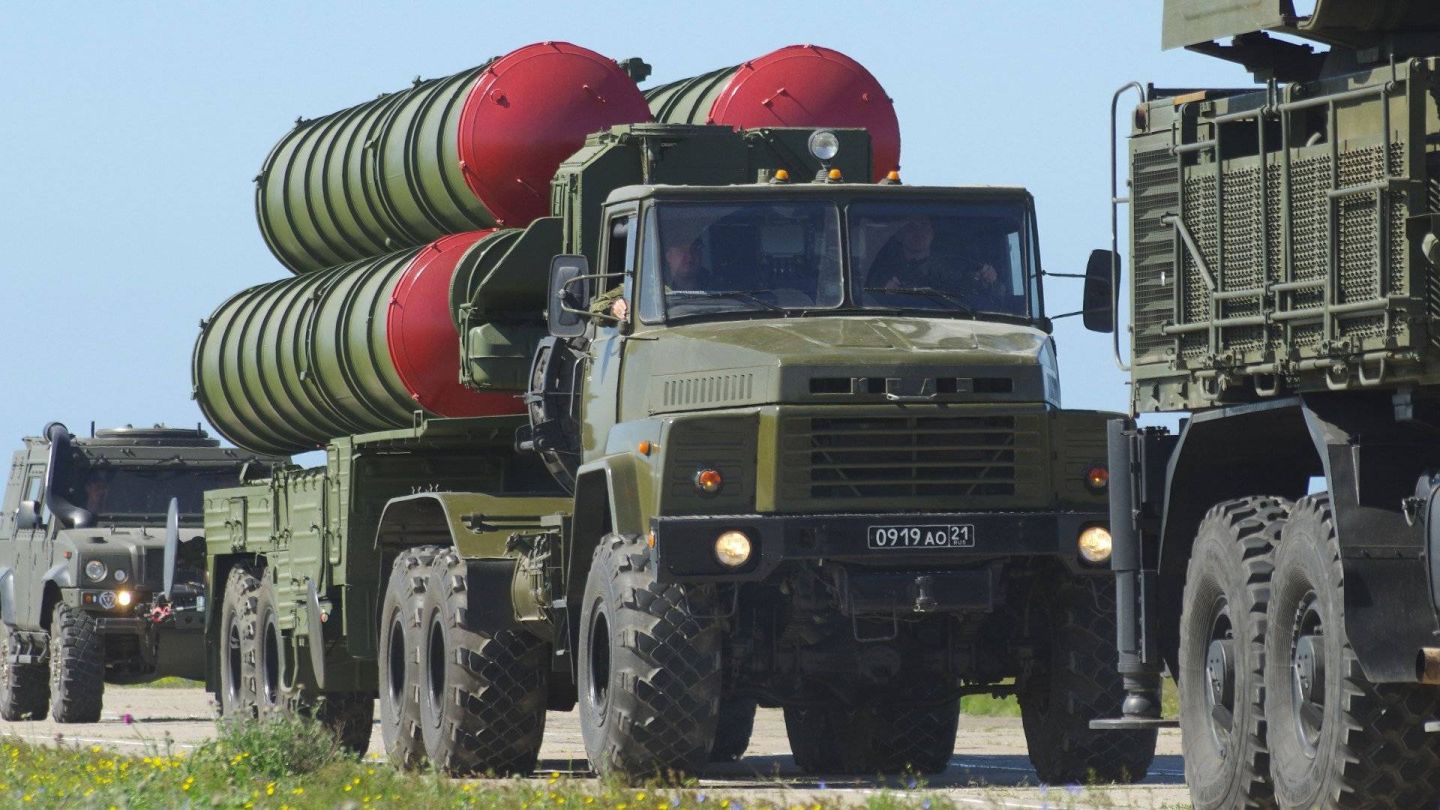
S-300 Surface to Air Missile Battery
The least well known of the S-300 families, the S-300F was designed as a navalised variant of the S-300P to provide protection for the Soviet Navy’s surface vessels against air and cruise missile attacks. With the United States Navy fielding a far larger carrier fleet, one which the USSR was only beginning to consider competing with with the development of the Ulyonavsk Class supercarrier program, which was cancelled after construction of the first ship had begun following the USSR’s disintegration, American fleets were expected to maintain air superiority against their Russian counterparts when operating away from Russian coasts. Development of a capable long range anti aircraft missile system was thus a matter of critical importance for the Soviet Navy, leading to the commissioning of the S-300F surface to air missile system in 1984. The missile system also deployed a secondary infrared terminal seeker to reduce its vulnerability to saturation by multiple hostile targets - with saturation being a common strategy to counter a large warship’s air defences.
One notable improvement the S-300F had over the S-300P was that it introduced 5V55R missiles, increasing the engagement range to 90km. This improvement was incorporated onto the S-300PM/PS the following year. The missile achieved a maximum target speed of Mach 4, and its capabilities were highly prized for blue water operations where long range capabilities were particularly important. The second variant in the S-300F family would further improve on its capabilities and come equipped with yet more capable and longer ranged missiles. The S-300FM, entering service six years later in 1990, was the first to introduce the 48N6 missile which would two years later be installed on the S-300PMU-1, carrying a 150kg warhead and engaging targets up to 195km away. The Soviet Navy's massive Kirov Class battle cruisers relied heavily on this system for long range air defence, each deploying 144 of the missiles for this purpose. The S-300FM remains in service today, and as Russia built no more large surface warships - either destroyers, carriers or Kirov Class cruisers, after the Soviet Union’s disintegration no further naval air defence systems of the S-300F series ever entered into service.
While the Russian Navy has since the fall of the Soviet Union focused overwhelmingly on the development of submarine capabilities, having lost the vast Ukrainian shipyards formerly relied on to produce large surface vessels, the country is currently planning a considerable expansion of its surface fleet with new heavy warships - the first to be produced since the USSR's disintegration. Russia is confirmed to be testing a number of technologies for use on a large supercarrier, which may be constructed under the SHTORM program, and intends to field amphioxus assault ships which can function as light carriers deploying specialised fighter aircraft by the late 2020s. With a supercarrier estimated to displace 80-100,000 tons, and the lighter carriers set to be produced in to classes of around 40,000 and 20,000 tons, there is a considerable possibility that these vessels will warrant the production of a new surface to air missile system of the S-300F series - likely integrating the latest technologies developed for the S-500, S-400 and S-300V4 which are currently Russia's most advanced long ranged systems. The upcoming Project 23560E Shkval Class destroyers, reportedly deploying a record 200 vertical launch cells for onboard missiles - more than double the payload of any Western destroyer class and surpassing the current record holder, the Chinese Type 055, is also likely to deploy such a system for air defence.
Continued in Part Four
