
Yemeni Ballistic Missile Strikes Central Israeli: Air Defences Fail to Intercept
Military Watch Magazine Editorial Staff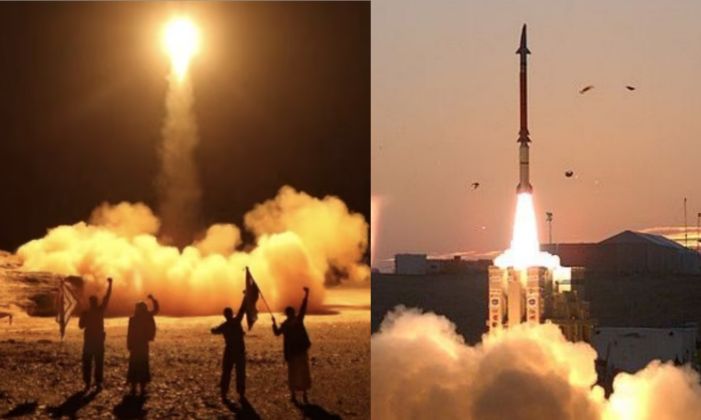
Ansurullah Ballistic Missile Launch and Israeli David’s Sling Launch
A ballistic missile strike launched from Yemen by Ansurullah Coalition forces in the early hours of September 15 was reported by Yemeni sources to have struck a power station in central Israel, causing serious damage. Israeli reports claimed that the missile fell in an open area and caused only minor damage to a train station, but that interceptors were fired at the incoming missile and failed to intercept it. Ansurullah Coalition forces reported that the strike involved “a new hypersonic ballistic missile,” which was able to hit its target. “The enemy’s defence systems failed to intercept and confront [the missile]. It crossed a distance of 2,040km in eleven and a half minutes, and caused a state of fear and panic” in Israel, the statement added. It was further stated that “the Israeli enemy should expect more strikes and specific operations” in the lead up to the anniversary of the outbreak of open hostilities between Israeli and Palestinian Gazan forces on October 7, 2023. Expanded Yemeni strikes are expected to result in escalated Israeli efforts to strike targets in the Arab country, in parallel to ongoing air campaigns against Gaza, Hezbollah forces in Lebanon, and government forces in neighbouring Syria. 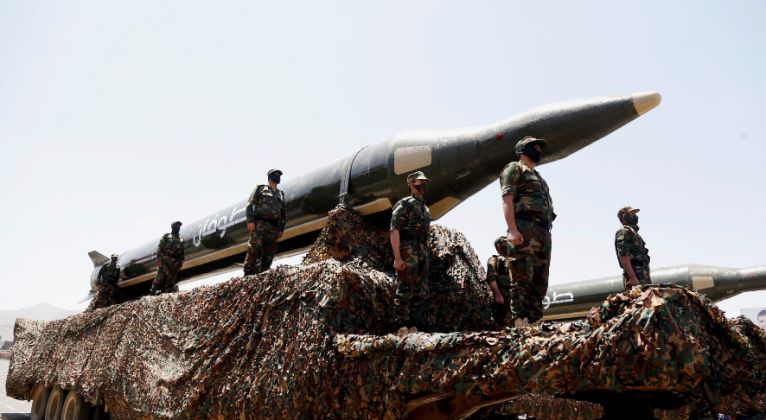
If successful, the attack would represent by far the most significant launched by Ansurullah Coalition forces against Israel. The coalition’s forces on July 19 launched a successful drone strike on the centre of Tel Aviv, impacting near the American consulate and causing several casualties, to which Israeli responded with an air strike on an oil depot in the city of Al Hudaydah in western Yemen. Alongside drone and ballistic missile attacks, the Ansurullah Coalition has also launched cruise missile strikes against Israeli targets in the past. The fact that its ballistic missile attack was able to bypass Israeli air defences is a potential game changer, however, with the country having among the best protected airspace in the world against such attacks using systems such as the David’s Sling and Barak 8.
The United States and United Kingdom have taken primary responsibility for joint Western and Israeli efforts to strike the Ansurullah Coalition’s forces, although they have notably struggled to suppress its fighting strength despite close to ten months of operations and well over a billion dollars in expenditures. This has included the use of costly anti ballistic missiles in considerable quantities to intercept Yemeni strikes on their maritime targets. Yemeni units have shot down eight American MQ-9 Reaper drones, among other successes in their campaign. The extent of the Ansurullah Coalition’s successes in fielding hypersonic weapons remains in question, however, and it remains possible that the ballistic missile class in question was in fact a missile with a manoeuvring reentry vehicle rather than a hypersonic glide vehicle. These less advanced but still formidable vehicles have been provided to Israeli adversaries by North Korea from the 1990s as a measure to counter expansion of Israeli anti missile defences, and may have proliferated to Yemen either from North Korea directly or through Iran.
