
Israeli F-15 Fighters Carry Out Long Range Strike on Yemeni Oil Depot: Ageing Fleet’s Future Uncertain
Military Watch Magazine Editorial Staff
Israeli F-15s and Al Hudaydah Oil Explosion
The Israeli Air Force on July 20 deployed F-15 fighters for a long range strike on an oil depot in the city of Al Hudaydah in western Yemen. The Israel Defence Forces confirmed that the attack was launched “in response to the hundreds of attacks carried out against the State of Israel in recent months.” The attack came a day after Yemeni Ansuruallh Coalition forces launched a successful drone strike on the centre of Tel Aviv, impacting near the American consulate and causing several casualties. The strike on Tel Aviv saw the first confirmed use of the new Yafa long range drone, which was reportedly designed specifically to be able to bypass enemy air defences. Israel’s counterstrike was the first in the country’s history known to have been launched against targets in Yemen, and is widely reported to have been carried out due to significant domestic calls for retaliation. Ansuruallh Coalition forces have been under the bombardment from the United States Navy from late 2023, although with little apparent effect on their combat capabilities.
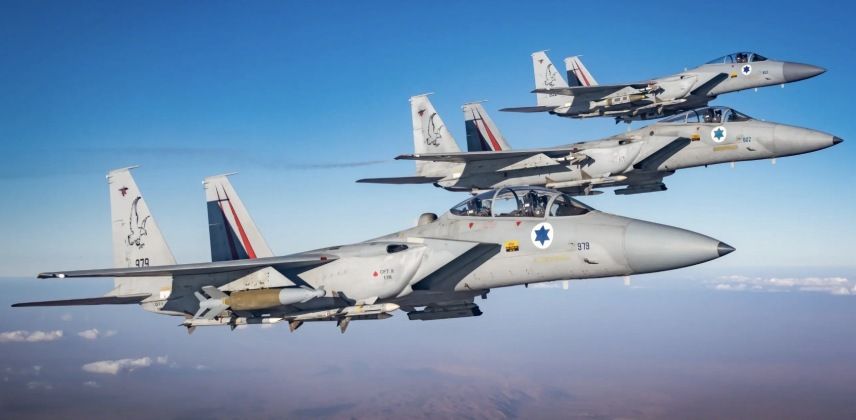
With Al Hudaydah being located over 2000 kilometres from Israel, the recent attack represents one of the longest distance operations in Israeli military history. While many classes of fighter such as the Chinese J-20 and Russian Su-34 are optimised for such long range missions, no Western fighter class has anything approaching such a reach, and although the F-15 is the longest ranged fighter class in the Western world, it would still require significant aerial refuelling and carriage of external fuel tanks to reach its target. The Israeli F-15 fleet is by far the oldest in the world, and is largely comprised of obsolete Cold War era models including the world’s last operational F-15A/B models from the 1970s. The newest Israeli operated variant, the F-15I, dates back to the 1990s and uses an obsolete mechanically scanned array radar and dated avionics. With Israeli defence budgets under serious strain, the possibility of acquiring modern F-15 variants to replace the aging aircraft currently in service has been under discussion for well over a decade, with reports indicating that a contract for up to 50 new F-15s may be signed in the near future. Modernisation has become increasingly urgent as the age of the current fleet continues to raise operational costs, while Israel’s regional rival Iran has moved to modernise its own fighter fleet with acquisitions of Russian Su-35 combat jets.
