
World's Five Most Powerful Navies: Which Power Will Rule the Seas in the 2020s?
Military Watch Magazine Editorial Staff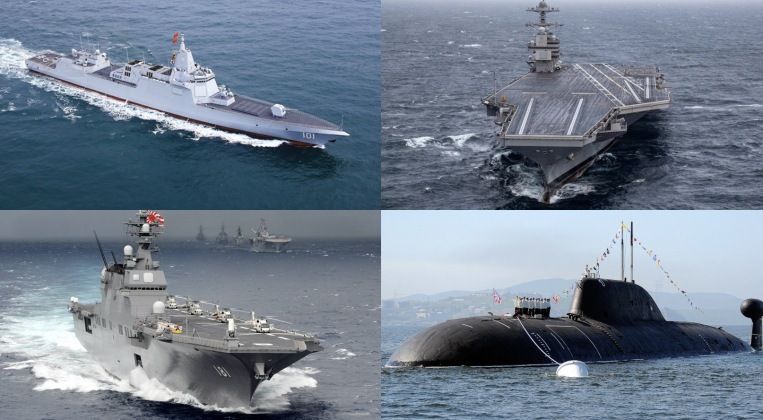
Chinese Type 055 Class, USS Gerald Ford, Russian Akula Class, Japanese Izumo Class
Naval power has been key to many countries claim to great power status for centuries, from the British Empire which was built around maritime trade to the United States today which is is unrivalled in terms of naval power projection capabilities. Navies can also be defensive assets, with the Soviet Union in the past and China, Japan and North Korea today having navies overwhelmingly oriented towards protecting territory rather than projecting force offensively. The balance of power at sea has generally reflected which countries have the most advanced industrial bases, with which has resulted in a growth in East Asian naval power relative to the rest of the world as the centres of global supply chains move eastwards. A look at the five most capable navies in the world and their most important strengths is given below:
United States
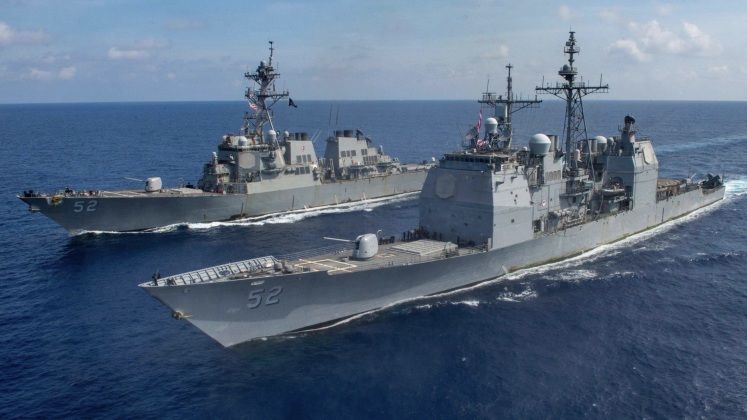
The United States Navy deploys by far the largest combat fleet in the world at around 3.5 million tons, and has retained retains high combat readiness levels for its high level assets relative to those of other Western powers such as Britain and Germany. The most iconic asset in the U.S. Navy’s fleet are its carrier strike groups, which provide it with blue water capabilities unrivalled by any other power. The service is currently the only one one in the world to deploy supercarriers, and was the first to integrate electromagnetic launch systems on a carrier warship - the USS Gerald Ford in 2017. The U.S. Navy currently deploys eleven supercarriers and a further nine amphibious assault ships - 40,000 ton warships capable of functioning as medium carriers and deploying up to 20 F-35B and Harrier II vertical landing capable fighters each. The American destroyer fleet, while increasingly surpassed in performance by rival platforms such as the South Korean Sejong the Great Class and Chinese Type 055, is still qualitatively well above average - with the latest Arleigh Burke Class vessels far surpassing their analogues in Russian and European service. Destroyers are supported by Ticonderoga Class cruisers which, while ageing, are the most heavily armed Western surface ships at sea. The U.S. submarine fleet is also without peer in the firepower it can lay down, with close to 70 vessels in service - all nuclear powered - of which eighteen are of the Ohio Class and were designed especially for strategic nuclear warfare. The U.S. Navy, like most major Western Navies, is overwhelmingly oriented towards offence and overseas power projection - and operates in this role across the world from the South China Sea to the Black Sea.
China
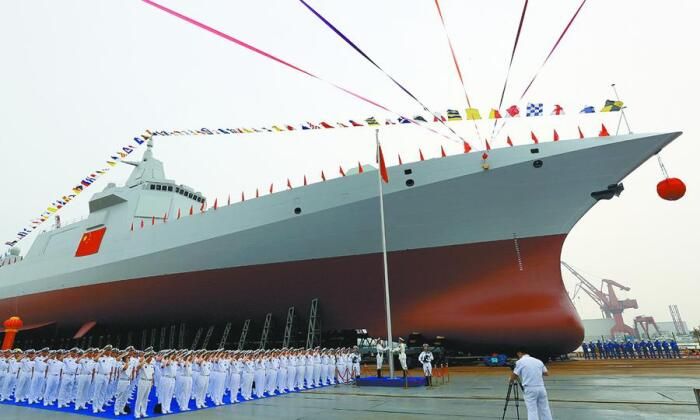
China’s People’s Liberation Army Navy is the fastest growing in world history when measured in the tonnage added annually to its fleet, and is set to be a peer competitor to the United States at sea by the year 2030. Unlike the U.S. however, China is capable of focusing the vast majority of its assets to a single front - meaning that even with a far smaller fleet it i capable of eclipsing American power in Northeast Asia due to the skewed correlation of forces in its favour. The PLA’s surface combat fleet is set to match and could very soon eclipse that of the U.S., with over 50 destroyers and, since 2018, the most powerful destroyer class in the world in the form of the Type 055. The PLA currently fields almost 100 frigates and corvettes, while the U.S. Navy has only around a dozen. Chinese warships are not only numerous, but integrate state of the art sensors and munitions - with its ships capable of outranging and outgunning their Western counterparts and deploying a far larger proportion of state of the art munitions capable of impacting at extreme speeds.
China’s reported lead in railgun and hypersonic missile technologies is set to further provide its fleet with an edge as these are integrated onto its warships - which is expected to begin in the mid 2020s. The country’s Type 055 destroyers are also set to integrate anti satellite munitions - a unique capability with required systems currently in the late development stages. These destroyers are widely considered the world's most capable surface combatants. While its surface combat fleet is strong China’s submarine and carrier fleets currently leave something to be desired - with the former relying heavily on Russian technologies and capable only of an anti access area denial role while the latter lacks state of the art catapult technologies found on American warships. China’s integration of EMALS and provision of its upcoming supercarriers with KJ-600 AWACS platforms, however, will do much to compensate for this advantage - with the country predicted to field seven carriers by the year 2025.
Russia
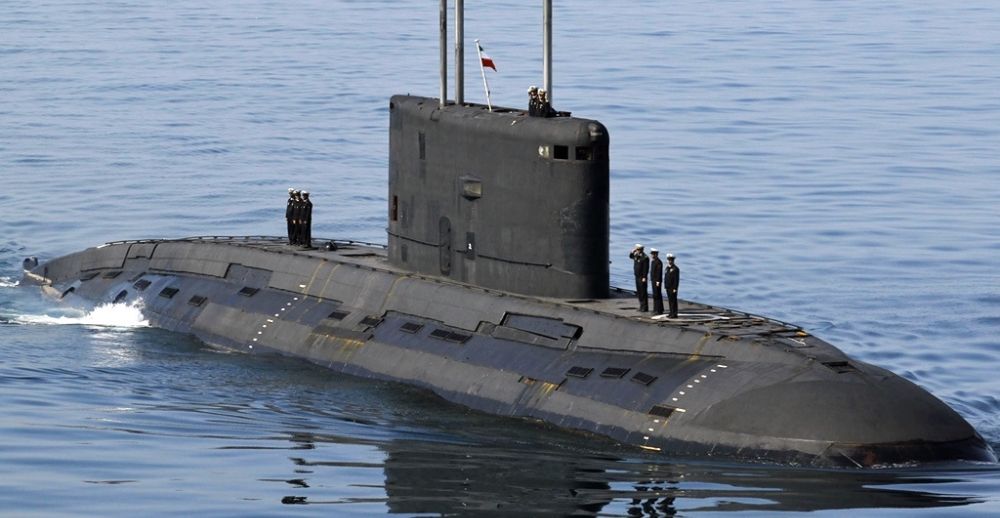
The capabilities of Russia’s surface fleet have left something to be desired due to a lack of new acquisitions since the Soviet Union’s collapse. The loss of Ukrainian shipyards has meant that the Russian Navy has been unable to induct anything larger than a frigate into service since them - relying on a modest fleet of thirteen destroyers and nine cruisers. The country’s sole carrier, Admiral Kuznetsov, has had a troubled history despite fielding formidable fighter jets - leading to speculation that it could be retired in favour of either an EMALS equipped supercarrier - comparable to the U.S. Navy’s Gerald Ford Class, or lighter carriers deploying special vertical landing capable jets - comparable to the American Wasp Class ships. The Russian Navy has proven highly resourceful considering its circumstances - leveraging the country’s remaining strengths to compensate for the considerable weaknesses which emerged following the Soviet collapse. Older warships have been refitted with modern missiles to strengthen their capabilities, with the country’s Kalibr and P-800 cruise missiles much feared as among the most capable in the world. These are set to be complemented by the Zicron hypersonic cruise missile, which is capable of staining speeds of around Mach 10 and striking targets at extreme ranges with precision. The Navy is also complemented by ground based aircraft, with MiG-31 and Tu-22M long range strike aircraft since mid 2018 which capable of deploying hypersonic ship hunting ballistic missiles dubbed ‘carrier killers’ for their destructive potential. The greatest strength of the Russian Navy, however, is its submarine fleet - which alongside 11 ballistic missile submarines include 17 nuclear and 33 diesel attack ships. Possibly the quietest in the world, and armed with some of the most sophisticated submarine launched munitions, these warships are key to compensating for the shortcomings of the Russian surface fleet until such a time as the country’s economy may allow for the construction of new large surface combatants.
Japan
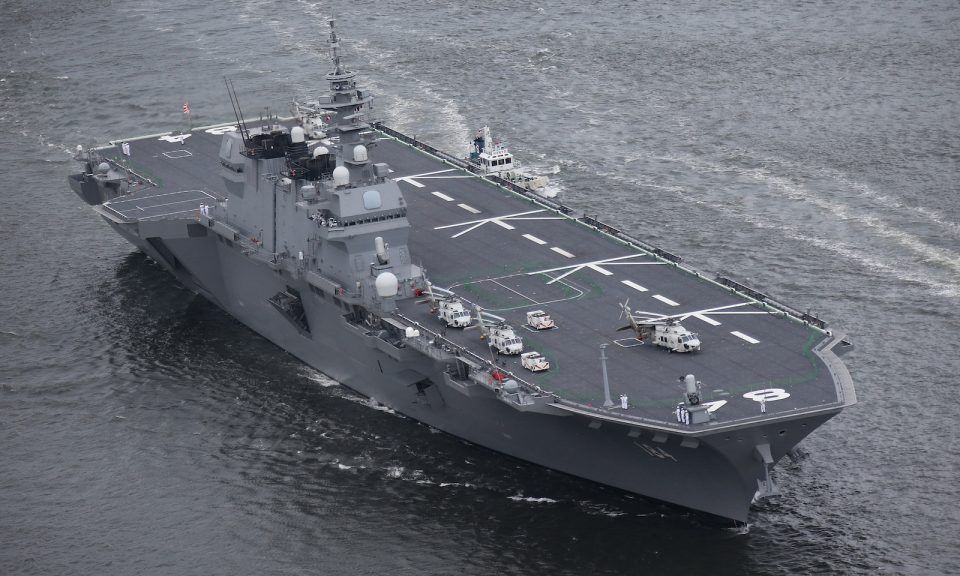
With the third largest destroyer fleet in the world by a considerable number, which until recently was larger than that of neighbouring China and surpasses all the destroyer fleets of Europe combined, Japan’s Navy is by far the strongest arm of its military. It has been able to integrate state of the are technologies both from the United States and from its own defence sector, and has continued to pioneer important new technologies to provide a significant qualitative edge over most potential threats. While Japan fields the third most numerous carrier fleet in the world at four vessels, the two light carrier classes at 19,000 and 27,000 tons are designed primarily for anti submarine warfare - a field in which Japan has excelled since the Cold War when it was equipped by the Western Bloc to assist in a potential war effort against the USSR. Although the country’s Izumo Class ships are capable of deploying small numbers of F-35B vertical takeoff fighter jets - these rely heavily in support from land based E-3 Sentry AWACS platforms and lack the numbers or the capabilities to pose a serious threat offensively. Like China however, Japan’s Navy is primarily defensively oriented - meaning that the lack of carriers can be compensated for by support from long range land based fighters such as the country’s 200 F-15J air superiority platforms and anti ship cruise missile equipped F-2 jets. Also like China, Japan has invested far more heavily in short ranged diesel powered submarines for anti access area denial - rather than nuclear powered vessels which are better suited to offence and thus strongly favoured by Western navies.
South Korea
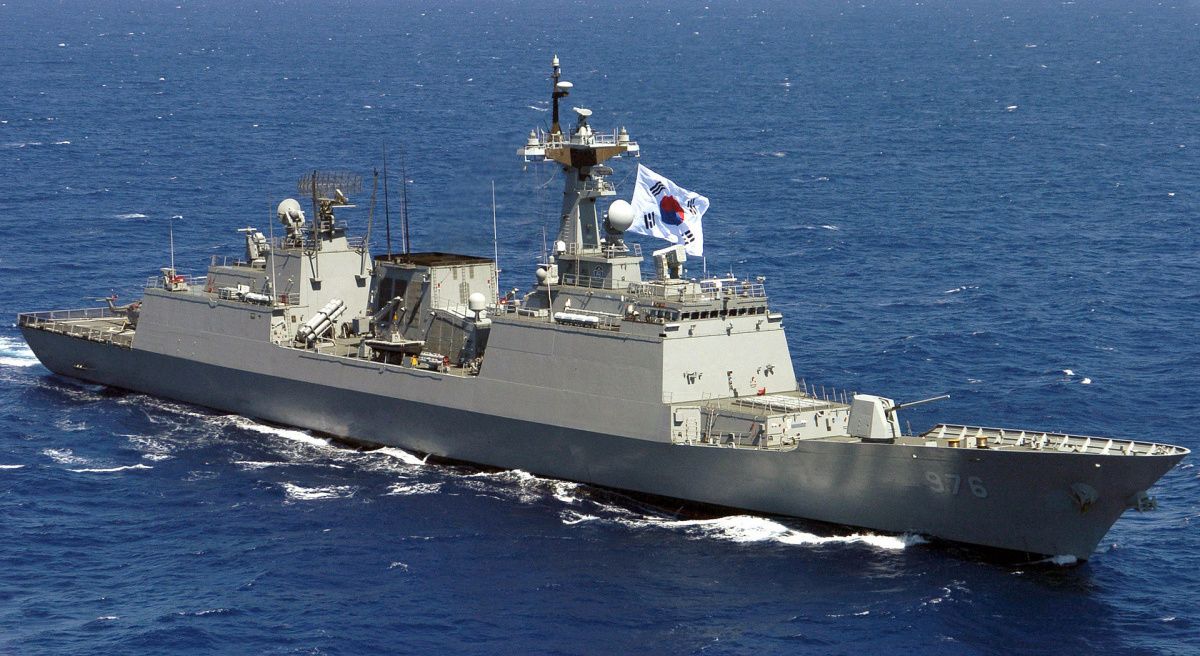
South Korea’s Navy, although small, is increasingly geared to blue water power projection operations. The service fields a large fleet of twelve formidable destroyers and an emerging carrier program - having so far built two modest sized but extremely cost effective and sophisticated Dodko Class warships which are capable of contributing to anti submarine warfare efforts. The Sejong the Great Class carrier is better armed than the American Arleigh Burke Class - though the two designs share a number of similarities - and until 2018 was considered the most capable destroyer in the world. South Korea’s Navy is among the world's most modern and is supported by a military shipbuilding capacity eclipsing those of all European powers, and arguably surpassing Russia as well. The country’s sixteen attack submarines are considered among the most formidable diesel attack vessels in the world, while the country’s frigates and corvettes are also world class. Whether South Korea’s Navy will continue to expand will likely depend on whether tensions with North Korea continue to abate - freeing more resources from preparations for an inter-Korean War and towards global operations. Expansion could lead to the induction of larger numbers of more sophisticated destroyers and larger carriers capable fo deploying fixed wing aircraft, the latter which is likely to be seen before 2030. Considering Japan’s announcement of plans to acquire carrier based fighter aircraft in 2018, the possibility that South Korea will look to make a similar investment to retain parity with its longstanding rival is considerable.
