
The World’s Only Nuclear Surface Combat Ship is Now Heavily Optimised to Defend the Russian Arctic
Military Watch Magazine Editorial Staff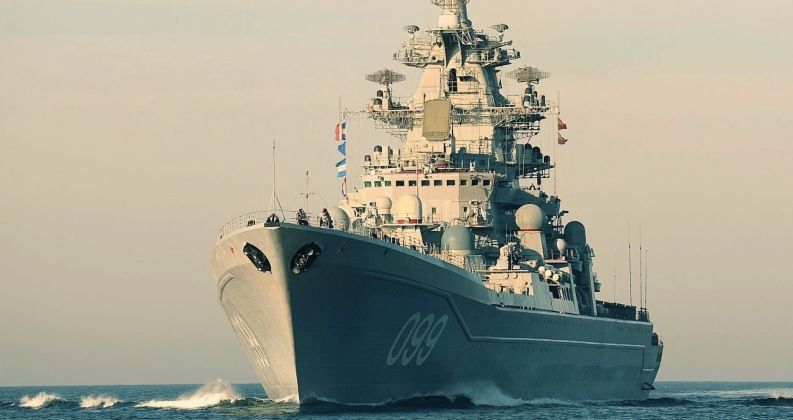
Kirov Class Nuclear Powered Cruiser
Following confirmation that the Russian Navy had deployed the heavy nuclear-powered cruiser Admiral Nakhimov for the final phase of its sea trials, significant attention has been drawn to the uniquely large and powerful warship’s capability to influence the balance of power in the Arctic, where it will primarily be deployed. Following the ship’s re-floating on July 25, 2025, it set sail under its own power the following month, marking the first time it had done so in 28 years. This was due to the much delayed and protracted nature of the very extensive refit which replaced the vessel’s electronics and weaponry to transform its combat potential. Displacing 28,000 tons, Kirov class ships are by far the largest surface combatants in the world, and were designed in the USSR with an outstanding amount of modernisation potential, including considerable excesses electrical power, internal volume and structural margins needed for modernisation over decades, ensuring the post-refurbishment Admiral Nakhimov still has a world leading performance despite its age.
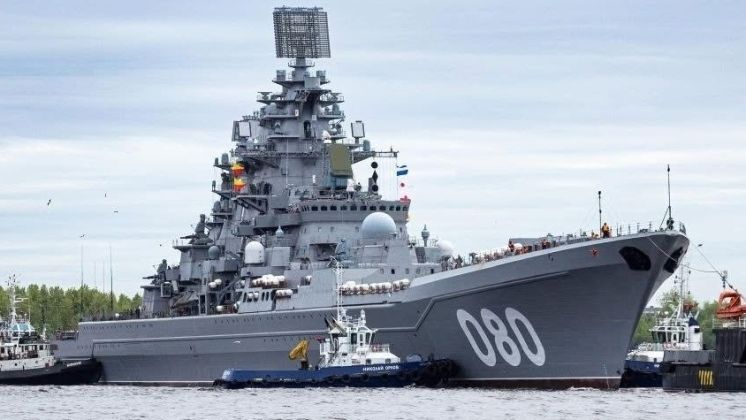
Kirov class ships use a unique hybrid propulsion system combining two nuclear reactors with conventional oil-fired boilers, with the boilers were not only serving as emergency backups, but also allowing ships to continue operating if reactor maintenance was required, and simplifying certain operational scenarios. Their combination of nuclear propulsion, sophisticated sensors, and massive missile armament made them extraordinarily costly to build and maintain. Kirov class ships were intended to operate in environments that would have been challenging for many contemporary Western warships, with Soviet planners expecting them to spend prolonged periods in Arctic waters, where icing could threaten sensors, weapons, and flight operations. Consequently, considerable effort was devoted to winterisation measures, heated equipment, and enclosed working spaces.
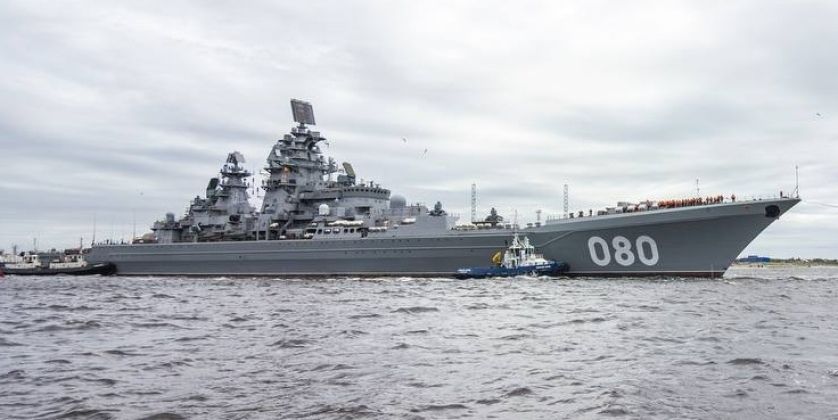
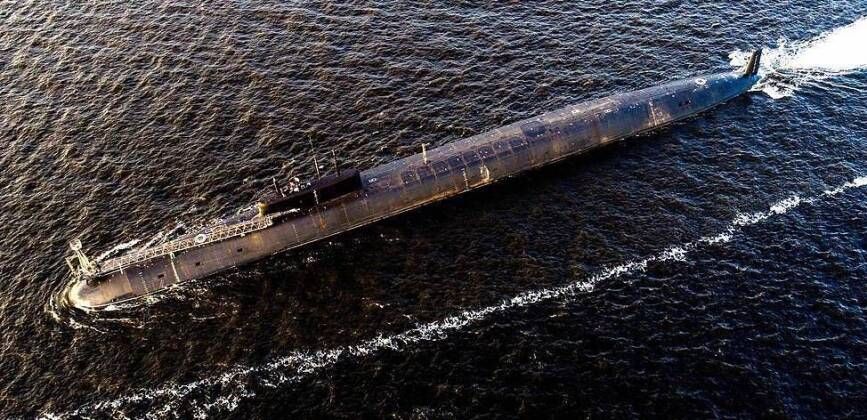
The Kirov class design’s emphasis on winterisation reflected the strategic importance of the Soviet Northern Fleet and the Arctic approaches to Soviet territory, and is expected to be particularly invaluable for the Admiral Nakhimov’s future and provide it with a unique advantage over other types of surface combat vessels in the region. The use of nuclear propulsion systems and the considerable space onboard to accommodate supplies allows for very extended deployments lasting several months without refuelling or resupply, which is invaluable due to the vastness of the Arctic theatre. With the Arctic representing the closest point of transit between North America and Russia’s primary industrial centres, the Admiral Nakhimov is expected to be relied on heavily both for air and missile defence, and for the protection of Russian ballistic missile submarines, the majority of which are deployed in the Arctic under the Northern Fleet.
Kirov class cruisers were originally conceived not primarily as carrier killers, but as outstandingly large anti-submarine warfare command ships, with early studies for the program having emphasised long-range anti-submarine missiles and the ability to hunt U.S. ballistic missile submarines in the North Atlantic. Only later, as Soviet naval doctrine evolved under the command of Admiral Sergey Gorshkov, were the ships redesigned around an anti-ship cruise missile capability. Nevertheless, their anti-submarine capabilities remain highly robust, and combined with major advances in air defence capabilities achieved during refurbishment provides an optimal means of defending the Northern Fleet’s strategic nuclear forces from submarine or air attacks. The Admiral Nakhimov’s ability to engage aircraft and missiles is particularly outstanding, with the ship having integrated three battalions’ worth of missiles from the S-400 system for a total of 96 long range surface-to-air missiles.
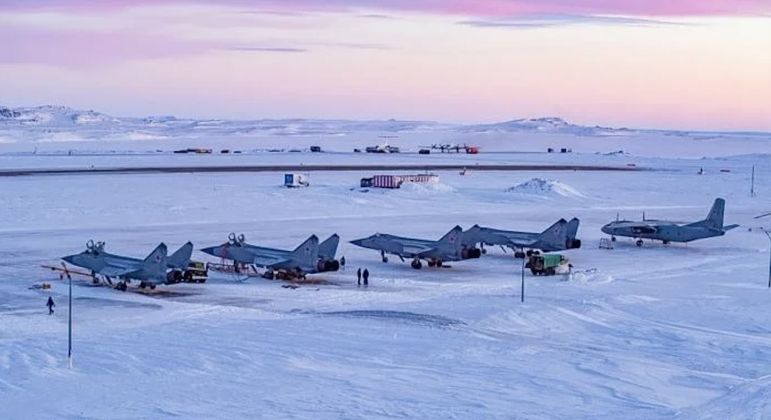
Kirov class cruisers were among the first warships in the world designed from the outset to exploit the space-based reconnaissance networks, with their cruise missiles designed to receive targeting information from reconnaissance satellites, maritime patrol aircraft, submarines, and other platforms. In many respects, the cruisers were not simply warships but nodes in a larger Soviet reconnaissance-strike complex spanning thousands of kilometres. The Admiral Nakhimov’s network centric capabilities have been improved considerably, with the warship expected to network closely with submarines, space-based sensors, and aircraft such as MiG-31BM interceptors to build up a fuller picture of the Arctic’s airspace, waters, and subsurface domain. With the ship having been heavily optimised both for Arctic warfare, and to serve as an forward command and control centre to support a wide range of other asset types, the Admiral Nakhimov imminent return to frontline service in the Northern Fleet has significant impacts for the regional balance of power.
