
Will Iraq Be Next to Purchase Russia’s S-400 Missile System? Baghdad Considering Acquisition to Bolster Weak Air Defences
Military Watch Magazine Editorial Staff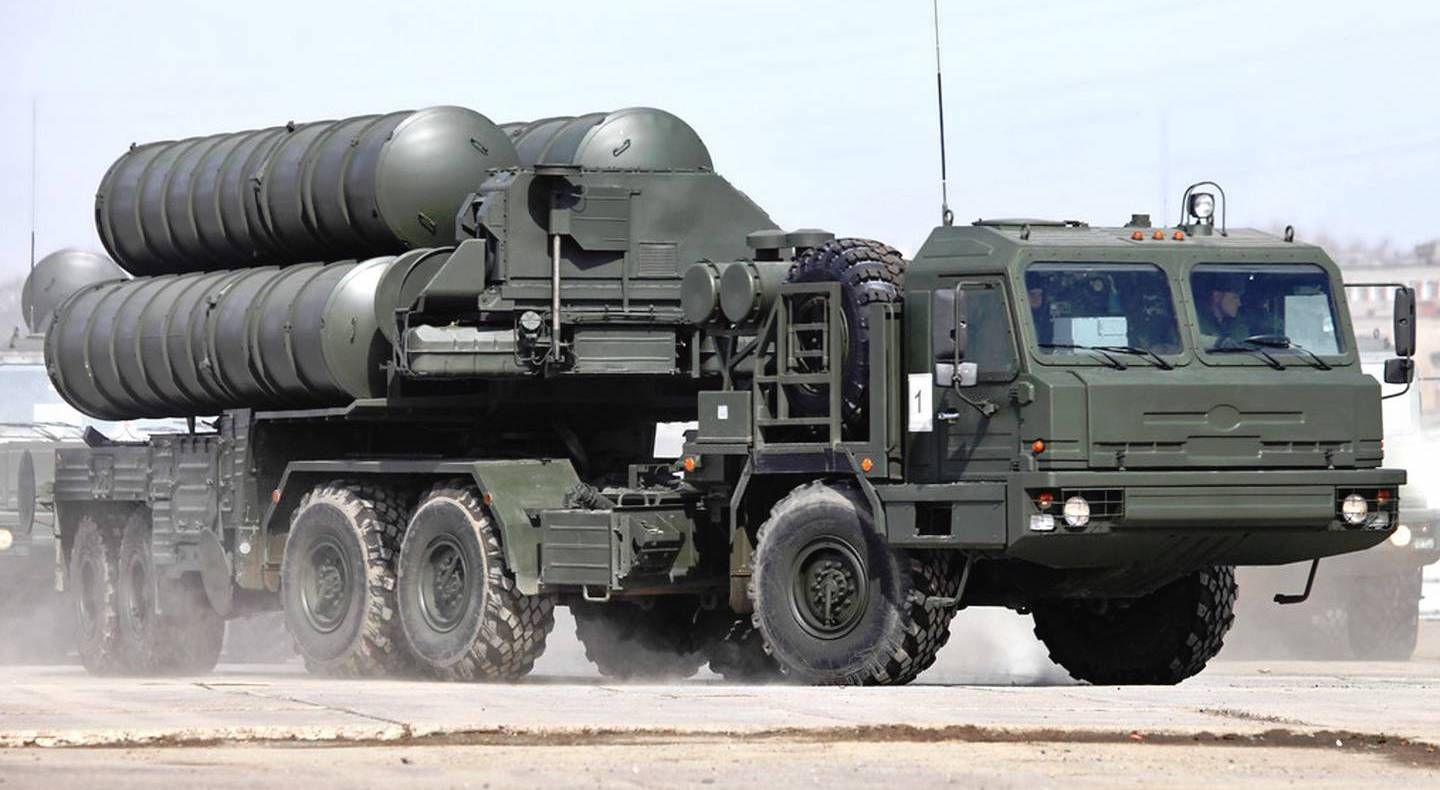
S-400 Surface to Air Missile Battery
Following reports in early 2018 that Iraq was seriously considering the acquisition of Russian built S-400 long range surface to air missile systems, the country’s ambassador to Moscow Haidar Hadi stated regarding Baghdad’s position on the purchase: "As for S-400, there is no contract yet… There is no information that there are talks or that talks are at a particular stage… If the government decides to buy these systems, it will be Iraq's sovereign affair and will depend on its needs.” Iraq’s air defence capabilities are currently negligible - making its airspace among the most poorly defended in the region as neighbouring powers move heavily to strengthen their own aerial warfare capabilities. The country’s Air Force lacks any combat aircraft capable of long range air to air engagements - with its sole squadron of F-16C Fighting Falcons outfitted primarily for an air to ground role and supplied only with short ranged AIM-9L and AIM-9M sidewinders - sufficient to engage drones of the Islamic State terror group but not heavier or more sophisticated targets. This makes Iraqi Fighting Falcons the most poorly armed for long range air to air combat in the world, with the vast majority of operators using AIM-120 long range missiles and Egypt and Venezuela, which lack these munitions, deploying the AIM-7E/F Sparrow and Python 4 respectively - both of which outperform the AIM-9L/M at range. For ground based anti aircraft capabilities, Iraq's Air Defence Command is currently comprised of an estimated 3000 personnel, which operate a number of short ranged Russian Patsir-S1 combat vehicles, 9K338 handheld anti aircraft missiles and ZU-23-2 anti aircraft guns. This comes despite an extremely high annual defence budget of over $17 billion - much of which is diverted to ongoing counterterrorism operations or thought to be lost to corruption in the armed forces.
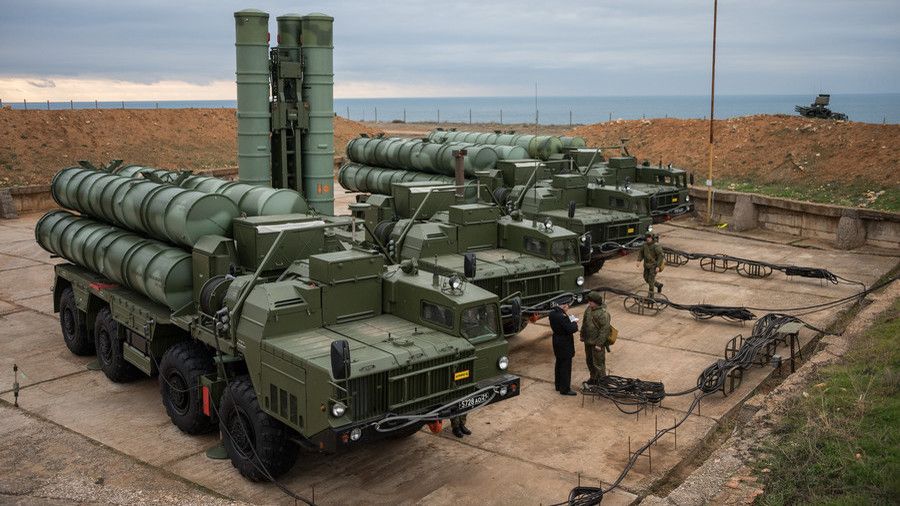
Iraq faces two major difficulties in procuring the S-400 system - despite its procurement of a growing number of Russian weapons systems and a considerable defence budget. The first is that the country's Air Defence Command lacks a sufficient network of short and medium ranged complementary systems such as the BuK-M2 or S-350 which are needed to protect S-400 missile batteries, command centres and radars. These high value targets are otherwise potentially vulnerable to attack, and while the S-400 deploys over half a dozen missile types for multi level air defence it is still designed to be fielded in conjunction with other shorter ranged platforms. While existing Iraqi Pantsir-S1 systems and anti aircraft artillery may have some value in this role, more systems are needed in particular to target low flying aircraft which retain some survivability at range against the S-400 itself.
The second and arguably greater concern is the possibility of Western pressure, with the United States in particular strongly condemning states which acquire high end Russian arms - the S-400 in particular - and threatening them with harsh economic sanctions under the Countering America's Adversaries Through Sanctions Act (CAATSA). The proliferation of the S-400 in particular has been cited by the U.S. Military leadership as threatening to undermine the Western Bloc’s “ability to dominate airspace” in the Middle East. Not only is Iraq heavily dependant on the U.S. for defence cooperation, but Washington has also held considerable leverage over Baghdad since toppling of its Ba’athist government in 2003 due to issues such as the separation of Iraqi Kurdistan - a state which the U.S. could threaten to lend some official recognition should Baghdad act too far out of step with Western interests. Iraq increasingly finding itself surrounded by long range Russian air defence systems including the S-300PMU-2 in both Syria and Iran, the PAC-3 variant of the Patriot in Saudi Arabia likely to soon be followed by the S-400, and several S-400 batteries in Turkey the first of which will be delivered by mid 2019. Russia itself deploys the S-400 and S-300V4 to protect its military assets in Syria. With no comparable system to the S-400 available from other manufacturers, this could force Iraq to look to the S-400 for its own defence needs. As Baghdad looks to strengthen its armed forces beyond counterterrorism acquisition of the S-400 - possibly accompanied by other systems and combat aircraft - remains a significant possibility.
