
Why the U.S. Just Made its First Ever F-22 Stealth Fighter Deployment to Israel: Are They Useful in Wartime?
Military Watch Magazine Editorial Staff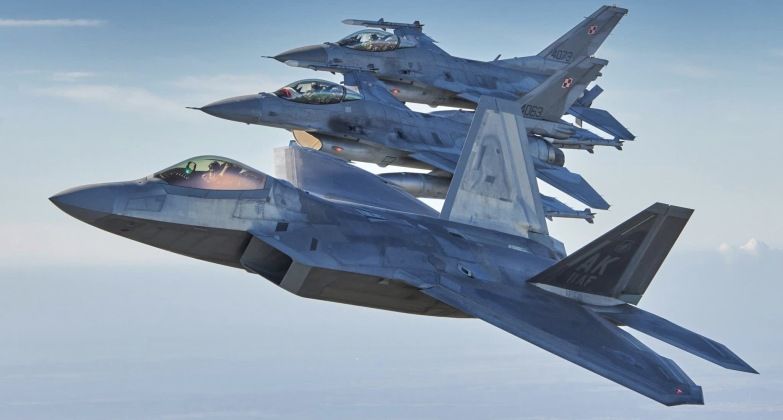
U.S. Air Force F-22 with Polish F-16s
USA
The U.S. Air Force has for the first time deployed F-22 Raptor fifth generation fighter aircraft to an airbase in southern Israel, with twelve of the fighters having taken off from Royal Air Force Lakenheath in the United Kingdom on February 24 to redeploy. This has taken place as part of a large scale military buildup by the United States against Iran, although significant questions have been raised regarding the F-22’s utility when deploying from Israeli bases, particularly when considering the limitations imposed by their short ranges. F-22s in the Middle East previously deployed to Al Udeid Airbase in Qatar and Al Dhafra Airbase in the United Arab Emirates, allowing them to support counterinsurgency operations in Afghanistan and Iraq and the war effort against Syria, while also positioning them comfortably within operational range of targets in Iran.
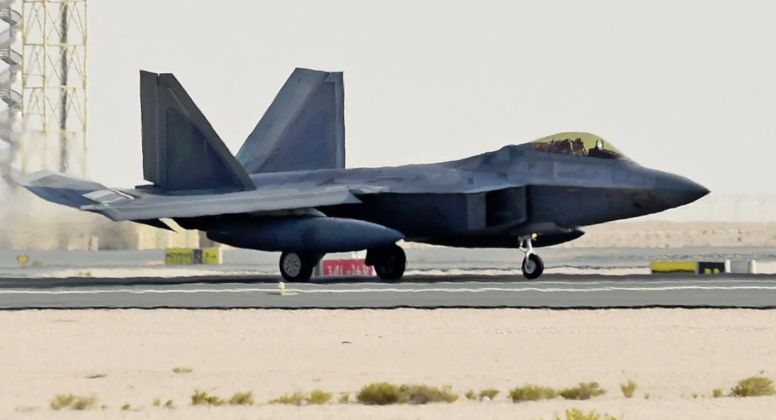
Commenting on the deployment of F-22s, retired U.S. Air Force Lieutenant General David Deptula described the move as significant, telling the New York Times it “indicates preparation for a more aggressive stance toward Iran and potential cooperation with Israel in an attack. It signals that the U.S. is serious about attacking if Iran does not agree to U.S. terms.” This aligns with a threat issued by President Donald Trump that“really bad things” will happen if Iran does not comply, with the United States demanding an abnormal degree of constraints on the country’s civilian nuclear program, and unilateral curbing of the Iranian ballistic missile deterrent. Iran’s ballistic missile strike capabilities are considered the primary factor which have deterred Western and Israeli attacks in the past, and which forced the United States and Israel to cease hostilities in June 2025 after causing very considerable damage to targets across Israel.

The F-22 is in many respects the least versatile 21st century fighter in service anywhere in the world, and lacks the advanced data sharing and electronic warfare capabilities of the F-35, while being restricted to a shorter range despite its much larger size due to its far greater fuel consumption. The aircraft lacks any access to air-to-ground or anti-ship missiles, meaning it can only engage targets at range using AIM-120 air-to-air missiles. The importance of this capability against Iran may remains, since the Iranian Air Force fields no post-Cold War fighter types, and primarily relies on Vietnam War era F-4D/E and F-5E fighters, while F-22s operating from bases in Israel will regardless remain out of range of penetration operations into Iran unless having extensive aerial refuelling support.
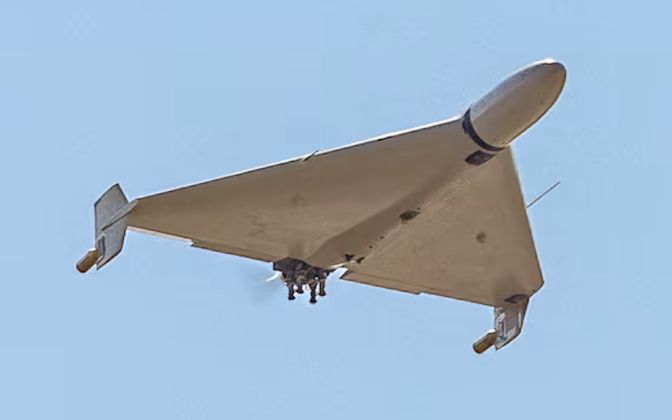
A likely primary purpose of F-22 deployments to Israel is to bolster Israeli morale, with the F-22’s reputation as a ‘super fighter’ having been built up over decades by extensive public relations efforts despite their aircraft’s considerable limitations and design issues. The F-22’s combat potential is today particularly limited when comparing it to newer fighter types such as the F-35 and F-15EX. A primary operating role the aircraft could perform is to support anti-drone operations, as Iran has in the past launched large swarms of single use drones against Israeli targets. Nevertheless, fighters such as the F-15 will arguably be much more capable of performing such operations, as they not only maintain higher availability rates, but also carry more air-to-air missiles, and can carry laser-guided rockets to provide a more cost effective solution against low value targets. The F-15 also has a much longer range, and while most variants in service integrate much more powerful radars than the F-22’s ageing AN/APG-77 which dates back to the 1990s. The U.S. Air Force has already deployed F-15E fighters to Jordan from late January.
