
Why America’s New F-35 Block 4 is a Drastic Improvement: 50% More Missiles, 25% Longer Range and Much More
Military Watch Magazine Editorial Staff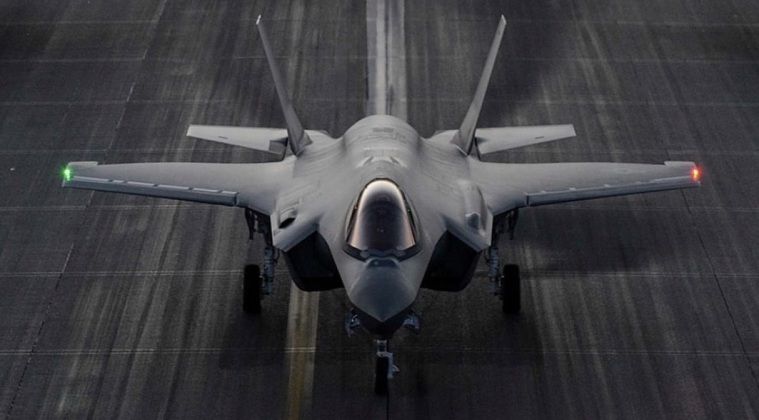
F-35 Fifth Generation Fighter
Much like its fourth generation predecessor the F-16 Fighting Falcon, the F-35 fifth generation single engine fighter is expected to see a production run several decades long and will continue to incorporate further upgrades and enhancements throughout that time. This means that F-35s produced near the end of the 2020s will have far superior capabilities to those produced when the aircraft first entered service in the mid 2010s. The latest variant of the fighter, the F-35 Block 4, is already expected to have a far superior performance to the Block 3 variant which is so far the most capable the U.S. Air Force has received. The improvements to the design are significant that hit will be released in waves, so the first F-35s of the new production block will be designed F-35A Block 4.1, followed by Block 4.2 which will be slightly more capable still. Some of the improvements to the design are very significant, with a new wing mounted fuel tank system expected to increase the fighter’s range by 25% - compensating for an outstanding weakness relative to competing stealth fighter designs which all have much longer ranges.
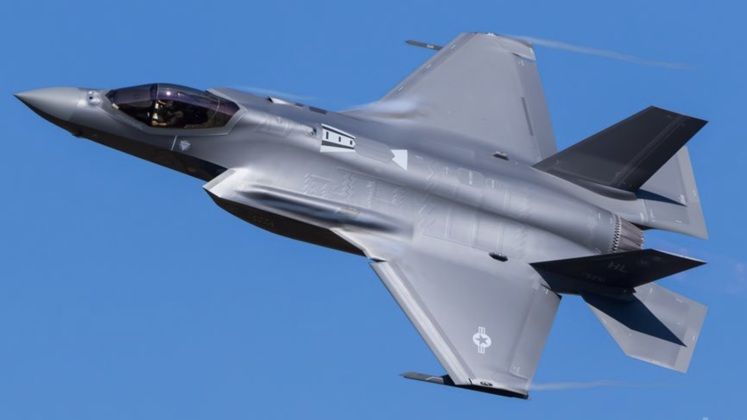
Another major enhancement which will come with the F-35 Block 4 are a new and much more powerful set of main computers, which will allow the fighter to receive 25 times more instructions than those currently onboard. This will be of benefit when the fighter processes more data both from its own sensors and from data links with accompanying drones and other manned jets. A faster computer will also increase the F-35’s electronic warfare capabilities considerably. The nw variant of the F-35 is also se to receive a new ‘Sidekick’ missile launch system which will increase the fighter’s long range firepower by 50% - increasing its internal capacity for missiles from four to six AIM-120 active radar guided missiles. This will partly bridge the gap between the F-35 and other stealth fighters - with the F-22 and Chinese J-20 each carrying eight missiles and the Russian Su-57 carrying up to ten. The F-35’s lighter payload is a result of it being a smaller single engine as opposed to a heavyweight twin engine design. The American stealth fighter has continued to see growing export orders as its capabilities have continued to be improved, although it is still very far from ready for high intensity combat and has yet to pass Pentagon tests needed to approve it for full scale production.
