
When Pakistan and Israel Almost Went to War; Tensions Between the Nuclear Armed Islamic Republic and Jewish State - Part Two
Military Watch Magazine Editorial Staff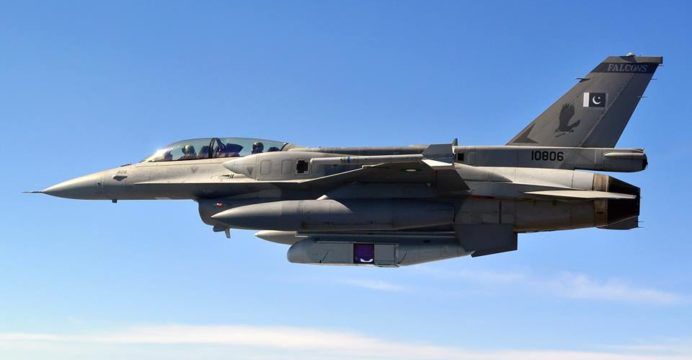
Pakistani Air Force F-16
Pakistan's intelligence agency ISI discovered the Israeli plan to strike the country’s nuclear facilities, and the military begun to both strengthen the defences of Pakistani nuclear facilities and prepare for retaliatory strikes in response. Pakistan’s armed forces at the time lacked the advanced strike capabilities it fields today, and were forced to rely on their F-16 light fighters to carry out attacks on Israeli targets. The Air Force’s 14th squadron of F-16C fighters was reportedly assembled and the pilots were asked to volunteer for what would almost certainly be a suicide mission to carry out retaliation strikes on Israeli targets. The majority of pilots agreed to participate, and F-16 fighters were prepared for an attack on Israel. While the exact targets are unknown, it is likely that the strikes were to target the country’s nuclear facilities to inflict maximum retaliatory damage.
With the element of surprise having been critical to the success of Operation Opera against Iraq, and later to Operation Outside the Box against a Syrian reactor in 2007, the fact that Pakistan’s ISI was able to discover the Israeli strike seriously undermined its chances of success. Pakistan’s ability to launch retaliatory strikes on Israel, as well as its readiness to challenge Israeli fighters in its own airspace and potentially destroy Israel’s aerial tankers - thus leaving its short range fighters stranded without fuel to return to their airfields, were all significant factors which contributed to deterring the Israeli military from carrying out the attack.
Pakistan would go on to test its first nuclear bomb in 1998, and has since acquired an arsenal of over 100 nuclear warheads for both strategic and tactical uses. Relations between Israel and Pakistan remain poor, with Islamabad having sided with Iran and Syria in their ever escalating conflict with Tel Aviv and the Western bloc. Israeli Defence Minister Avigdor Lieberman has accused ISI of capturing and assassinating Mossad agents around the world, and Islamabad’s foreign policy realignment away from the Western Bloc and towards China has further worsened relations between the two nuclear powers. In 2016 a false report that Israel had threatened Pakistani forces with nuclear attacks should they provide direct support to the Syrian military in its war against Islamist insurgents was met with a swift response from Pakistani Defence Minister Khawaja Muhammad Asif, who tacitly threatened Israel with nuclear retaliation should it ever undertake such action.
While Pakistan is not known to have proliferated nuclear weapons, the country’s strike capabilities have expanded significantly since the 1990s and pose a major threat to Israeli security in the event of future hostilities. While an attack on Pakistani facilities could have been contemplated by Tel Aviv or other state actors in the 1990s, it is today near impossible to take such military action. Pakistani ballistic missile capabilities have expanded considerably, with Islamabad acquiring the Rodong-1 from North Korea ballistic missile and fielding it as the Hatf-5/Ghauri-1 to deliver its nuclear payloads. Other platforms such as the solid fuelled Shaheen 3 have also been tested. Pakistan’s airspace meanwhile is more secure than ever before, and while the Air Force still lacks advanced air superiority fighters to match the F-15, it fields both heavily armed new indigenous fighters, the JF-17, as well as state of the art HQ-16 air defence systems. With Pakistan moving to strengthen its ties with Israel’s foremost Middle Eastern adversaries, namely Iran, whether Islamabad will be drawn further into Middle Eastern conflicts remains to be seen.
Part One is available here
