
Pakistan's Foreign Minister Warns Country is 'Next Target' for Western Destabilisation After Iraq, Libya and Syria
Military Watch Magazine Editorial Staff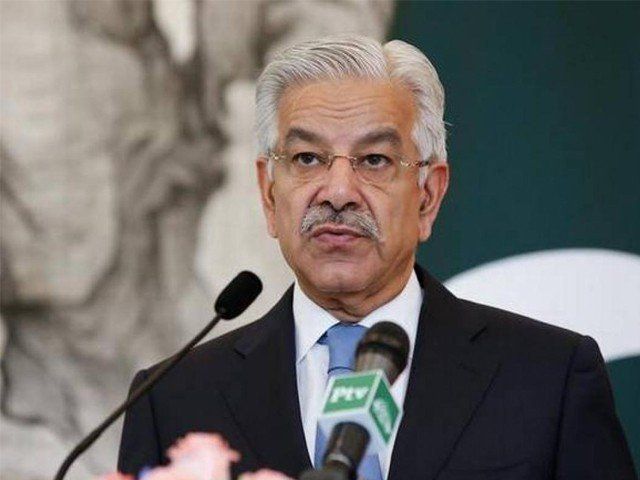
Pakistani Foreign Minister Khawaja Muhammad Asif
Pakistan's Foreign Minister Khawaja Muhammad Asif addressed what he believed to be an imminent threat to the country's sovereignty in a statement before the country's National Assembly. Replying to a point of order raised in regards to unrest in the Middle East and its relation to Pakistan's own security interests, Minister Asif said the United States sought to make Pakistan its proxy state carrying out policy in line with Washington's interests - particularly in regards to Afghanistan where the United States has been engaged in 17 year war. The United States has accused Pakistan of hindering its war effort in the country by turning a blind eye to operations by Taliban insurgent forces on its territory.
Asif stated regarding U.S. intentions towards his country: “Pakistan will not protect interests of any country or any power, but it will only safeguard its own interests." In regards to Afghanistan, he stated that peace in the country was in Pakistan's interests but not in those of 'world powers' - a thinly veiled reference to the U.S. and its Western allies. The minister stated: “A superpower is sitting in a country but the production of heroin has jumped from 200 tons to 9000 tons, and the 16 best armies of the world have lost 43 percent of territory to Taliban. They (Taliban) don’t need us, they have control over 43 percent area of Afghanistan."
Regarding the role of Pakistan in the Middle East crisis, Asif said that his country would not interfere in region's internal affairs or take sides in conflicts between Muslim nations. The minister stated: “Pakistan sincerely wishes that Iran and Saudi Arabia and Saudi Arabia and Qatar overcome their differences but it (Pakistan) does not want to be part of any internal rift in Islamic Ummah (international community of Muslim states.)" Asif referred to the significant drawing down of Pakistan's military presence in Saudi Arabia, in line with his stated policy of non alignment, and that remaining forces were involved exclusively in the country's internal matters. He also noted the country's refusal to join the Saudi led coalition in Yemen or any military action outside of Saudi borders, again reaffirming the country's neutrality in regards to the Arab Kingdom's conflicts with Qatar, Iran and Yemen's Ansurallah Coalition.
Asif referred to Pakistan's previous military cooperation with the United States, both in the 1980s against the USSR and from 2002 in the War on Terror, as mistakes which hindered national interests. The foreign minister took a strong stance against U.S. interventions in the Middle East, stating: “What has happened in Aleppo and what is happening in Ghouta, 1.4 million Iraqis have been killed in the Iraq war and 700,000 in Syria, all these innocents have been killed in the U.S. imposed war of regime change." He indicated that Pakistan was a future target for the Western powers which had acted to destabilise Middle Eastern states, noting that these counties "are not well wishers of Pakistan either."
