
When Pakistan and Israel Almost Went to War; Tensions Between the Nuclear Armed Islamic Republic and Jewish State - Part One
Military Watch Magazine Editorial Staff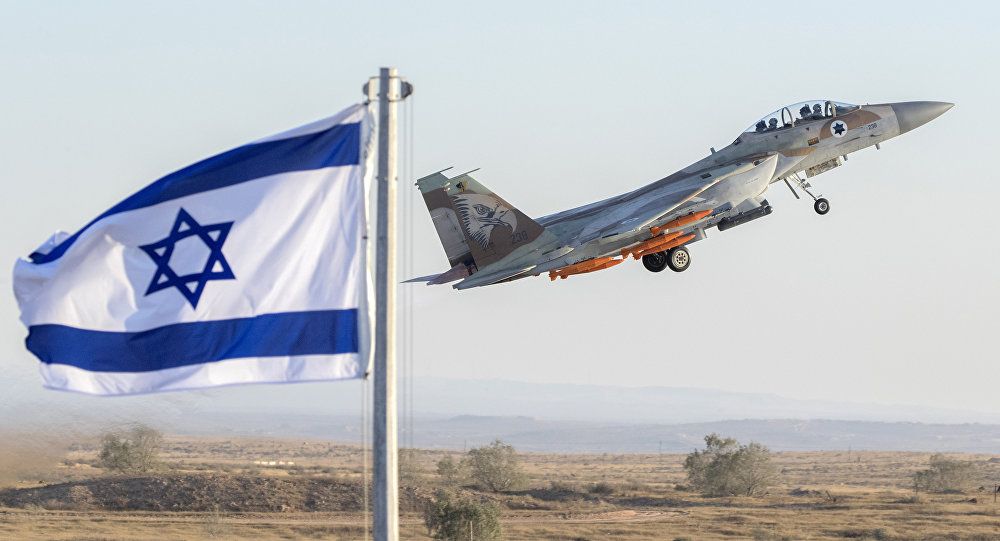
Israeli Air Force F-15D Heavy Fighter
While Pakistan had been a strategically critical ally of the Western bloc during the Cold War, bordering China, Soviet aligned India and the Soviet Union itself and serving as a key conduit for Western arms and aid to anti Soviet Islamist Islamist insurgents in Afghanistan, relations between Islamabad and the West saw a serious decline following the disintegration of the USSR in 1991. The United States’ adoption of a new foreign policy which was at times perceived to be 'anti Muslim,’ targeting a number of Muslim states with military force, was strongly criticised by the Pakistani government, and violations of Pakistani airspace during American attacks on Afghan targets in the 1990s further soured relations. The Pakistani nuclear program however was perhaps the main point of contention between the Western Bloc and Islamabad, and while Israel, India and even Iran during the Pahlavi dynasty had been met with relatively little opposition in their attempts to develop nuclear arms, in Iran’s case with active U.S. support, Pakistan’s acquisition of nuclear arms was considered an unacceptable development by the Western powers. The result was the imposition of stringent economic sanctions on the South Asian state and an arms embargo by the United States.
Alongside the Western bloc, Israel was also stringently opposed to the Pakistani nuclear development. While both Islamabad and Tel Aviv had been major Western military partners during the Cold War, each supplied with advanced U.S. arms to combat their Soviet aligned neighbours, relations between the two were poor. Israel’s longstanding conflict with a number of Middle Eastern Muslim states, and its reliance on its own nuclear arsenal to maintain an asymmetric advantage over these states, led to concerns that Pakistan’s bomb would be a 'Muslim bomb,’ and could well proliferate to Israeli adversaries such as Iran or Sudan - two other self proclaimed Islamic Republics with close ties to Islamabad.
In response to the perceived threat posed by Pakistan’s nuclear weapons development, the Israeli military considered launching preventative military strikes on Pakistani nuclear facilities. A plan for the Israeli Air Force to strike Pakistani Nuclear Facilities in Kahuta was authorised by the Israeli High Command, and the military reportedly built a full mock up of the facilities in the Negev Desert based on satellite images which were used by Israeli pilots to practice mock attacks. While Israel had initially sought to launch a strike jointly with India, this request was flatly refused by Delhi - leaving Tel Aviv to handle the results of any political fallout alone. Failing to gain direct Indian support, Israeli sought to at the very least gain landing and refuelling rights to launch the attack on Pakistan from facilities in India. This too was refused by Delhi, seriously complicating the Israeli operation. Without even token Indian support, Israeli would be held solely responsible for the attack.
Israel had previously carried out a highly successful preventative strike on an Iraqi nuclear reactor in 1981 under Operation Opera to prevent Saddam Hussein’s government from developing a nuclear weapon, and the operation against Pakistani facilities was set to follow a similar plan. Israel and Pakistan’s air forces mirrored one another’s capabilities, with the two having been the first and second respective clients for the U.S. F-16 Fighting Falcon light fighter - fielded by both states in large numbers. Israel did however retain an advantage in that it had acquired more advanced heavy air superiority fighters, the F-4E and F-15C, which were capable of carrying heavier payloads, operating at longer ranges and flying at higher altitudes. This was a capability Pakistan lacked. The long range of the Israeli fighters would have proved a significant asset in a strike on Pakistan and minimised the need for aerial refuelling. Israel’s larger aerial tanker fleet was also an essential asset, which were particularly critical in allowing shorter range lighter fighters such as the F-16 to reach Pakistani targets.
Continued in Part Two
