
Vietnam Enhances Su-30 Long Range Fighters with Russo-Indian BrahMos Cruise Missiles
Military Watch Magazine Editorial Staff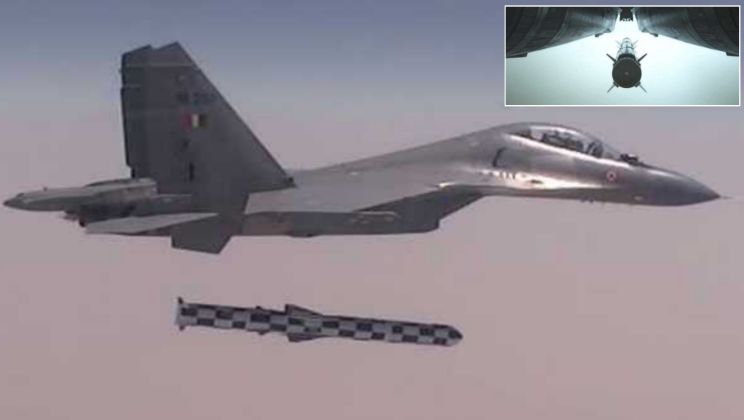
Launch of BrahMos Cruise Missile From Indian Air Force Su-30MKI Fighter
India and Vietnam have signed $629 million a contract for the export of BrahMos cruise missiles, which are expected to be used to re-equip Vietnamese Su-30MK2 fighter aircraft to enhance their long range strike capabilities. Although the BrahMos is a Russian designed missile type, its production in India has allowed it to be marketed to countries that for political reasons have sought to avoid making direct procurements from Russia, such as the Philippines which signed a $375 million procurement contract in 2022. The missile was jointly developed by Russia's Chelomey Design Bureau India's Defence Research and Development Organisation, with Indian sources claiming an 83% domestic production rate had been achieved by 2025, which will increase it to 85% by 2026, and 90-95% in the future.
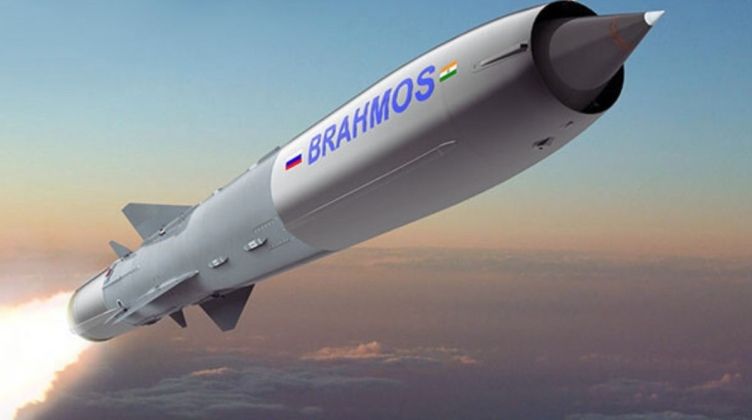
The BrahMos is a direct derivative of the Soviet P-800 cruise missile, which was developed as part of a broader Soviet effort to create a new generation of high-speed anti-ship weapons capable of penetrating increasingly sophisticated Western naval air defences. The missile’s most distinctive feature is its ramjet propulsion system, which enables sustained flight at around Mach 2.8–3. During the Cold War, Soviet designers invested heavily in high-speed anti-ship missiles because they viewed aircraft carrier battle groups as one of NATO’s greatest military advantages. Rather than matching the U.S. Navy ship-for-ship, Soviet doctrine emphasised overwhelming enemy fleets with salvos of extremely fast missiles that were difficult to intercept. The BrahMos inherits this philosophy, with its speed, sea-skimming flight profile, and emphasis on defeating naval air defences all reflecting Soviet operational thinking rather than indigenous Indian concepts.
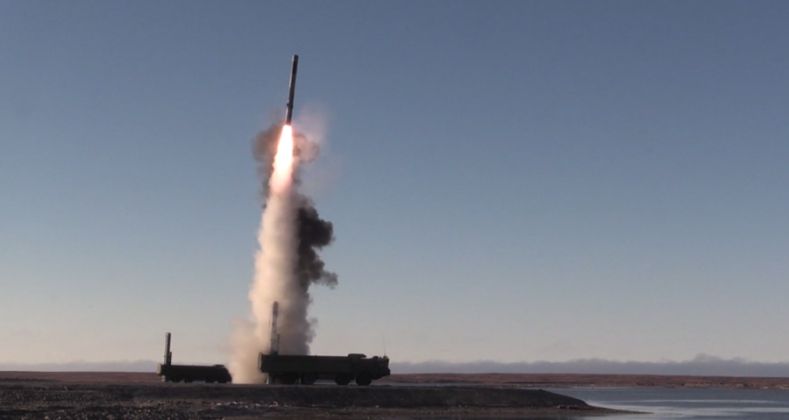
Modifications to the P-800 design under the joint BrahMos program included the integration with Indian command-and-control systems, adaptation for multiple launch platforms, software modifications, and later development of land-attack capabilities. The core aerodynamic configuration, propulsion system, and overall missile architecture remain closely tied to the Soviet design. The missiles have already been integrated onto Indian Air Force Su-30MKI fighters, which sets a precedent for integration to enhance Vietnamese Su-30 fighters. Vietnam notably already fields P-800 missiles, although these are deployed from Bastion coastal defence systems and from frontline warships, with an air-launched variant never having been developed. The P-800’s use in service is a primary indicator that the BrahMos was developed for integration onto fighters.
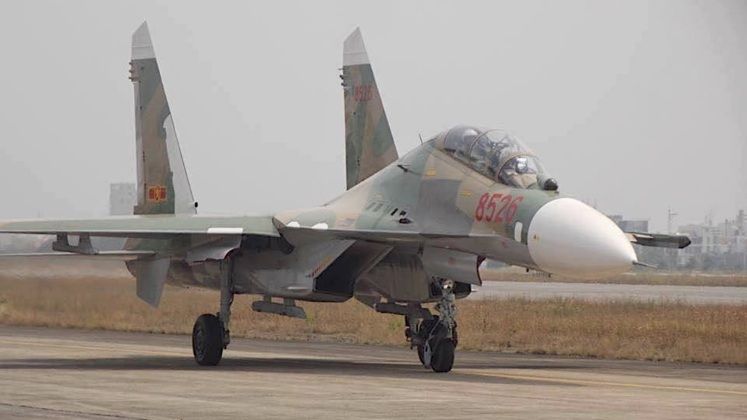
Unlike the Su-30MKI produced at the Irkutsk Aviation Plant and serving in the Indian fleet, the Su-30MK2 was developed as part of a separate family of lower cost fighters at the Komsomolsk-on-Amur Aircraft Plant, which after 2009 converted to producing the Su-35S for the Russian Air Force. The fighter was closely derived from the Su-30MKK that was customised for Chinese requirements, with the Chinese PLA Navy becoming the Su-30MK2’s its first client in 2004. The aircraft was well optimised for maritime strike role with sophisticated avionics particularly for command, control, communications, computers, intelligence, surveillance, target acquisition and reconnaissance capabilities. The Su-30MK2 benefits from the characteristic long range, high flight performance and powerful sensors of the Su-30 design. Nevertheless, its ageing avionics have increasingly limited its utility for air defence operations, with the integration of the BrahMos expected to compensate of this by increasing potency in strike roles. This could allow it to fulfil complementary roles to the Su-57 fifth generation fighters which local sources widely report that Vietnam is expected to procure.
